




0
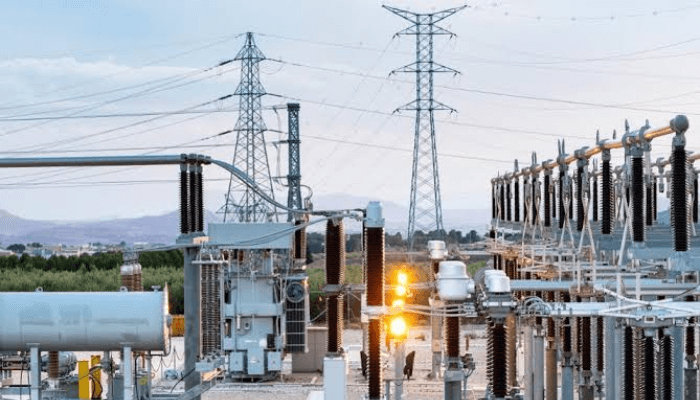
LAGOS – Developments have shown that the rise of alternative energy in Nigerian homes and businesses is not a fad. It is seen as a structural shift in response to a broken national electricity grid.
While it brings empowerment and reliability to millions, it is gradually eroding the financial base of distribution companies.
In homes across Lagos, Kaduna, Port Harcourt, and Enugu, solar panels now gleam on rooftops that were once dark and silent during frequent blackouts.
In bustling shops and small factories, battery inverters hum quietly, replacing the noisy petrol and diesel generators that once dominated Nigeria’s business landscape.
This quiet energy revolution, driven by frustration with the national grid, is transforming the way Nigerians power their lives. But for the country’s 11 electricity distribution companies (DisCos), it represents both a crisis and an inflection point.
For DisCos, the path forward isn’t to resist change but to embrace it: partner with innovators, focus on quality service, and adapt to a new energy marketplace shaped by customer choice, not grid monopoly.
If they fail to evolve, they risk becoming relics in an energy future that is already unfolding— one solar panel, one inverter, and one independent house.
DisCos On The Losing End
Nigeria’s DisCos were established during the 2013 power sector privatisation to handle electricity distribution. Yet, for over a decade, they’ve struggled with a legacy of poor infrastructure, low investment, electricity theft, and regulatory pricing caps. The result? Frequent blackouts, limited reach, and mounting losses.
Many consumers, weary of unreliable supply, have turned to alternative energy—not just diesel generators, but increasingly solar home systems, inverter-battery setups, and community mini-grids. As this trend accelerates, DisCos are watching their most reliable customers—paying households and businesses—leave the grid or drastically reduce consumption.
“In the past year, I’ve spent less than N3,000 monthly on grid power,” says Olatunji Adeyemi, a civil servant in Ibadan. “My 1.5kVA solar system powers my fan, lights, TV, and fridge. NEPA (DisCo) is now just a backup.”
DisCos, dependent on consumer billing to survive, are increasingly squeezed. When customers self-generate power, DisCos lose revenue—while fixed costs like network maintenance remain. The impact is especially harsh in urban centres where alternative energy adoption is fastest.
Across Nigeria, the affordability and reliability of small-scale solar has improved dramatically. Millions of homes now use rooftop panels, lithium batteries, and charge controllers. Many pay via “pay-as-you-go” models offered by companies like Sun King, Lumos, and BBOXX.
A solar kit capable of powering lights, fans, and a TV can now be acquired with an initial deposit as low as N10,000 and monthly payments of N5,000–N8,000—far less than the cost of constant generator fuel or high DisCo bills.
“Since getting solar, I sleep better,” says Mr. Joshua Akingbade, a trader. “No fuel queues, no noise, no fire risk. I have told all my neighbours.”
These systems are especially popular in peri-urban areas where grid power is erratic and electricity theft is common. They also appeal to renters who can’t modify fixed electrical connections.
According to the Rural Electrification Agency (REA), in 2023 alone, over 1.5 million new households adopted standalone solar systems or hybrid setups in Nigeria and by 2025, that number is projected to hit 3 million. A development which is described as a massive market shift.
Businesses Lead The Exodus For Survival
Dr. Ayodele Aderinwale, Chairman of Justrite Superstores, has publicly spoken about the benefits of solar energy and its impact on the business.
He has emphasised that rising electricity costs, unreliable grid power, and soaring diesel prices have motivated the decision to switch to solar power. His experience with solar energy solutions, particularly those provided by Huawei, has proven them to be the most cost-effective energy solution for running businesses in Nigeria.
He said, “The switch to solar power is not just a cost-saving measure but also a strategic decision to improve the stability and reliability of Justrite’s power supply, which is crucial for running a supermarket chain like ours”.
For Nigeria’s small and medium enterprises (SMEs), which account for over 80 percent of jobs, the unreliability of the grid is not just an inconvenience, it’s an existential threat.
“My cold room business was dying,” says Chinedu Eze, an entrepreneur. “I spent N40,000 weekly on diesel. I installed solar and inverter last year, and now I save more than half.”
Across sectors—from salons and bakeries to clinics, farms, and printing presses—businesses are investing in rooftop solar, inverter-battery systems, and smart energy storage to cut costs and ensure uptime.
Hybrid solar installations—often combining solar, inverter, and occasional DisCo backup—are now mainstream among middle-class enterprises. Many use financing schemes from fintechs, microfinance banks, or renewable energy companies.
For DisCos, this trend is worrying. Commercial customers, who are metered and pay high tariffs, have historically subsidised poorer residential customers. As these businesses reduce grid dependence or disconnect entirely, DisCos lose their most profitable revenue source.
Financial Strain, Shrinking Customer Base
The Nigeria Electricity Regulatory Commission (NERC) estimates that less than 45 percent of electricity produced is actually paid for. This is due to technical losses, meter bypassing, energy theft, and non-payment. But the fastest-growing loss segment now is “load defection”—customers choosing alternatives.
DisCos must still maintain poles, wires, transformers, and substations—even if customers use only 20 percent of what they once consumed. With fixed costs rising and revenues falling, most DisCos remain in financial distress.
A 2023 audit showed that seven of the eleven DisCos were technically insolvent, unable to meet obligations to the bulk electricity market. Some, like Kaduna and Yola DisCos, have been taken over by government lenders and AMCON due to poor performance.
Boom For Alternative Energy Firms
On the flip side of the DisCos’ struggles is the boom in Nigeria’s alternative energy market. Driven by necessity, innovation, and customer demand, a growing number of local and international companies now offer tailored solutions to households and businesses.
For instance, Sun King Nigeria now operates over 90 stores, offering solar kits with flexible financing. They claim to have served more than 2 million Nigerians as of 2024.
Arnergy, a Lagos-based solar startup, focuses on powering SMEs, estates, and private clinics, often displacing DisCo supply completely.
MTN & Lumos partnership has enabled over 100,000 solar home systems, paid for via mobile airtime.
Husk Power Systems plans to build 500 solar mini-grids across Nigeria by 2026, mostly in underserved communities.
Investments into Nigeria’s decentralised energy sector crossed $250 million in 2023, more than triple the amount in 2020, according to the Africa Solar Industry Association.
While the shift to alternative energy is undeniable, some DisCos are trying to adapt rather than resist. For instance, a few DisCos now explore hybrid billing or leasing grid infrastructure to solar mini-grid firms. This can help monetise rural customers who are too costly to serve with conventional power.
By installing prepaid meters and focusing on high-value customers, some DisCos are trying to improve collections and reduce losses, some are also beginning to consider co-investing in local power generation—especially solar and gas-based—so they can offer reliable supply and compete with off-grid providers.
Still, most lack the capital or regulatory freedom to move quickly.
Consequently, as more well-off households and businesses exit the grid, the financial burden of maintaining DisCos increasingly falls on lower-income users—who are least able to pay and least likely to afford solar alternatives.
This creates a growing inequality in power access. If left unaddressed, DisCos could be trapped in a vicious cycle of declining revenues, poorer services, and deeper customer distrust—while a parallel energy economy flourishes outside their reach.
“Nigeria is becoming a two-tier electricity society,” warns an analyst at the Nigerian Economic Summit Group. “One tier is reliable, clean, private—and the other is broken, underfunded, and collapsing.”
Read the full article here