





The Asset Management Corporation of Nigeria (AMCON), last week provided the facts and figures about its takeover of Arik Air and its efforts at returning the airline to its past glory. OLUSEGUN KOIKI writes.
Almost eight years after the takeover of Arik Air from its shareholders by the Asset Management Corporation of Nigeria (AMCON), both parties are still bickering over the action.
The shareholders of Arik Air at every given opportunity insist that the takeover of the airline on February 9, 2017 by AMCON was premature and rude.
The shareholders also constantly accused the corporation of willfully running down the airline in connivance with its receiver manager by not servicing its debts or honouring its initial agreements with its financiers before the takeover.
For instance, its shareholders, purported that before AMCON’s takeover, the airline enjoyed a stellar reputation in the aviation industry.
According to a statement by Godwin Aideloje on behalf of Arik Air shareholders, alleged that as at the time of takeover, the airline operated a fleet of 19 aircraft, of which 17 were operational, maintained a spare parts inventory valued at over $200 million, adding that its management had no history of lease defaults, aircraft seizures or unfulfilled financial obligations to their financiers. In fact, they described AMCON intervention as “invasion.”
But facts and figures released over the weekend in Lagos by AMCON, contradicted the claims of Arik shareholders.
The facts revealed that the airline as of the time of takeover, was gasping for breath with its fleet of aircraft nosediving at an accelerated rate, while its obligations to its financiers had completely taken the backseat.
Mr. Jude Nwauzor, the Head of Corporate Communications Department of AMCON, in his interaction with aviation journalists, showcased the facts about the true state of the airline before the takeover in 2017.
According to him, while the airline had 30 aircraft in its fleet, only a few of such airplanes were operational, while the majority was grounded for various reasons.
Some of the facts he presented indicated that a few of the aircraft were either on lease, their present status unknown, scrapped or information about them were not available.
According to AMCON, the airline’s Hawker HS125-800XP airplanes with the registration numbers: 5N-JMA and 5N-JMB, which were on lease from J.M Air Limited were abandoned and inactive in Chester, United Kingdom and Lagos, respectively.
Also, the airline’s 15 Boeing 737 aircraft with the registration numbers: 5N-MJA, 5N-MJB, 5N-MJI, 5N-MJG, 5N-MJH, 5N-MJN, 5N-MIJ, 5N-MJK, 5N-MJC, 5N-MJD, 5N-MJE, 5N-MJF, 5N-MJO, 5N-MJP and 5N-MJQ, had various statuses.
The document revealed that out of these 15 Boeing 737 aircraft, only six were active; two abandoned in Norwich, Southend in the United Kingdom; one was scrapped in Lagos, six of the planes were inactive in Lagos, while two others were undergoing maintenance checks in Johannesburg (South Africa) and Malta.
Besides, the document showed that Arik Air had four Airbus A340- 500 (two) and A330-200 (two) in its fleet as at the time of takeover.
One of the aircraft was scrapped in Lagos, the other was active, another was undergoing maintenance outside the country, while the fourth was inactive in Lagos.
Also, the document showed that Arik Air had five Canadian Royal Jet CRJ900 with the registration numbers: N5-JEA, 5N-JEB, 5N-JEE, 5N-JEC, 5N and 5N-JED. Three of the jets were leased from Jen Air Ltd, while the other two were owned by Arik Air.
The records showed that as of the time of takeover, two of these jets were inactive in Lagos, while the three others were active.
The airline also had four Q400 aircraft in its fleet with the registration numbers: 5N-BKW, 5N-BKX, 5N-BKU and 5N-BKV.
As of takeover, two of the Q400 D402, were inactive in Lagos, one was active in the same Lagos and the fourth was scrapped in Lagos by the former owners of the airline.
It was also gathered that one of its aircraft, A340-500 was seized and operated by HiFly in Portugal, while others were repossessed by investors.
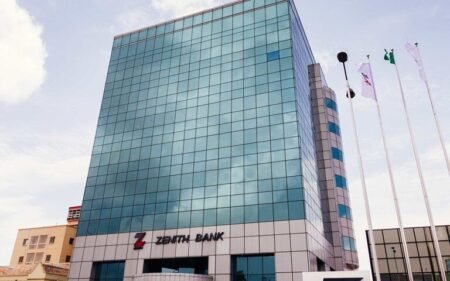
Information gathered also revealed that some of the aircraft were financed by Standard Chartered Bank, Access Bank, Zenith Bank, Ecobank/Afrexim, Export Development Canada and some other unknown investors.
Nwauzor, in his presentation maintained that the total debts of Sir Johnson Arumem-Ikhide, the owner of Arik Air to AMCON was over N455, 171, 764, 772.80 as of December 31, 2024.
The debts included that of Arik Air, Rockson Engineering and Ojemai Farms.
AMCON, a debt recovery agency of the Federal Government of Nigeria, said it had watched as several commentators, and analysts spread skewed and misguided reports on different media platforms, which did not explain the sorry state of Arik Air before the Federal Government of Nigeria mandated AMCON to intervene in the airline.
Giving the breakdown of the total debts, Nwauzor, informed that Arik as of December 2024, owed AMCON N227,637,469,394.34 billion; Rockson Engineering, N163,502,837, 397.75 billion, while Ojemai Farms owed the corporation another N14, 031, 457, 980.71 billion, totalling N455, 171, 764, 772.80.
Nwauzor, also alleged that Arumem-Ikhide in some of its agreements with AMCON, agreed to the debts owed to the government agency, and signed restructured agreements on payback, but failed to honour his agreements.
Nwauzor, expressed that the Act setting up AMCON in Section 6 empowered the corporation to purchase, manage, and dispose of External Balance Assessments (EBAs), which included Arik, stressing that at the time of takeover, the airline was insolvent.
According to him, Section 48 of AMCON Act, empowers the corporation to appoint a Receiver or Receiver Manager to take, manage, and dispose of assets of a debtor company like Arik, which it did.
The receiver manager, he maintained, also had the option of either managing or selling off the assets of a debtor company, but the Federal Government prevailed on the corporation to keep the airline alive. Since takeover, he said AMCON has consistently invested in the airline.
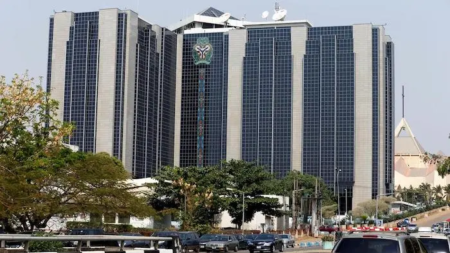
“As you know, AMCON is owned by the Central Bank of Nigeria (CBN) and the Ministry of Finance and is guided by the AMCON Act drafted by the National Assembly, and signed into law by the President and Commander-in-Chief of the Armed Forces of the Federal Republic of Nigeria. That was how AMCON came to be.
“What that means is that you cannot play outside the laws of the Federal Republic of Nigeria, and the AMCON Act, and that the corporation since inception is guided by this. If push comes to shove, AMCON still has the option to liquidate the company and any other debtor organisations. But, we are still today managing Arik, which was insolvent in 2015 and 2016 before AMCON stepped in.”
Stakeholders’ Reactions
Mr. Olumide Ohunayo, Director, Research, Zenith Travels, in an interview with Daily Independent, said that the intervention of AMCON in Arik Air when it did, was a step in the right direction, which received the applause of most of the stakeholders.
According to him, as of the time the corporation stepped in, Arik Air was struggling with adequate payment of insurance premiums on aircraft, grounded most of its airplanes and struggling to source funds to purchase Jet A1.
He declared that describing the intervention of the corporation in Arik Air by some stakeholders as uncharitable and unnecessary when it did was unfair to AMCON, maintaining that it saved the airline from total collapse.
He said: “The Corporation came at a time when Arik Air could not even pay insurance, which means they could not fly, could not buy Jet A1. So, the airline was grounded. We were happy that AMCON came in.
“Then, Arik Air was the biggest airline in the industry and hundreds of Nigerians were working with them. It is in this country that we have seen an airline claiming to have 30 or 40 aircraft, but in the long run, could not maintain them and only seven or eight of them are operating. One thing is to own and another thing is to have serviceable aircraft that can operate.”
Ohunayo further commended AMCON for keeping Arik and Aero Contractors going since its interventions in the two airlines and advised the corporation to devise a new means of keeping the carriers in business.
He suggested AMCON could return the airlines to their former owners if they were willing to offset their debts or offer them to willing investors who would further turn them around.
Also, Capt. Samuel Caulcrick, former Rector of the Nigerian College of Aviation Technology (NCAT), Zaria, said that the intervention of AMCON had saved many businesses, including the financial institutions from collapse.
Calucrick, explained that the essence of AMCON was to buy over non-performing loans from banks on behalf of the Federal Government, a role he said the corporation had played very well since its establishment in 2010.
He, however, said that rather than the government buying over the bad loans, the Federal Government should have adopted the Barack Obama option, which held in trust the bailout funds of its automobile industry in 2008.
He said: “I think what the government should have done was what the Barack Obama administration did in the United States in 2008 to the AIG, General Motors, Cadillac and others. When the government put down the money, they held it in trust. The government was not involved, but was just there as an observer to make sure that they didn’t divert the money.
“The government ensured there was corporate governance in the system. So, the government was able to get their money back. AMCON should have held what they gave in trust. Now that the banks are profitable, the government can now get back its money from the banks.
“I want to advise that the government should go back to the National Assembly, all these bad loans that AMCON is holding on to, the banks can now absorb them. Banks will do it differently the way AMCON is doing it.
Read the full article here