






BAMIDELE OGUNWUSI
As it seems the much-sought after foreign direct investments (FDIs) has continued to elude countries in the sub-Saharan Africa (SSA) region including Nigeria, analysts have called on governments in the region to channel their attention towards an increased diaspora remittances
Remittances are an important source of financing for the SSA region and according to the World Bank.
Remittances have been more stable than Foreign Direct Investments, which have demonstrated considerable volatility over the past two decades. Remittances to the region significantly exceeded FDI flows in 2023.
In a report, Remittances Prices Worldwide Database, it was established that “remittance flows to developing countries have surpassed the sum of foreign direct investment and official development assistance in recent years, and the gap is increasing”.
Dilip Ratha, lead economist and lead author of the Remittances Prices Worldwide Database, advocated leveraging remittances for private capital mobilization to support development finance, particularly through diaspora bonds.
“Regional growth in remittances in 2023 was largely driven by strong remittance growth in Rwanda (16.8 per cent), Ethiopia (16 per cent), and Mozambique (48.5 per cent). Nigeria, the largest remittance-recipient country in Sub-Saharan Africa, is expected to receive more than $20bn in official remittances by the end of 2023, a slight increase compared with the previous year. In Ghana, the second-largest recipient, remittances increased to $921.17m in 2023Q2, from $691.60 million in 2022Q2,” the report said.
Nigeria claims 20% of Africa’s $100 billion remittance market, second after Egypt. Despite economic challenges, Nigeria’s remittance market is projected to rebound to a 3 per cent growth in 2024, following a modest 1.3 per cent in 2023, though inflows will remain below pre-pandemic highs.

This optimistic projection, initially linked to slowing inflation in high-income Western countries where many Sub-Saharan migrants live, is now tempered by the fact that some of these economies, like the UK, are facing recession, which could reduce migrants’ employment opportunities and earnings. The impact on Nigeria’s remittances will depend on the balance between these counteracting forces and the resilience of the migrant community.
Importantly, actual remittance inflows are likely double what official figures say—estimated at $30 billion, based on the World Bank’s estimates that informal flows could exceed 50 per cent of formal flows. These inflows are an important lifeline for poor, rural households receiving 50% of inbound remittances into low-
AAAA Remittance flows to Sub-Saharan Africa are expected to have increased by about 1.9 per cent in 2023 to $54 billion, driven by strong remittance growth in Mozambique (48.5%), Rwanda (16.8%), and Ethiopia (16%). Remittances to Nigeria, accounting for 38 per cent of remittance flows to the region, grew by about 2 per cent, while two other major recipients, Ghana and Kenya, posted estimated gains of 5.6 per cent and 3.8 per cent, respectively. Fixed exchange rates and capital controls are diverting remittances to the region from official to unofficial channels. In 2024, remittance flows to the region are projected to increase by 2.5 per cent. Sending $200 to the region cost 7.9 per cent on average in the second quarter of 2023.
Following a year of increased remittance flow in sub-Saharan Africa, the World Bank anticipates further growth this year. Nevertheless, challenges and issues requiring attention accompany this projection.
In its latest Migration and Development Brief titled Remittances Brave Global Headwinds with a Special Focus on Climate Migration, the World Bank projects a 2.5 per cent growth in remittance flows to Nigeria, Ghana, and other sub-Saharan African countries this year. Remittance flows to the region are anticipated to have risen by approximately 1.9 per cent in 2023, reaching $54 billion. Notably, remitting $200 to sub-Saharan Africa incurred an average cost of 7.9% in the second quarter.
Nigeria, as the largest remittance recipient in the region, is expected to receive over $20 billion in official remittances by the end of 2023, marking a slight increase compared to the previous year. Remittances to Nigeria, constituting 38 per cent of the region’s total, grew by about 2 per cent, while Ghana experienced estimated gains of 5.6 per cent. The growth trend extended to other nations, including Mozambique (48.5%), Rwanda (16.8%), Ethiopia (16%), and Kenya (3.8%).
Despite the 3.8 per cent growth in remittances to low- and middle-income countries (LMICs) in 2023, a moderation from previous years, the World Bank expresses concern about the potential decline in real income for migrants due to global inflation and low growth prospects. Remittance flows to LMICs, estimated at $669 billion, have been resilient, supported by stable labor markets in advanced economies and Gulf Cooperation Council (GCC) countries.
However, the World Bank forecasts a further softening in the growth of remittances to LMICs to 3.1 per cent, driven by slowing economic growth and weaker job markets in high-income countries. Additional risks include volatile oil prices, currency exchange rate fluctuations, and the possibility of a deeper-than-expected economic downturn in high-income nations.
$365m in May 2024
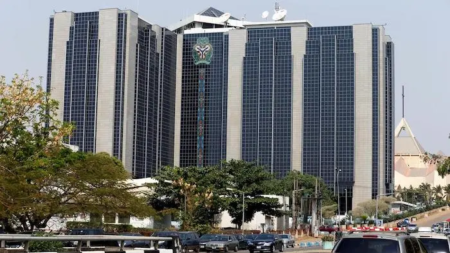
Data realised by the Central Bank of Nigeria (CBN) revealed that total foreign remittances for May 2024 amounted to $365 million, marking an 80 per cent year-on-year increase compared to May 2023, which recorded $202.89 million.
According to analysts, the significant rise underscores the growing confidence and reliance on remittances as a vital source of foreign exchange for the Nigerian economy.
A deeper analysis of the data showed that for the first five months of 2024, Nigeria received a total of $841.37 million in remittances.
January started the year on a positive note with $138.56 million. However, February experienced a notable dip, recording the lowest influx of remittances at just $39.14 million, potentially reflecting seasonal variations or short-term economic factors affecting diaspora contributions.
The trend reversed in March, with remittances climbing to $104.9 million, suggesting a rebound in the flow of funds. This upward momentum continued into April, which saw remittances rise to $193.31 million. The surge peaked in May with an impressive $365.44 million, the highest monthly figure recorded so far this year.
According to market watchers, this substantial increase in May could be attributed to several factors, including improved economic conditions in countries where the Nigerian diaspora resides, enhanced remittance channels, and perhaps targeted financial policies by the CBN aimed at encouraging higher remittance inflows.
“The consistent rise in remittances highlights their critical role in supporting not only household incomes but also national economic stability. These funds often go towards education, healthcare, and business investments, contributing significantly to the socio-economic development of Nigeria.
“As remittance flows continue to grow, they present a resilient financial lifeline for many Nigerian families and a stable source of foreign currency for the nation.
The CBN’s ongoing efforts to streamline remittance processes and ensure favourable exchange rates are likely contributing factors to this positive trend, “said an expert who does not want his name in print.
At the last monetary policy committee meeting, the CBN Governor, Olayemi Cardoso said: “Members further observed the recent volatility in the foreign exchange market, attributing this to seasonal demand, a reflection of the interplay between demand and supply in a freely functioning market system.
The Committee also noted the marginal increase in the external reserve balance between March and April 2024 and urged the Bank to sustain its focus on accretion to reserves.
“The MPC commended the Bank for the recent approval of licenses of fourteen international Money Transfer operators (IMTOs). This is expected to improve competition and lower the cost of transactions, thus attracting more remittances through formal channels.”
He added: “We have identified that this is a very critical element of the inflows coming into the country. It is estimated to represent about six per cent of our GDP. And so, we felt that it was important from the central bank perspective, to have a strategy to engage this sector.
“Now within that; the IMTOs play a very major role, and so for us, it was important for us to meet them. We had several private discussions, understanding what their problems were, and seeing how we could help them to ensure that they are more effective in the things they do. And of course, we shared the challenges that we saw in the future for the country and that everybody had a role to play. And I must say that they responded very positively.
“Two aspects that concern them, one was the issue of the price, commissions, and the charges they are having to pay and of course, the issue of at some point in time the rates. And since the rates have converged, that has become less of an issue but they are encouraged to use your official channels to advance the cause of the very laudable efforts that we are making to enhance the flows of foreign currency coming in.
“I am very interested in how we make progress on this and I’m certain that we will be successful in doing it. Our target is to double the remittance flow within a year. And as I said, we have started that process of engaging to ensure that it happens.”
Nigerian investor Moses Adeolubodun views this development as a positive signal for investment opportunities within the region.
He said, “I believe that this upward trajectory is a testament to the resilience and potential of these economies. The growth further signifies a positive economic outlook, and as an investor, I see promising opportunities for strategic investments.”
Read the full article here