



1
The Advertising Regulatory Council of Nigeria and the Federation of State Gaming Regulators of Nigeria have formalised a historic agreement that promises to end the era of fragmented advertising rules in the country’s booming gaming sector, anchoring the partnership squarely within President Tinubu’s vision of true federalism.
With the new development, effective April 1st, 2026 Nigeria’s gaming industry is entering one of the most consequential periods in its regulatory history.
Following the Supreme Court’s landmark November 2024 ruling which stripped the National Lottery Regulatory Commission (NLRC) of jurisdiction outside the Federal Capital Territory and confirmed gaming regulation as a residual matter for states, Nigeria’s 36 states have moved decisively to reshape how the sector is governed.
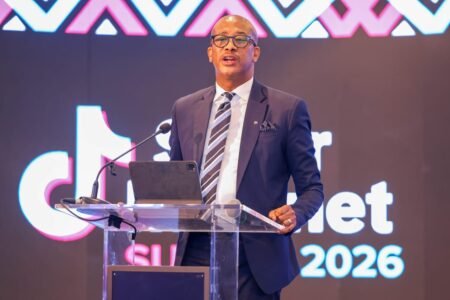
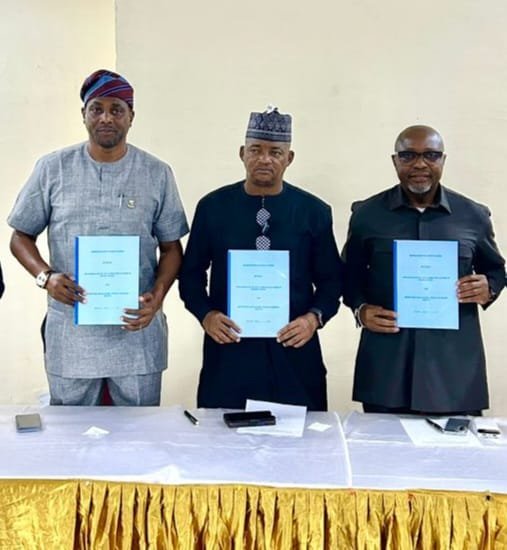
The MoU, signed at a ceremony in Lagos, establishes a formal collaboration to harmonise the rules governing how gaming and lottery companies promote their products and services across all media channels in Nigeria.
Fielding questions from the media on the development, Director-General of the Advertising Regulatory Council of Nigeria, Dr. Olalekan Fadolapo observed that the absence of an alignmentin the dynamic gaming landscape where each of the member FSGRN member states operated its own rules around how gaming operators could communicate with the public does not only create administrative inconvenience in a sector characterised as ‘high-risk,’ but also regulatory gaps that can translate into harm to consumers, to the public image of the industry, and to the broader Nigerian economy.
“What we stand to gain is sanity of the regulation and operation of gaming in Nigeria. If we allow all these things to be done in silos, it is going to create more problems.”
Under the terms of the MoU, FSGRN and ARCON commit to working jointly to develop and enforce a single, coherent advertising regulatory framework that will apply uniformly across FSGRN member states.
This means that when a gaming company seeks to run a promotional campaign on national television or digital media channels that fall squarely within ARCON’s federal mandate, the standards applied will be consistent with, and complementary to, those enforced by state regulators at the operator level.
Dr. Fadolapo emphasised that the partnership respects the constitutional division of powers. Advertising, he noted, is a matter of federal regulation. Gaming, per the Supreme Court’s 2024 ruling, sits with the states.
The MoU is precisely the mechanism by which these two legitimate spheres of authority are brought into constructive alignment rather than left to operate at cross-purposes.
“The association has 25 members. Within this framework of the MoU, we have 25 member states where we can now say we have a single advertising regulatory framework.”
Fadolapo added that the MoU is, in part, a practical expression of the cooperative federalism the Tinubu administration has championed. Rather than allowing federal and state actors to work at odds, the partnership creates a model in which both tiers of government reinforce each other’s mandates for the public good.
“President Bola Ahmed Tinubu, through policies and guidelines, is amplifying true federalism. With true federalism, there is need for state and federal government agencies to cooperate and partner together in areas where we need each other.”
Read the full article here