






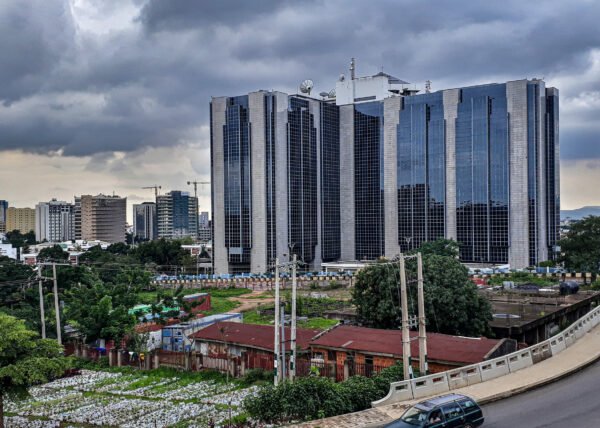
The Central Bank of Nigeria (CBN) has appealed against the recent judgement of the Federal High Court in Lagos, which nullified its its dissolution and takeover of the board and management of Union Bank of Nigeria Plc during its January 2024 intervention.
PREMIUM TIMES reported that the trial judge, Chukwujekwu Aneke, ruled that the CBN’s actions were ultra vires and not in compliance with the provisions of the Banks and Other Financial Institutions Act 2020 (BOFIA).
According to the court filings, Titan Trust Bank Limited, alongside Luxis International DMCC and Magna International DMCC, claimed to be the ultimate beneficial owners of Union Bank.
They challenged the CBN’s dissolution of the bank’s board, the appointment of a new management, and the initiation of a recapitalisation process that allegedly diluted their shareholding and excluded them from key decisions.
In his ruling, the judge nullified the entire regulatory intervention and granted the applicants’ prayers. He set aside the CBN’s public announcement dissolving the board and invalidated all actions taken by the regulator-appointed management.
The court ordered the immediate reinstatement of the former board and management led by Farouk Gumel, and restrained the CBN from exercising any powers over the bank’s governance, including restructuring its share capital or altering its ownership structure.
It also halted the recapitalisation process and investor selection programme initiated under the CBN-appointed board.
CBN’s appeal
In its notice of appeal dated 26 March, a copy of which was shared with PREMIUM TIMES on Friday, the CBN argued that the lower court erred in law by holding that it acted outside its statutory powers when it dissolved the board of Union Bank.
It maintained that it is the primary regulator of Nigeria’s financial system and is empowered under the CBN Act and BOFIA 2020 (as amended) to supervise and intervene in financial institutions. It contended that its actions were carried out in good faith and within its statutory mandate, and that Section 51 of BOFIA protects it from liability for actions taken in the course of exercising its regulatory powers.
CBN further argued that the trial court failed to properly interpret the relevant laws granting it supervisory authority and wrongly restricted the scope of its powers. It insisted that Union Bank was in severe financial distress, with a negative capital adequacy ratio, a capital shortfall exceeding N224 billion, and high levels of non-performing loans, and that failure to intervene would have posed a risk to the stability of the banking sector.
It also faulted the trial court for nullifying actions taken by the management it appointed, arguing that such actions were valid administrative measures protected by the presumption of regularity. It maintained that the court erred in restraining it from exercising its statutory powers over the governance of the bank, including restructuring its share capital.
Additionally, the CBN challenged the court’s findings on fair hearing, arguing that no specific rights violations were established and that the matter before the court was one of judicial review rather than enforcement of fundamental rights.
It also disputed the court’s reliance on the concept of “continuing injury,” arguing that the cause of action had expired under the applicable limitation period and that the recapitalisation process did not give rise to a fresh cause of action.
It further contended that the trial court erred in granting orders of mandamus and in failing to properly apply established legal principles, including the requirements for judicial review remedies. It also argued that the court ignored uncontroverted evidence and reached conclusions that resulted in a miscarriage of justice.
CBN maintained that courts lack the authority to restrain the exercise of statutory functions lawfully conferred on a regulator and described the judgement as perverse.
It prayed for an order setting aside the lower court’s judgement and dismissing the suit filed before the lower court on 19 December 2025.
It also urged the appellate court to grant any further orders it deems appropriate.
The CBN is represented by a team of Senior Advocates of Nigeria (SANs) led by Yusuf Ali. The team of SANs includes Kemi Pinheiro, Tunde Fagbohunlu, Uche Obi, and Chukwudi Enebeli.
The respondents in the appeal include Titan Trust Bank Limited, Luxis International DMCC, Magna International DMCC, and several former directors of Union Bank, including Bayo Adeleke and Yetunde Oni.
Background
The dispute stemmed from the CBN’s January 2024 intervention, when it dissolved the boards and management of Union Bank, Keystone Bank, and Polaris Bank over alleged regulatory breaches and corporate governance failures.
At the time, the CBN cited provisions of BOFIA, including non-compliance with licensing conditions, threats to financial stability, failure to adhere to regulatory directives, and undercapitalisation.
It subsequently appointed interim management teams and initiated recapitalisation and restructuring programmes as part of broader regulatory interventions in the banking sector.
The Federal High Court set aside the actions of the CBN on various grounds, including denial of the Union Bank’s directors their right to fair hearing.
On the issue of fair hearing, the court held that the applicants’ fundamental rights were breached, noting that they were sanctioned without being allowed to respond to allegations arising from a purported special examination of the bank.
The judge found that the applicants’ shareholding was reduced from 100 per cent to 40 per cent and that they were excluded from participating in the recapitalisation exercise without legal justification, describing the actions as indicative of bad faith.
Although the CBN defended its intervention as part of its prudential oversight, citing severe financial distress at the bank—including a negative capital adequacy ratio, a capital shortfall exceeding N224 billion, and a high non-performing loan ratio—the court held that such regulatory powers must be exercised strictly within the confines of the law.
On jurisdiction, the court ruled that Section 51 of BOFIA does not shield the CBN from judicial review where it acts outside its statutory powers. It also held that the actions of the CBN-appointed board were subject to review, describing them as agents of the CBN.
The court dismissed procedural objections raised by the respondents, holding that the applicable rules of court were directory and not sufficient to defeat the suit. It also found that the applicants suffered a “continuing injury,” noting their exclusion from management and decision-making processes between January 2024 and December 2025.
On damages, the court acknowledged that the respondents admitted the applicants invested $190 million in the bank but declined to award additional claims in the absence of oral evidence.
Read the full article here