





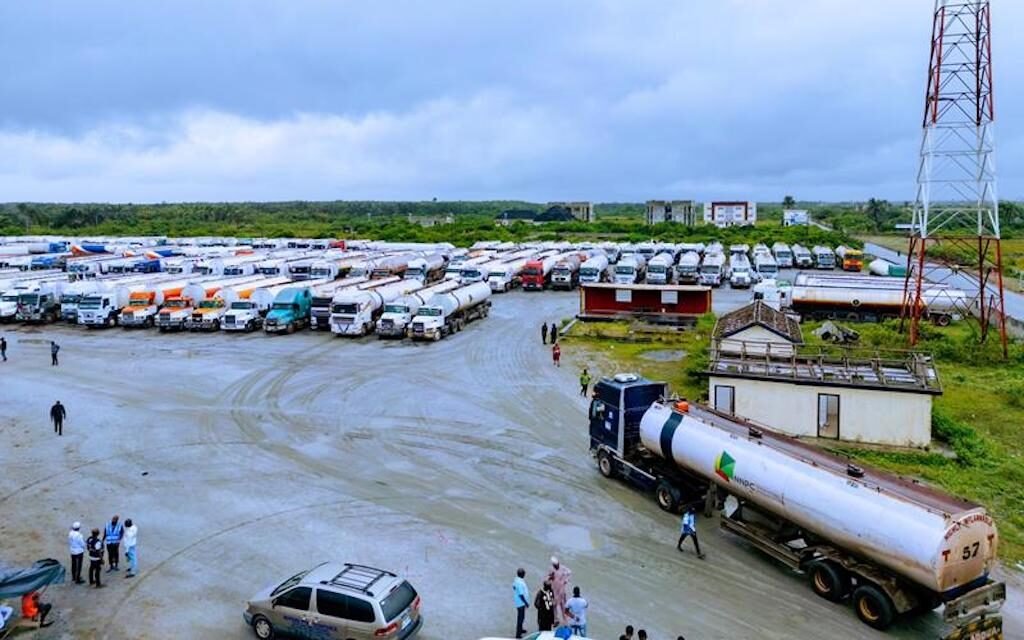
Dangote Petroleum Refinery has reduced its gantry price for petrol to N1,200 per litre and its coastal price to N1,153 per litre, amid ongoing tensions in the Middle East that continue to shape global oil markets.
The refinery disclosed this in a statement shared with PREMIUM TIMES Thursday night.
The adjustment marks a downward review in the company’s pricing structure and is expected to influence fuel supply costs across distribution channels, including depots and retail outlets.
Global oil prices have remained volatile since the outbreak of hostilities involving the United States and Israel on one side and Iran on the other, which has disrupted crude shipments from the Gulf region.
The disruption has pushed Brent crude prices above $100 per barrel, forcing countries to explore alternatives to ensure energy security.
In Nigeria, the spike in global crude prices has translated into higher domestic fuel costs. Petrol, which sold for about N870 per litre before the escalation, now averages around N1,500 per litre in parts of the country.
The Dangote Refinery has repeatedly adjusted its petrol gantry prices in response to fluctuations in global crude markets, with multiple revisions recorded since the crisis began.
Across major filling stations nationwide, petrol prices have hovered around N1,350 per litre and above, contributing to rising transport costs and broader inflationary pressures.
READ ALSO: Dangote Refinery expands African footprint with 456,000-tonne fuel exports
With the latest reduction by the refinery, Nigerians expect a gradual easing of pump prices across filling stations.
Meanwhile, amid the ongoing Middle East crisis, the federal government has intensified efforts to scale up the rollout of Compressed Natural Gas (CNG) vehicle conversion kits as part of measures to reduce pressure on transportation costs.
Officials say recent developments highlight the strategic importance of strengthening domestic refining capacity.
Nigeria’s Minister of Foreign Affairs, Yusuf Tuggar, said the crisis underscores why Gulf oil and gas producers should see Nigeria as a partner, rather than a rival, in efforts to diversify global energy supply during periods of disruption.
Read the full article here