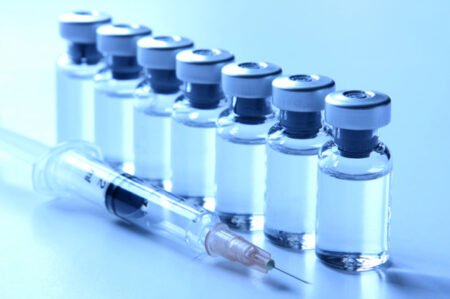










The Democratic Republic of the Congo (DRC) has received an initial allocation of 70,000 doses of the Ervebo Ebola vaccine to support the response to the ongoing Bundibugyo virus disease outbreak.
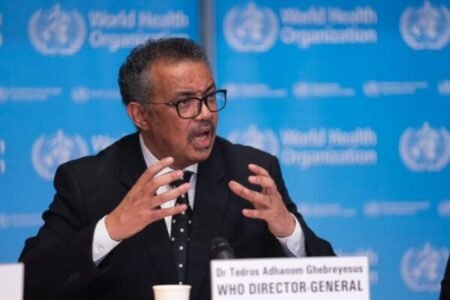
The World Health Organisation (WHO) and the Africa Centres for Disease Control and Prevention (Africa CDC) disclosed this in a joint statement on Thursday.
The allocation followed a request by the DRC government last week for vaccines from the global Ebola virus disease vaccine stockpile managed by the International Coordinating Group on Vaccine Provision (ICG).
Of the 70,000 doses, 20,000 will be used in a Phase III clinical trial to assess whether Ervebo can protect against Bundibugyo virus, while the remaining 50,000 doses will be administered to frontline and health workers in line with recommendations by the WHO Strategic Advisory Group of Experts on Immunisation (SAGE).
Why the vaccine is being tested
The decision to use part of the allocation in a clinical trial reflects the uncertainty surrounding the effectiveness of Ervebo against Bundibugyo virus.


Ervebo is a licensed vaccine recommended for use during outbreaks caused by the Zaire species of Ebola virus. The current outbreak in the DRC, however, is caused by Bundibugyo virus, a different species of the Ebola virus.
WHO said it is not yet known whether Ervebo can protect humans against Bundibugyo virus, although early laboratory and animal studies suggest that it may provide some protection.
The Phase III trial is therefore expected to generate evidence on whether the vaccine can offer protection against the virus and help guide future decisions on its use during similar outbreaks.
WHO said people offered the vaccine, whether as part of the trial or outside it, must be informed about the potential risks, benefits and limitations of using Ervebo against Bundibugyo virus and must provide informed consent.
Outbreak spread
According to the latest WHO disease outbreak update, 4,665 confirmed cases and 2,184 deaths had been reported as of 12 August.
The outbreak has expanded from the Mongbwalu health zone in Ituri Province to 54 health zones across six provinces: Ituri, North Kivu, South Kivu, Haut-Uélé, Tshopo and Bas-Uélé.
WHO described the outbreak as being in a phase of intense transmission and said it was the largest Ebola outbreak ever reported in the DRC.
The outbreak was declared on 15 May and has been driven by factors including population movement, insecurity, artisanal mining activities and cross-border travel involving Uganda and South Sudan.
The scale of the outbreak has consequently increased pressure on health authorities and researchers to deploy available interventions while developing tools specifically suited to the Bundibugyo virus.
Vaccine development
In July, PREMIUM TIMES reported that the first human clinical trial of an experimental Bundibugyo Ebola vaccine had begun at the University of Oxford.
The Phase I trial, known as BD-Ebov, is assessing the safety of the experimental ChAdOx1 BDBV vaccine and its ability to stimulate immune responses in healthy adults.
The vaccine was developed by the University of Oxford’s Oxford Vaccine Group and Pandemic Sciences Institute in collaboration with the Serum Institute of India and the Coalition for Epidemic Preparedness Innovations (CEPI).
Unlike Ervebo, which is licensed for use against Zaire ebolavirus, ChAdOx1 BDBV was specifically designed to target Bundibugyo virus.
The development of a vaccine specifically targeting the virus is considered important because there is currently no approved vaccine specifically for Bundibugyo virus.
The use of Ervebo in the current outbreak could therefore serve a dual purpose; providing protection to health workers who are at high risk of exposure while generating evidence on whether an existing Ebola vaccine can provide protection against another species of the virus.
WHO’s technical advisory group on candidate vaccine prioritisation recently recommended that Ervebo be included in a randomised clinical trial during the ongoing DRC outbreak following a review of emerging evidence on its potential cross-protection against Bundibugyo virus.
Community response
Beyond the vaccines, WHO and Africa CDC said the success of the response would also depend on the involvement of communities affected by the outbreak.
The two organisations welcomed the allocation of the vaccines and supported the DRC’s focus on a community-led approach, which they said would give communities a central role in the response.
Such an approach, they said, would help protect affected populations, save lives and contain transmission while ensuring that people receiving the vaccine understand its potential benefits and limitations.
The ICG partners are WHO, the International Federation of Red Cross and Red Crescent Societies, Médecins Sans Frontières (MSF) and United Nations Children’s Fund (UNICEF), while Gavi, the Vaccine Alliance, provides funding for the global vaccine stockpile.
WHO and Africa CDC said they remained committed to supporting the DRC government to end the outbreak while generating scientific evidence that could strengthen preparedness for future outbreaks.
READ ALSO: DRC Ebola outbreak becomes second-largest on record – WHO
Nigeria’s preparedness
The continued spread of the virus has also raised concerns beyond the DRC because of the potential for cross-border transmission.
Nigeria has subsequently heightened its preparedness, with the Nigeria Centre for Disease Control and Prevention (NCDC) activating its Emergency Operations Centre, strengthening surveillance at points of entry and increasing monitoring across states.
The federal government also identified 21 states and the Federal Capital Territory as being at high risk of Ebola infection following a dynamic risk assessment.
State governments were urged to strengthen surveillance, isolation capacity and infection prevention and control measures.
Discover more from Premium Times Nigeria
Subscribe to get the latest posts sent to your email.
Read the full article here