









0
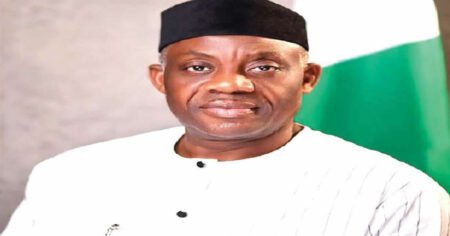
Comrade (Prince) Williams Akporeha, President, National Union of Petroleum and Natural Gas Workers (NUPENG), in this interview with SUNDAY INDEPENDENT, throws light on the myriad of challenges that the Oil and Gas sector is faced with, and points the way forward to developing the value chain schemes in the industry. Excerpt:
You were at the 2025 ILC recently. Can you be specific on your take home from the conference?
Yes, I was at the conference were lots of resolutions were taken to bring together global, regional, and national actors to advance resolutions through policy and action coherence for their respective member States. This year’s session of the International Labour Conference was an opportunity for Government, employer and worker delegates from the ILO’s 187 Member States to addressed important world of work matters such as new international standards on the protection of workers against biological hazards in the working environment, decent work in the platform economy and innovative approaches to promoting transitions from the informal to the formal economy. My take home from the conference was I attended the sessions where key resolutions were made that would strengthen decent work and social security in respective member states. Part of the sessions adopted Biological Hazards in the Working Environment Convention, 2025 (Convention No. 192), which was the 1st international instrument specifically addressing biological hazards in the working environment. Highlight of the resolution was the call on Member States to formulate national policies & adopt measures on occupational safety and health that include the prevention and protection against biological hazards. One of the sessions also approved Amendment to Maritime Labour Convention, 2006 (MLC). The changes calls for the right to shore leave and repatriation, and call for recognising seafarers as key workers. The Maritime Labour Convention is a binding international law for ensuring minimum working and living standards for all seafarers on ships. The Decent Work in the Platform Economy held its 1st standard-setting discussion on decent work in the platform economy, an important step toward improving rights and conditions for digital platform workers. Resolution on Reducing Informality was adopted by the ILC to reduce informality and support the transition to formal work. The resolution calls for urgent action to improve working conditions, extend social protection, and create decent jobs, especially for those most affected by informality.
The World leaders call for urgent action to advance social justice at the Inaugural Forum of the Global Coalition for Social Justice. In my view, no country can resolve the dilemmas that affect the international society on its own, rather government of various countries need to look for best practices and experiences wherever they are. I think the Global Coalition will be a central tool for building a transition with social justice, decent work, and poverty eradication.
What do you think the Federal Government should do to diversify the non-oil sector to compliment the oil & gas sector to boost the nation’s needed industrialisation?
The fact that oil only contributes about 9 per cent to the GDP while it contributes over 90 per cent of our foreign exchange earnings is is a contradiction to what analysts expected of Nigeria. This is because Nigeria is not developing the value chain in the oil and gas industry. If the country had developed the value chain of crude oil, it would have brought more developments as the value chain is enormous. The way we can develop other sectors is the money from oil. Our advocacy is that Federal Government should put plans in place so that between now and say 5 to 10 years, Nigeria will be producing up to three million barrels of crude oil per day. The money that you get from the extra one million barrels per day, you can set it aside to do two things; to be invested in renewables as we are moving into energy transition and to be developing other sectors like agribusiness, which is the key that will unlock our development. If Nigeria can fix the critical missing link in its effort to develop the country’s Midstream & Downstream gas sector to mobilise funds for the provision of the critical infrastructure for the gas industry and the proceeds used to develop the agribusiness, the road to massive economic revival is near. This can be made possible if Federal Government can create enabling environment to attract local, foreign investment in oil & gas industry. For effective agribusiness, Nigeria needs a deliberate policy that will do backward integration to develop the value chain. That is the fastest way to grow the economy. Our take is that we must generate enough money from oil and gas sector to develop other sectors and the fastest sector to develop is the agribusiness sector, which contributes largest to the nation’s Gross Domestic Product (GDP). If we develop that sector, it is going to create a lot of jobs. We need to develop the value chain around the agric sector.
What is the position of your union on insecurity in Nigeria? Are your members still exposed to danger in the course of performing their duties?
Currently, insecurity in Nigeria is a huge challenge, and it is doing a lot of harm to the economy. We are advocating and urging government to step up the game. This is because to the investors, it would be preferable to go to neighboring countries that are relatively secured instead of investing in Nigeria. We advocate that government must look at the peculiarities. If Nigeria wants to increase royalties as other countries, the government must create the enabling environment to attract investment. Nigeria is having challenges securing the pipelines, securing the offshore and onshore installations. We are exposed to insecurity. Our road network still does not support a 21st Century economy. Apart from renewed vigor in the rail system, the rest of our transportation infrastructure belies our developmental aspirations. However, as a union we are trying to partner with security agencies and give them all the maximum support they require.
What advice that can spur growth and development of the Nigerian economy does the leadership of NUPENG has to give the Federal Government?
NUPENG in collaboration with other key players in the nation’s economy are imploring the Federal Government to focus more on four key areas to promote sustainable growth and prosperity: achieving economic stability, leveraging the digital revolution, making development greener and more sustainable, and investing in people, saying that it is the private sector, rather than government, that can spur growth and development of the Nigerian economy. We believe it is the best way for Federal Government to speed recovery, and to build a more resilient and inclusive economy is to partner with the private sector to strengthen and diversify the nation’s export revenues and unleash its full potential to create jobs opportunities for Nigerians.
On the issue of unemployment in the country, could you, please, suggest how government can enhance productivity to boost job creation?
We suggest that the three tiers of governments, federal, states and local governments should give more attention to technical and vocational training to boost the educational system. That is the path that can help Nigeria to maximally deal with the issue of unemployment. We have a large population of youths out there unemployed. With the high rate of unemployment, the nation is sitting on a keg of gunpowder. The three tiers of government, Federal, states and Local governments, should focus on Technical and Vocational Education and Training (TVET) to boost skills development project. That is the pathway to take the youths out of the labour market. Those that would be trained will either become employers of labour themselves because the skills they would be trained in are what the industry needs to get jobs.
Read the full article here