




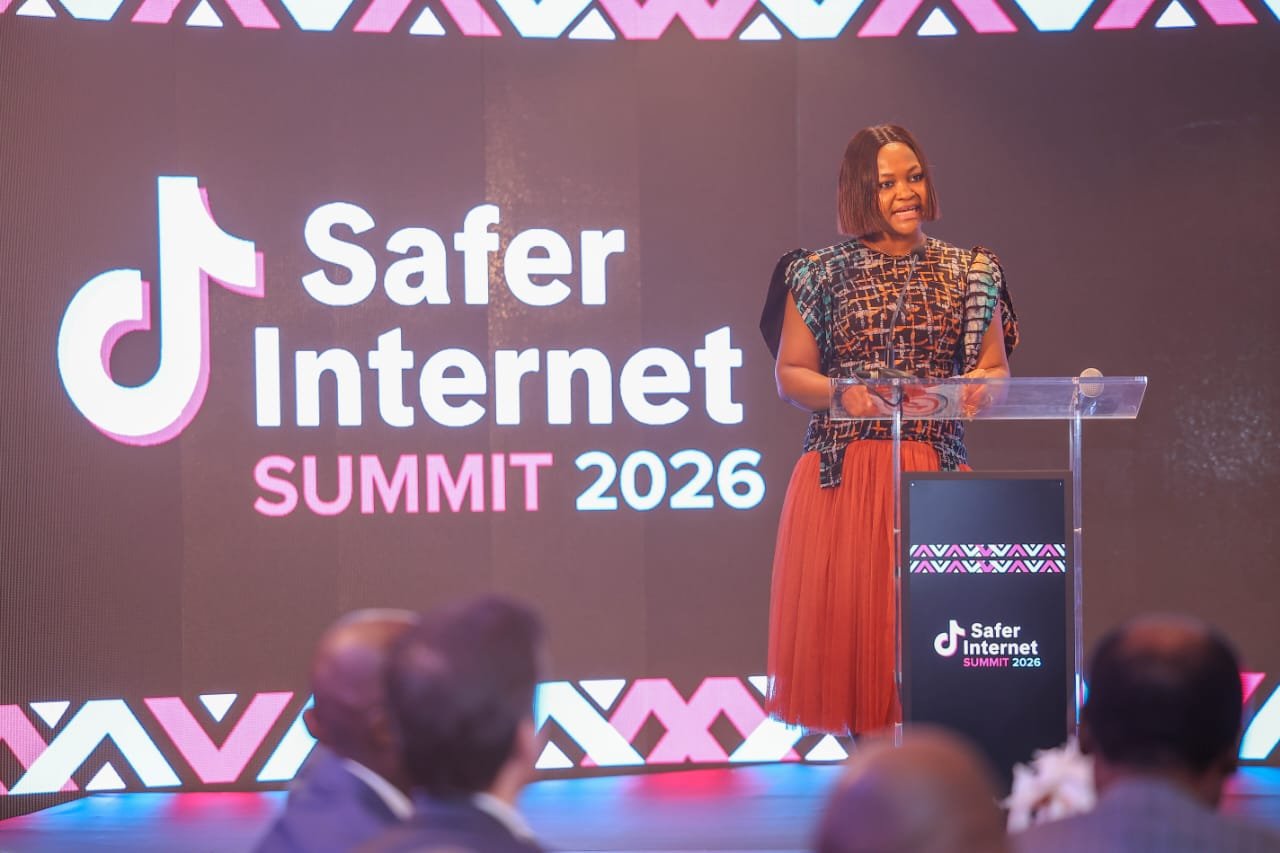
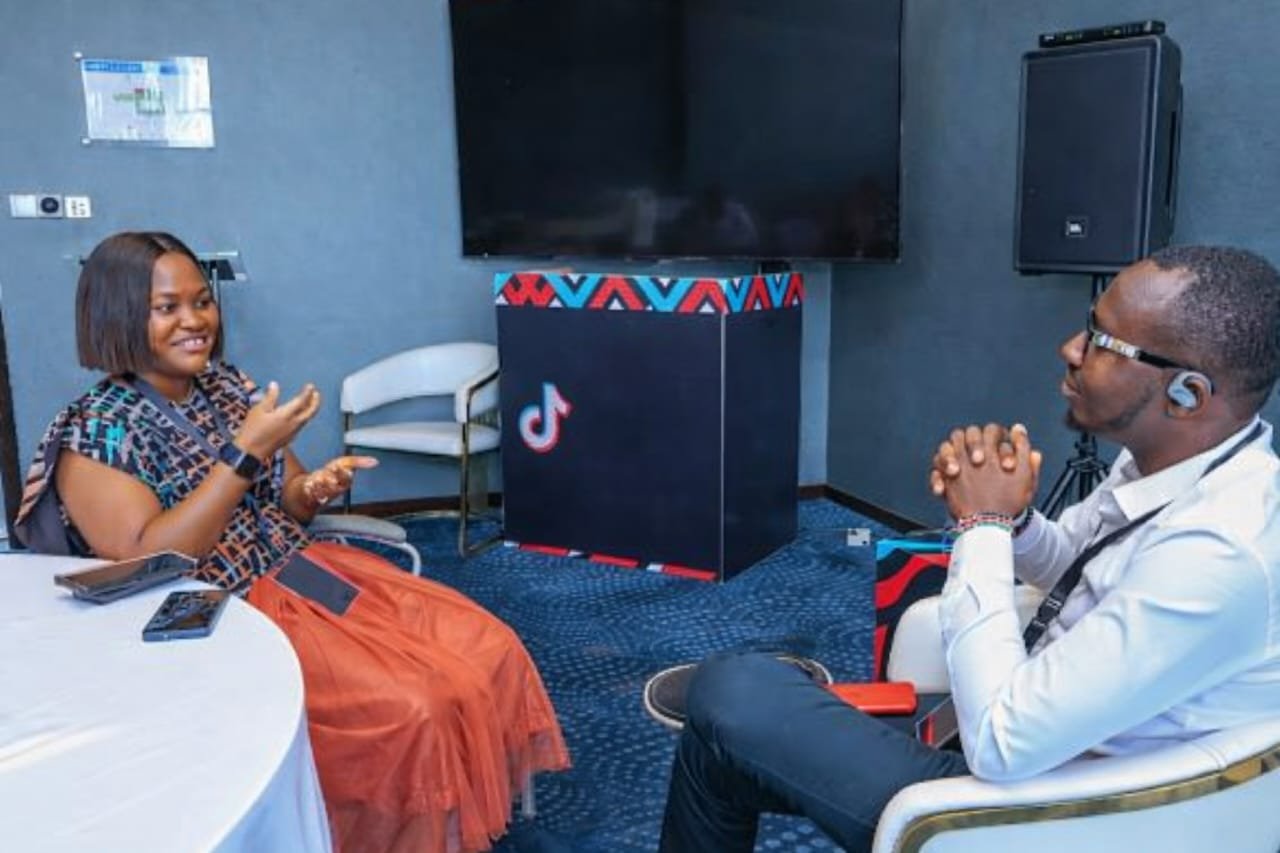
Tokunbo Ibrahim is TikTok’s Head of Government Relations and Public Policy for Sub-Saharan Africa. Last week, on the sidelines of the 2026 TikTok Safer Internet Summit in Nairobi, Kenya, she spoke with PREMIUM TIMES’ Business Editor, Oladeinde Olawoyin, sharing insights on how the platform navigates the complexities of Nigeria’s regulatory environment.
PT: As a major stakeholder, what’s your major takeaway from this summit, and how might that affect Nigeria as a market?
Tokunbo: This is the third summit we’re having. The first one was in Ghana, the second one was in South Africa, and now we are having it in Kenya. And the idea behind the summit is to have conversations, not just with government stakeholders — right, they are a very big part of it — but also hearing like civil society and creators’ perspectives so that we can have holistic conversations on safety, acknowledging that safety is not a one pillar, or one private sector or public sector problem that can be solved alone.
That being said, I know the importance of the regulators that we have back in Nigeria. At the second edition held in South Africa, we had representatives from the Office of the National Security Adviser. We had representatives from the National Information Technology Development Agency (NITDA) and the Films and Censor Board.
And this year, again, wanting to improve on the successes of last year, not only do we have representatives from the Film and Censor Board, as well as NITDA present, but we also thought it was important for the audience, the other regulators, to hear from the Nigerian regulators. Given that we are the giant of Africa, we also had NITDA make a presentation on AI policy, which is the theme of this year’s summit. So not only did NITDA give a presentation, but they were also part of a panel. So their voice is very important. I don’t think we can have AI conversations without NITDA. And I do understand the direction and drive of Nigeria in AI right now.
We have the Minister of Communications, Honourable Bosun Tijani, who is also very passionate about AI. And we know that AI is, we can’t even say it’s the future anymore, it’s here, right? And that’s why we’re having those conversations. But I guess my point is that those conversations cannot be complete without Nigerian stakeholders and Nigerian voices. And that’s why we ensure that not only were they invited as participants or invited as part of the audience, but they are actually participating in educating all the attendees and telling them where they are and the next direction for AI
PT: You said Nigeria is so central to TikTok’s operations and existence, not just in Africa, but even in the global space. Why has the summit not been held in Nigeria? Should we expect the next edition in Nigeria?
Tokunbo: There are actually plans to host an edition in Nigeria soon. But I guess this year, Nigeria wasn’t the right fit because we have a number of other plans for Nigeria.
So in April, we will be doing a safety workshop and campaign with the Office of the National Security Adviser. We also have some other plans with the Film and Censor Board. And we just thought that, since those plans already exist so close to when the summit will happen, maybe we should do the summit in another market and focus on the safety initiatives and campaigns we have planned for that market.
In addition to that, we also have something planned for SMBs, where we’ll be educating SMBs on how to grow their businesses, digital literacy, and how to stay safe online. So we already have quite a few plans for Nigeria. That’s to say that in the coming years, the summit will also be held in Nigeria.
PT: Nigeria has a data privacy act, and you talked about partnering with NITDA, but I didn’t hear you say anything about NDPC. Is there any partnership with the agency on how to educate Nigerian youth?
Tokunbo: And we are just finalising our conversations with the NDPC on privacy initiatives that we want to collaboratively do. So the reason I didn’t highlight it is that those conversations aren’t 100 per cent finalised yet. So a partnership will definitely happen. It’s just the details of those partnerships that are still being discussed.
One major issue Nigerian TikTokers complain about is the perceived discrepancy between TikTok’s monetisation programme and the funds received by others outside Nigeria, despite the work they put into TikTok… any thoughts on this?
Tokunbo: So I think there is a misconception around, and I don’t really like to mention other platforms, but I think TikTok is a fairly young platform. So when the concept of monetisation arose, or when people began to understand what monetisation meant, they understood it in the way that, I guess, some other platforms do monetisation.
So when people hear monetisation, that’s the thing that immediately comes to mind. But at TikTok, we have various ways in which creators can earn from the platform, in which creators indeed earn from the platform. And one thing I would first like to clarify is the creator fund, which I guess is sometimes popularly referred to, that we have in other markets but don’t have in Nigeria. It was actually only started in 2023, and it only exists in seven markets because it’s still being test-run.
So it’s not like Nigeria or Africa was excluded; it’s just that it’s in the test-run phase. But in the absence of the creator fund, creators can still make money on the platform in other ways. So we have live gifting, which is essentially you going live, and your creators, followers, or viewers can gift you.
We have video gifting as well, where creators like your audience, like your videos, they gift you, like this is actually money that you withdraw, right, when you get gifted. We also have a subscription. You can decide that you have a number of followers who like your content and want to pay a monthly subscription fee. So those are some standard ways. There’s also the flip side of it, right? TikTok is constantly creating opportunities for brand partnerships.
So a brand wants to partner with the creator, the creator has gotten famous on TikTok, and therefore, essentially because of that recognition that TikTok has given you, you then get the opportunity to partner with various brands, which is money in your pocket. You have said you like my dress, this dress I discovered on TikTok, right? And this is a Nigerian brand. As I have seen people here today from South Africa, from Ghana, they’ve all said they like my dress. I’ve shared the TikTok link with everyone. So these are also businesses that are expanding outside the four corners and four shores of Nigeria as a result of the influence of TikTok. So people get to build their growth, their businesses on TikTok.
They also get advice on how to take their business to the next step. I think these are still ways to put money in your pocket. So I would still consider them as monetisation and the monetisation opportunities created by TikTok.
PT: What advice would you give to me to ensure that I monitor what my teenager, maybe a 15-year-old teenager, is doing on TikTok? What tools are available to me to monitor?
Tokunbo: So we do have quite an extensive range of safety tools. We also will have what we call parent pairing, which essentially gives parents and guardians the ability to pair their TikTok with their children’s own. And I should also mention that teens’ experience on TikTok is very different from that of 18+ users.
So even though TikTok is a 13+ app, what a 13-year-old sees, a 15-year-old sees, a 16-year-old sees, and an 18-year-old and above sees on TikTok is a completely different type of TikTok. And even the privacy settings: if you’re under 18, you can’t go live or get DMs from people you don’t know. So there are a lot of privacy settings that already exist.
There’s also parent pairing, which gives the ability to do things like set screen limits, time limits for your kids, but also a wait time. You can decide that, actually, Mondays to Fridays, I don’t want my kids to be on TikTok. You can do that from your own phone. You can decide that, actually, on Saturday I only want them on TikTok for two hours, right? So you can do that on your own phone. We also have resources on the platform, mental health, like TikTok is investing quite a bit in improving the experience for youths, for parents who also understand and can support their teens on the platform. And because we understand the importance of feedback, it’s the reason why we have a Youth Advisory Council, where we have representatives of youths from across the world, including Nigeria.
PT: What is your experience engaging with the Nigerian government in terms of government/official requests to bring down certain content? And where do you draw the line between the government’s claims on safety and security on one hand, and freedom of expression on the other hand?
Tokunbo: So, actually, we do encourage governments to share takedown requests with us, right? Because the takedown request helps us to jointly keep the platform safe. It also helps us to train our algorithm. But we also have partnerships with the government to onboard them to our TikTok safety enforcement tool, which essentially lets them report content. Regarding your question about drawing the balance, we have received takedown requests, but everything must be viewed in line with our community guidelines. So, if we receive a takedown request, we don’t take it downn just because it’s coming from the government. We assess it in line with our community guidelines. If we find it to be violative of our community guidelines, then we take it down.
READ ALSO: TikTok announces additional $200,000 investment in AI, Media Literacy for Sub-Saharan Africa
If we don’t find it to be in violation of our community guidelines, we inform the government that it’s not in violation. I will not call this the only exception. Of course, we also consider local laws and regulations. So, if they send us a takedown request and they say that it’s in violation of, say, Nigerian law, we will require them to, one, tell us what law they are stating that it’s in violation of. And we will review the law to indeed confirm that it’s in violation of the local law. If we find it to be violative, we take it down.
Where we need further assessment, we will confer with our external legal counsel to indeed confirm whether it’s in violation or not. And then, if we find that it’s in violation, we take it down. If we find that it’s not in violation, we communicate that to the government.
PT: Let’s talk sanctions. Have you ever been sanctioned by the Nigerian government? And if the government ever did sanction you, how did you handle it?
Tokunbo: What I will say is that in dealing with the Nigerian government, what I have found is that proactive communication goes a long way and it is instrumental to avoiding any sanctions. So instead of reacting to situations, I have learned to always proactively communicate with them, whether that is proactively sharing a transparency report in terms of what type of content we’ve taken down from the platform, or what type of trends we are seeing on the platform and therefore we are working on it. So if we proactively communicate to them or if I proactively communicate to them, that we are aware of this trend, we are working on it, we’ll provide feedback to you, they can see that we are active, they can see that we are communicating.
They also have information to share with their superiors. So there is no reason for them to impose sanctions because they are also aware that online safety is a collaborative effort.
Read the full article here