





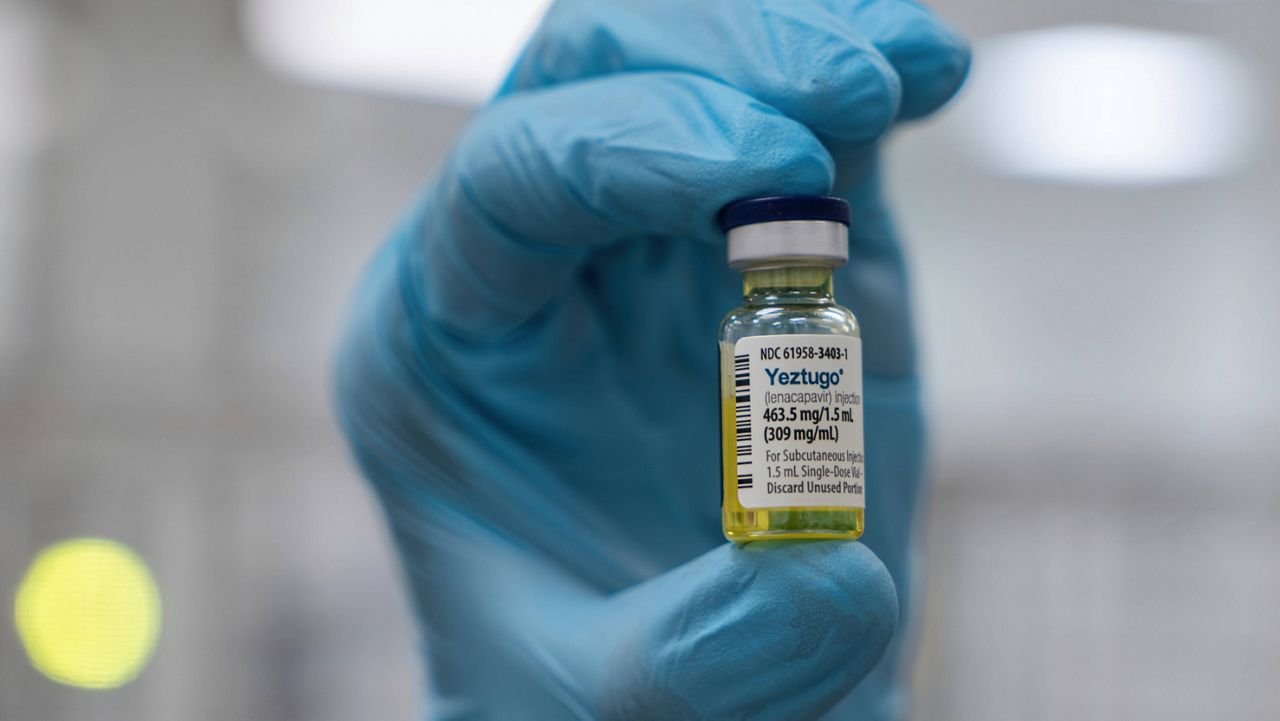
Nigeria is preparing to introduce lenacapavir, a new twice-yearly injectable drug for HIV prevention that global health experts say could significantly strengthen efforts to curb new infections.
The injection, which offers an alternative to daily oral pre-exposure prophylaxis (PrEP), is expected to arrive in Nigeria in March 2026, according to the National Agency for the Control of AIDS (NACA).
The agency says regulatory clearance has already been secured from the National Agency for Food and Drug Administration and Control (NAFDAC), while readiness assessments have been completed in 10 states, including Lagos, Kano, Akwa Ibom and Anambra.
The introduction follows a landmark recommendation by the World Health Organisation (WHO) in July 2025 endorsing injectable lenacapavir as an additional HIV prevention option.
What is Lenacapavir?
Lenacapavir is a long-acting antiretroviral medicine that targets the HIV capsid, a protein shell that protects the virus and plays a key role in viral replication.
By interfering with this capsid, the drug prevents HIV from replicating and establishing infection after exposure. Unlike daily oral PrEP, which must be taken consistently to remain effective, lenacapavir is administered as an injection once every six months.
This reduces the burden of daily medication to just two doses per year.
According to WHO, the long-acting injectable offers a “highly effective, long-acting alternative” for people at substantial risk of HIV infection, particularly those who face challenges with adherence, stigma, or limited access to health services.
Global backing, WHO recommendation
Lenacapavir gained international attention after trial results demonstrated substantial protection against HIV infection among high-risk populations.
In July 2025, the WHO formally recommended the injectable as an additional PrEP option during the International AIDS Society Conference on HIV Science in Kigali, Rwanda.
The agency stressed that the injection should complement and not replace existing prevention tools such as oral PrEP and condoms. The recommendation came at a time when global HIV prevention efforts were showing signs of stagnation.
According to the WHO, 1.3 million new HIV infections were recorded worldwide in 2024, while approximately 40.8 million people were living with HIV. About 630,000 people died from HIV-related causes that year, with nearly 65 per cent of those living with HIV residing in the WHO African Region.
UNAIDS also welcomed the development, describing innovative prevention tools as essential to reversing new infections globally.
Affordability breakthrough
Despite its scientific promise, lenacapavir’s initial cost created major access concerns. In high-income markets, the drug’s annual list price was estimated at around $28,000 per person per year.
However, in September 2025, on the sidelines of the 80th United Nations General Assembly, Nigeria joined other countries in announcing a major price-reduction agreement at a Clinton Global Initiative meeting.
Under the arrangement, the cost of the twice-yearly injection was reduced to about $40 per person per year for eligible low- and middle-income countries.
Following the rollout of the drug in South Africa, Eswatini, and Zambia, marking the first public use of the twice-yearly injectable in Africa, Nigeria announced plans to adopt the drug in December 2025.
Data shows the drug reduces HIV transmission by 99.9 per cent, making it one of the most effective prevention tools to date.
Why it matters for Nigeria
HIV remains a significant public health issue in Nigeria. According to data cited by NACA and global health partners, HIV prevalence among Nigerians aged 15 to 49 stands at 1.3 per cent, with an estimated 1.9 million people living with the virus.
Nigeria has made progress in expanding treatment. Globally, the WHO reports that 31.6 million people were receiving antiretroviral therapy (ART) in 2024, up from 30.3 million in 2023.
In Nigeria, more people living with HIV are enrolled in care than ever before, and the country has recorded a decline in new infections over the past decade. However, prevention gaps remain. Daily oral PrEP, which has been available for more than a decade, requires strict adherence.
Globally, uptake has been limited, partly due to stigma, daily pill fatigue, and access barriers. Long-acting injectables like lenacapavir could help address these challenges by offering a more discreet and convenient option.
Populations expected to benefit most include adolescent girls and young women, sex workers, men who have sex with men, people who inject drugs, and other key and priority populations identified by WHO.
Nigeria’s rollout plans
According to NACA, preparations for rollout are ongoing. The agency says landscape and readiness assessments have been completed in selected states to evaluate service delivery capacity. A national training of trainers has also been conducted, followed by step-down training for healthcare workers in implementation states.
Information and communication materials are also being developed to support awareness and demand generation ahead of distribution, according to the agency.
READ ALSO: Court jails two over adulterated alcohol production in Lagos
NACA’s Director-General, Temitope Ilori, has described the introduction of lenacapavir as part of an effort to build a more sustainable and self-reliant HIV response, particularly amid global funding uncertainties.
The federal government has also approved additional funding to support uninterrupted HIV prevention and treatment services.
The expected arrival of lenacapavir in March 2026 marks an important milestone in Nigeria’s HIV prevention efforts. With twice-yearly dosing and the reduced price for low- and middle-income countries, the injection could expand access to protection for people who struggle with daily medication.
Read the full article here