








1
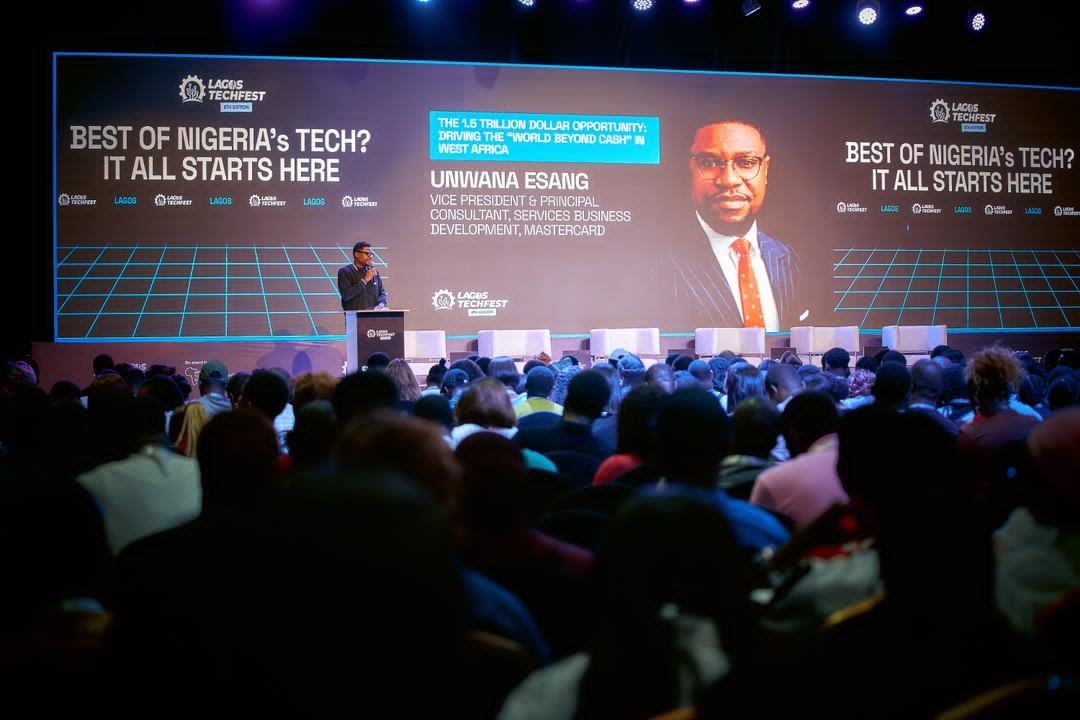
Mastercard returned to the Lagos Tech Fest 2026 as a Gold Sponsor, reinforcing its commitment to building an inclusive digital economy in Nigeria and across Africa.
The sixth edition of the event, organised by Eventhive, Africa’s leading B2B2C event servicing company with a strong portfolio across key sectors and six major cities, drew over 3,000 attendees, 70 speakers, and more than 1,000 companies from 25 countries, on February 17 and 18, 2026.
For Mastercard, Lagos Tech Fest offered a strategic engagement point, providing direct insight into how digital payments are being adopted on the ground where SMEs are scaling, where fintechs are innovating and where friction still limits participation.
These insights directly shape how Mastercard expands acceptance, strengthens infrastructure and enables broader economic inclusion across the continent.
“Nigeria sits at the centre of Africa’s digital transformation. It is one of the continent’s most dynamic innovation hubs, where fintech energy, entrepreneurial ambition and real-world commerce intersect. Events like Lagos Tech Fest are therefore not symbolic touchpoints.”
“They are opportunities to listen, collaborate and translate innovation into inclusive economic activity,” said Dr. Folasade Femi-Lawal, Country Manager, West Africa at Mastercard.
Central to Mastercard’s engagement at this year’s event was the $1.5 trillion opportunity the company projects for Africa’s digital payments economy by 2030.
According to Mastercard’s Economic Outlook 2025 research, this growth will be driven by internet penetration expanding at 20% annually and financial inclusion rising by 6% per year.
In Nigeria, the momentum is already visible: data from the Nigeria Inter-Bank Settlement System shows that electronic payment transactions reached ₦284.99 trillion in the first quarter of 2025 alone, a 17.7% year-on-year increase.
Point-of-sale transaction values rose to ₦10.45 trillion in Q1 2025, a 209% increase year-on-year, reflecting the expanding role of SMEs, informal merchants, and service providers in the digital economy.
To capture a meaningful share of this opportunity, Mastercard has identified three priorities for Nigeria: expanding affordable digital acceptance, strengthening trust, and enabling interoperable cross-border payment infrastructure, so that payments work easily and securely wherever commerce happens, from urban retail to informal markets.
Bringing Small and Micro Businesses into the Digital Economy
Small and micro businesses are the backbone of Nigeria’s economy, and expanding digital acceptance for this segment is central to Mastercard’s work in the market.
Mastercard’s SME Confidence Index for Nigeria found that 73% of SMEs plan to expand their digital payment capabilities across various channels to drive business growth.
Mastercard is responding to this ambition by making acceptance simple, affordable and accessible through device-based solutions that allow merchants to accept payments using tools they already own, including Tap on Phone and QR Pay by Link.
In Nigeria, Mastercard’s collaborations with UBA and Wema Bank have enabled 1.8 million SMEs and gig workers to accept seamless payments using low-cost, device-based acceptance solutions including QR-on-Card while improving transaction visibility and access to formal financial services.
Through a partnership with KaiOS, Mastercard is also extending digital acceptance to merchants using affordable feature phones, ensuring that participation is not limited to smartphone users or urban centres.
“When payments work easily and securely everywhere commerce happens, businesses can scale without rebuilding payments, security, and settlement systems at every stage, and participation follows,” Dr Femi-Lawal added.
Supporting Nigerian Fintechs To Scale Beyond Borders
With a growing number of Nigerian fintechs building for regional and global markets, Mastercard’s work at Lagos Tech Fest also centred on equipping startups with the foundational capabilities needed to compete sustainably.
Through platforms including Start Path, Product Express and Engage, Mastercard connects innovators to global expertise, accelerates technology integration, and provides access to market-ready infrastructure that reduces time to scale.
This growth is underpinned by built-in security. Mastercard’s cybersecurity solutions, including Decision Intelligence, RiskRecon, Cyber Secure, tokenisation and biometric authentication are embedded directly into the network, helping businesses detect fraud in real time, strengthen cyber resilience, and meet global security standards without rebuilding defences independently.
Strengthening Cross-Border Connectivity
As African businesses grow, the ability to move money seamlessly across borders is essential to trade, entrepreneurship and investment. Mastercard is strengthening this connectivity through Mastercard Move, which supports secure and interoperable money movement across more than 200 countries and territories. In Nigeria, collaborations with Fidelity Bank to launch Fidelity Send and with Access Bank to introduce Access Africa are enabling near real-time cross-border payments that improve transparency, reduce friction, and improve liquidity for businesses operating internationally.
“What stands out most is the shift from experimentation to execution. Nigerian innovators are increasingly focused on solving real economic challenges digitising commerce, enabling identity, strengthening trust frameworks and scaling solutions that integrate into everyday financial activity.
Nigeria’s trajectory reinforces its role as a key driver of Africa’s digital future, combining local ingenuity with global connectivity to shape the next phase of economic growth,” Dr Femi-Lawal.
Mastercard’s participation at Lagos Tech Fest 2026 forms part of its broader commitment to building thriving financial ecosystems across Africa, supporting entrepreneurs, and opening new possibilities for participation in the global economy.
Read the full article here