








The Nigerian government has announced plans to commission three major cancer facilities in May 2025.
The Coordinating Minister of Health and Social Welfare, Muhammad Pate, disclosed this on Monday, while speaking on the Sunrise Daily programme on Channels Television.
Mr Pate, a professor said all the centres will be ready with the necessary equipment to treat cancer.
“For the first time in Nigeria’s history, six major cancer infrastructure, and equipment investments were approved by Mr President early last year, of which they are already underway, and three of them will be ready by May 2025, to be commissioned,” he said.
Mr Pate further elaborated on the services that will be provided, emphasising the importance of advanced care for cancer patients in Nigeria.
“Those who are suffering from cancer will need this high level of care. It is a tertiary service, where we will have the linear accelerators, the brachytherapy, and other diagnostic equipment to allow them afford good quality cancer care in Nigeria in those six facilities.”
Cancer Care in Nigeria
Cancer remains one of the most lethal diseases globally, characterised by abnormal cell growth that can invade and spread to other parts of the body. It can develop in nearly any organ or tissue and is often classified based on the type of cells or organs affected.
According to the World Health Organisation (WHO), cancer is the second leading cause of death worldwide.
Cancer rates are rising globally, but there are significant disparities between developed and developing countries like Nigeria.
The Nigerian government, in May highlighted the country’s focus on a comprehensive cancer strategy, which includes cancer prevention, treatment, palliative care, research, and improved governance.
Healthcare facilities
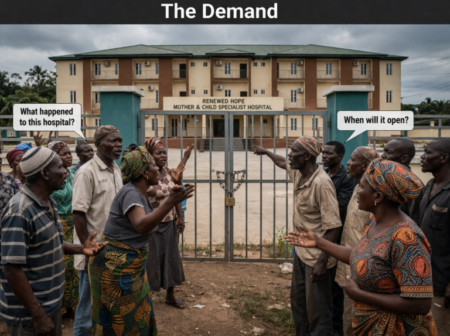
Mr Pate stated that over the past year, the federal government has significantly expanded healthcare facilities in certain states across the nation.
“We have expanded the federal facilities in the last one year including the Federal Medical Centre, Epe, in Lagos, Ekiti, which is a new one and the President just approved another new one at the Federal Teaching Hospital in Akure, Federal Medical Centre in Southern Kaduna, in Kafanchan,” he said.
He noted that the hospitals in Nasarawa have seen upgrades, with the Specialist Hospital in Keffi now being transformed into a teaching hospital, while the Federal University of Health Sciences in Azare has been established as a teaching hospital.
Mr Pate mentioned that the government also flagged off 10 major cancer diagnostic centres across the country five months ago.
He added that 201 tertiary healthcare facilities have undergone infrastructural upgrades and received new equipment, including Magnetic Resonance Imaging (MRI) scanners, Computed Tomography (CT) scanners, and anaesthesia equipment.
In response to the growing population and the strain on healthcare facilities, Mr Pate explained government’s efforts to expand the capacity of tertiary hospitals in the country.
“We are expanding the tertiary hospitals’ capacity in Nigeria because, for a very long time, the capacity that we had when we were 150 million people is what we still have when we are about 230 million people, which is not enough.”
Mr Pate reiterated the efforts planned for 2025, emphasising that investing in both human resources and training is a key component of healthcare development.
“We are going to do more in 2025, but the human resources and the training is also an important element that goes beyond the primary health care, and the government is investing in it,” he said.
Read the full article here