





1
Fragmented planning frameworks and inconsistent government policies are undermining Nigeria’s transportation system and worsening congestion, inefficiency and regional imbalance, Professor Samuel Iyiola Oni of the University of Lagos has said.
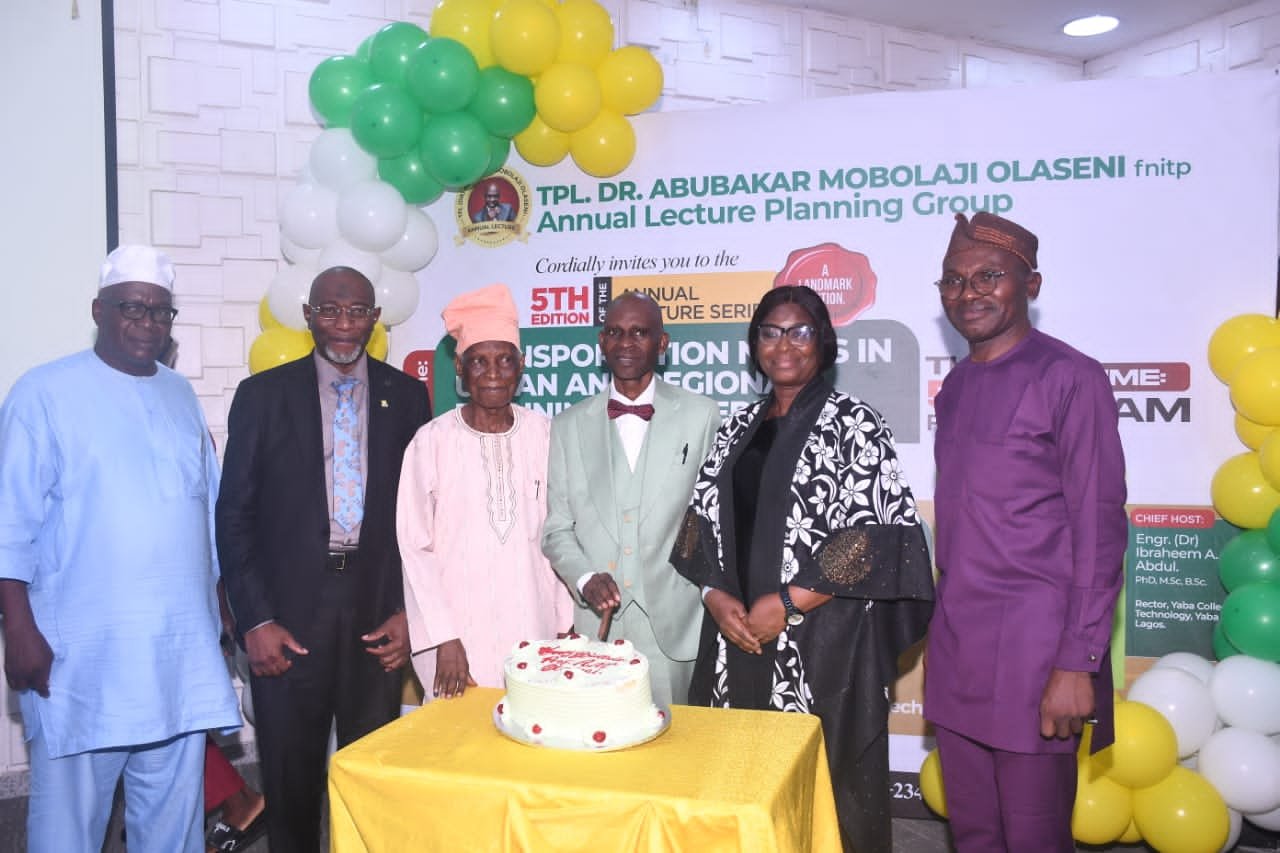
Speaking as Guest Lecturer at the 5th edition of the TPL (Dr.) Abubakar Mobolaji Olaseni FNITP 5th Annual Lecture Series held at Yaba College of Technology, Yusuf Grillo Auditorium, on Wednesday, Prof. Oni warned that transportation planning in Nigeria is often carried out within overlapping institutional mandates, resulting in duplication of projects, conflicting investments and poor utilisation of limited resources.
According to him, frequent shifts in political priorities and the abandonment of long-term transport master plans have weakened policy continuity and eroded investor confidence in the sector.
He noted that rail, road and inland water transport projects are commonly pursued as stand-alone initiatives rather than as components of an integrated national mobility strategy, thereby limiting their overall impact on economic growth and spatial development.
Prof. Oni further observed that weak enforcement mechanisms, fragmented policy coordination and chronically underfunded planning agencies continue to constrain effective transportation development across the country.
He added that the absence of coherent national transport planning frameworks has made synchronised implementation across federal, state and local levels difficult.
“The transportation nexus is not merely a technical challenge but a spatial one,” he said, stressing that the persistent disconnect between transport investment and regional planning has contributed significantly to urban congestion, regional disparities and systemic inefficiency.
He advocated the adoption of coherent and stable transport policies, stronger institutional coordination, multimodal transport development and the deployment of modern planning tools as critical steps towards reforming Nigeria’s transport sector.
In his remarks, the Rector of the College, Dr. Engr. Ibraheem Adedotun Abdul, described the lecture series as a vital platform for advancing policy-relevant scholarship, while commending Dr. Olaseni’s enduring contributions to academic quality, institutional leadership and national development.
He recalled Dr. Olaseni’s tenure as Deputy Rector (Academics), describing it as a period of shared leadership, institutional calm and strengthened academic standards.
According to the Rector, Dr. Olaseni played a key role in reinforcing internal quality assurance processes and ensuring that academic programmes remained credible, relevant and aligned with national development needs.
Dr. Abdul also highlighted the significance of the lecture theme, “Transportation Nexus in Urban and Regional Planning in Nigeria,” describing transportation as central to sustainable urban growth, economic development and social inclusion in the face of rapid urbanisation.
The Rector commended the Guest Lecturer, Professor Samuel Iyiola Oni of the University of Lagos, for his scholarly contributions to transportation, logistics and spatial planning, expressing confidence that the lecture would stimulate informed dialogue and practical solutions to Nigeria’s urban challenges.
Delivering the Chairman’s address on behalf of a former Rector of the College, Dr. (Mrs.) Margaret Kudirat Ibiyeye-Ladipo, Dr. Moruf Adebakin described the occasion as an opportunity to reflect on the role of leadership continuity, institutional memory and shared values in strengthening higher education systems.
He noted that Dr. Olaseni’s career exemplified how sustained policy focus and principled administration could enhance academic quality, staff development and institutional stability.
According to him, Dr. Olaseni’s years of service were marked by deliberate efforts to strengthen governance structures, mentor academic staff and promote evidence-based decision-making within the College.
Dr. Ibiyeye-Ladipo recalled her close working relationship with Dr. Olaseni, during her tenure as Rector, a period she said witnessed significant improvements in infrastructure, academic delivery and staff-student relations.
Beyond physical development, she emphasised that Management prioritised trust-building, openness and inclusive governance as critical elements of a functional academic environment.
Central to Dr. Olaseni’s legacy, the Chairman noted, was his strong advocacy for internal quality assurance and academic standards.
As a former Deputy Rector (Academics) and head of key committees, he played a leading role in strengthening accreditation processes, aligning curricula with NBTE requirements and ensuring programme relevance to national and industry needs, thereby positioning Yabatech as a competitive institution within Nigeria’s higher education framework.
Read the full article here