






2
A corrosion and materials engineering expert, Prof. Olayide Adetunji, has warned that failure to properly manage corrosion in metallic materials could trigger structural failures, industrial accidents and environmental disasters across critical sectors of the economy.
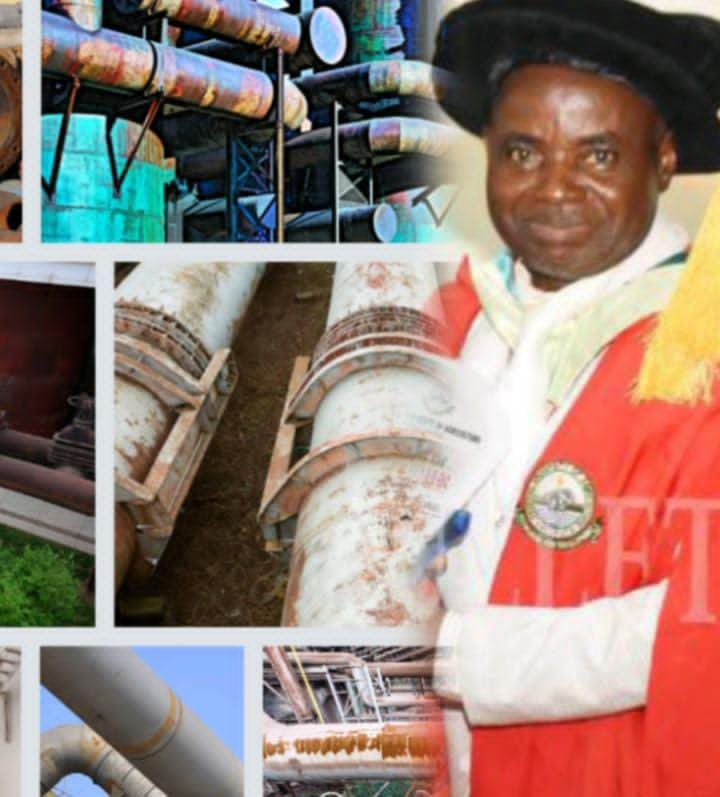
Delivering the 109th Inaugural Lecture of the Federal University of Agriculture, Abeokuta (FUNAAB), the scholar described corrosion as a “silent destroyer” that gradually weakens infrastructure such as bridges, pipelines, buildings and industrial facilities, often without visible warning signs.
In his lecture titled “Combating the Hidden Menace of Metallic Materials: Panacea for Industrial Growth and Environmental Sustainability,” Adetunji explained that corrosion poses serious threats to infrastructure, transportation systems, manufacturing operations and the energy sector.
According to him, neglecting corrosion control in these areas could result in catastrophic consequences such as building and bridge collapses, pipeline ruptures, equipment failures and fire outbreaks, with significant implications for public safety and environmental protection.
He stressed that corrosion-related deterioration remains one of the most costly and underestimated challenges confronting modern engineering systems, particularly in developing economies where maintenance culture and monitoring mechanisms are often weak.
To mitigate the risks, the professor highlighted several engineering solutions, including improved structural design, careful selection of corrosion-resistant materials, the use of protective coatings and the deployment of cathodic protection systems widely used in the oil and gas industry.
Adetunji also underscored the importance of corrosion inhibitors and advanced monitoring technologies capable of detecting early signs of deterioration in buried infrastructure such as pipelines and storage tanks.
As part of preventive measures, he recommended that fuel filling stations and petroleum depots across the country adopt sacrificial anode cathodic protection systems to guard against leakages from underground storage tanks and reduce the risk of soil and groundwater contamination.
The engineering scholar further urged the government to strengthen regulatory oversight by making corrosion resistance a compulsory requirement in corrosion inhibitors and advanced monitoring technologies capable of detecting early signs of deterioration in buried infrastructure such as pipelines and storage tanks.
As part of preventive measures, he recommended that fuel filling stations and petroleum depots across the country adopt sacrificial anode cathodic protection systems to guard against leakages from underground storage tanks and reduce the risk of soil and groundwater contamination.
The engineering scholar further urged the government to strengthen regulatory oversight by making corrosion resistance a compulsory requirement in infrastructure design and procurement processes. He specifically called on the Council for the Regulation of Engineering Practice in Nigeria (COREN) to enforce stricter standards that prioritise corrosion protection in public projects.
Beyond policy measures, Adetunji advocated the integration of Corrosion Engineering into university curricula to equip graduates with practical skills needed to tackle corrosion-related challenges in industry.
He also encouraged manufacturing companies and tertiary institutions He also encouraged manufacturing companies and tertiary institutions to establish dedicated corrosion monitoring and control units as a strategy to minimise maintenance costs, improve operational efficiency and extend the lifespan of critical infrastructure.
The professor added that stronger collaboration between academia and industry through targeted research funding would accelerate innovation in corrosion control technologies while boosting local content development and sustainable industrial growth.
Earlier, the Vice-Chancellor, Prof. Babatunde Kehinde, commended the 109th Inaugural Lecturer for his distinguished academic career and scholarly contributions.
He noted that Prof. Adetunji’s research interests span Corrosion Engineering, advanced materials development, machinery systems, energy materials, and nanotechnology, fields he described as critical to Nigeria’s industrial transformation and sustainable development agenda.
Read the full article here