








3
Nigeria’s capital market is entering one of its most consequential reform eras in nearly two decades as the Securities and Exchange Commission (SEC) pushes for full implementation of the newly enacted Investments and Securities Act (ISA) 2025.
The SEC has ordered all Capital Market Operators (CMOs) to declare their compliance status and ensure that every tradable instrument under their management is duly registered with the Commission no later than January 2026.
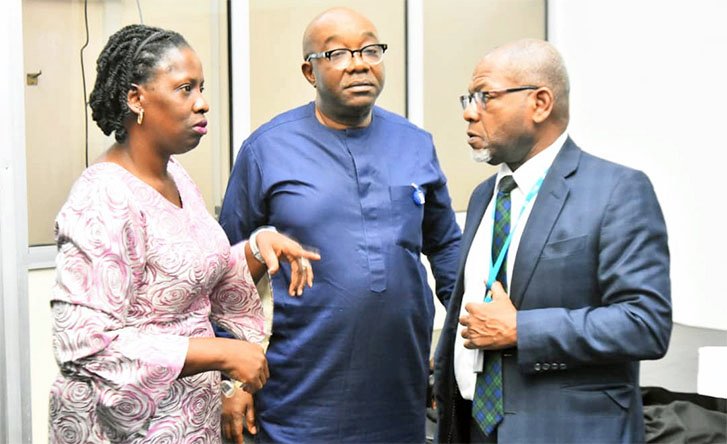
At the 2025 Journalists’ Academy held in Lagos, SEC Director-General, Dr Emomotimi Agama, represented by the Executive Commissioner (Operations), Mr Bola Ajomale, outlined the sweeping changes contained in the new Act and its implications for market operators, investors, digital platforms, commodities value chains, and the wider economy.
With the theme “The ISA 2025 and the Future of Nigeria’s Capital Market: Innovation, Protection, and Growth,” the Academy marked the SEC’s first major public engagement on the landmark reform.
Agama did not mince words: ISA 2025 is not a cosmetic update but a complete redesign of Nigeria’s capital-market architecture. It is the country’s most comprehensive capital-market overhaul since the repeal of the 1999 Act in 2007—and according to the SEC, it arrives at a critical moment in Nigeria’s economic history.
A bold compliance deadline: January 2026
A key announcement from the SEC chief was the January 2026 deadline for the full registration of all tradable instruments in the market.
“Anyone selling a tradable instrument must identify with the Commission and ensure its registration within this period,” Agama said.
This directive immediately puts pressure on CMOs, fintech platforms, alternative trading systems, and digital-asset operators whose products are now clearly classified as securities under the ISA 2025.
For the first time, digital platforms must meet the same disclosure and reporting standards as traditional market players.
Agama said the compliance requirement is non-negotiable and central to the Act’s goals of transparency, investor protection, and systemic oversight.
A future-facing law for a changing market
According to Agama, ISA 2025 “is more than a replacement for the 2007 Act. It is a forward-looking instrument designed to reposition Nigeria’s capital market for a rapidly changing world.”
Major global forces—fintech disruptions, virtual assets, digital trading, crowdfunding, and new financing structures—have tested the limits of the old law. Incidents of Ponzi schemes, unregulated crypto operations, broker collapses, and systemic vulnerabilities exposed gaps in previous regulations.
ISA 2025, Agama said, addresses these gaps comprehensively.
For the first time in Nigerian history, the Act:
Explicitly outlines the SEC’s regulatory objectives, eliminating previous ambiguities.
Strengthens the regulator’s investigative power, allowing it to probe related and unrelated third parties when necessary.
Enables pre-emptive systemic-risk monitoring, empowering the SEC to prevent contagion.
Modernises insolvency frameworks for financial market infrastructures (FMIs).
Formalises oversight of new classes of regulated entities, including commodities exchanges, derivatives platforms, digital-asset exchanges, warehouse receipt systems, and crowdfunding operators.
“This clarity strengthens regulatory authority and enhances institutional accountability,” Agama said.
A decade in the making
Agama revealed that ISA 2025 is the result of almost ten years of research, consultations, and technical drafting. The reform was driven by:
The exponential rise of fintech and virtual-asset markets.
The limitations of the 2007 Act in handling modern investment schemes.
Nigeria needs to deepen market liquidity and attract long-term capital.
The need to align with IOSCO global best-practice standards.
Persistent market scandals—failed brokers, distressed institutions, illegal investment operators—that eroded investor confidence.
Agama said the passage of the Act represents a collective national resolve to modernise capital-market governance and restore credibility to market operations.
Digital-asset recognition: Ending the era of regulatory uncertainty
One of the most widely anticipated features of ISA 2025 is its formal recognition of digital and virtual assets as securities.
For years, Nigeria’s digital-asset ecosystem— one of the world’s largest by adoption—operated in a grey zone, vulnerable to fraud, opaque operations, and poor investor protection. ISA 2025 ends that era.
It provides legal definitions and regulatory structures for: Digital assets, tokenised financial products, digital-asset exchanges, alternative digital trading systems, custody providers and wallet service operators
By classifying them as securities, the SEC can now impose registration requirements, transparency standards, risk controls, dispute-resolution mechanisms, and operational guidelines.
Agama said the recognition will attract institutional investors, reduce crypto-related fraud, and deepen liquidity for digital financial products.
“This is critical for both innovation and consumer protection,” he said.
Boosting Agric-Financing through commodities reform
ISA 2025 also introduces a long-awaited legal framework for commodities exchanges and warehouse receipt systems (WRS)—a development the SEC believes will be transformational for agricultural financing.
The Act standardises and certifies warehouses nationwide, makes warehouse receipts tradable as financial instruments and allows farmers and MSMEs to use receipts as collateral.
It also enhances price discovery, reduces post-harvest losses and integrates commodities into mainstream capital formation.
Agama described this as an economic development strategy, not merely a capital-market reform, saying it will unlock funding for farmers, stabilise income for rural producers, and power agro-industrial value chains.
Protecting Investors: A Stronger Tribunal and Expanded Compensation
ISA 2025 introduces several new investor-protection layers.
1. Expanded Investor Protection Fund (IPF)
The IPF now compensates investors for losses resulting from the revocation of broker registrations—a major gap in the old system that left many Nigerians stranded when firms collapsed.
2. Strengthened Investments and Securities Tribunal (IST)
Membership of the Tribunal has been increased from 10 to 12, enabling faster hearings, more panels, and reduced case backlogs.
3. Administrative penalties for quicker enforcement
The Act empowers the SEC to impose administrative sanctions without lengthy court processes, ensuring faster resolution of market breaches.
“ISA 2025 gives us modern tools to protect the integrity of the market,” Agama said.
Easier Capital Formation for SMEs, Startups and Governments
The SEC chief emphasised that one of the most far-reaching impacts of ISA 2025 is its potential to expand capital formation.
The Act supports Crowdfunding platforms, digital asset financing, Non-interest finance instruments, Investment contract issuers, Infrastructure fundraising, Sub-national bond issuances and SME and startup financing structures
This broad financing toolkit will allow small businesses, innovative startups, and state governments to raise long-term capital more efficiently and transparently.
Agama said this is crucial to Nigeria’s economic diversification agenda.
A more efficient regulatory ecosystem
Another critical reform is the removal of duplication in merger and acquisition (M&A) oversight. Under the new law:
The Federal Competition and Consumer Protection Commission (FCCPC) takes over the competition review.
The SEC focuses solely on fairness and investor protection.
This separation eliminates confusion, reduces processing time, and aligns Nigeria with global regulatory standards.
Tackling market abuse with expanded investigative authority
A major loophole in previous investigations was the SEC’s inability to examine third parties not directly regulated by it. ISA 2025 fixes this.
With expanded investigative authority, the SEC can trace the trail of transactions across related and unrelated entities, enforce compliance in complex financial schemes and pursue perpetrators of market abuse across the ecosystem.
“This closes a major loophole that hindered previous investigations,” Agama said.
The big picture: A capital market built for Nigeria’s future
Taken together, ISA 2025 marks the beginning of a new era for Nigeria’s capital market— one built on innovation, transparency, investor confidence, and strong regulatory tools.
Agama described the Act as innovation-oriented, investor-first, globally competitive, aligned with national development goals and fit for the digital age.
“This is a future-oriented law crafted to support innovation, stability, and investor confidence. It is the foundation of a capital market that matches Nigeria’s economic ambitions,” he said.
But, the SEC chief also made it clear that none of these reforms will take root unless market operators comply fully and faithfully.
With a January 2026 deadline and an expanded enforcement toolkit, the Commission is ready to push operators into the future—willing or not.
ISA 2025, in the SEC’s view, is not just a regulatory upgrade. It is the beginning of a new market order—one that could redefine how Nigerians invest, innovate, and build wealth for decades to come.
Read the full article here