






ISAAC ASABOR
According to Babatunde Odumeru, Managing Director at Brand Finance Nigeria, “Brand reputation is essentially the collective assessment of companies or nation’s integrity and prestige by its stakeholders.
This encompasses customers, employees, investors, and the general public.
It is a reflection of how much trust and confidence these stakeholders have in the brand.
“Brand reputation is not just about the quality of products or services but also about the company’s values, customer service, social responsibility, and communication. A strong brand reputation can lead to customer loyalty, attract top talent, and provide a competitive edge. Conversely, a weak reputation can result in a loss of customers, difficulty in recruiting, and challenges in sustaining business growth”.
In the context of Nigeria, Odumeru emphasises that Nigerian brands have a significant opportunity to enhance their reputation; both domestically and internationally by embracing professionalism and strategic brand management practices.
This is crucial for Nigerian brands aiming to expand their footprint and compete on a global stage.
As gathered by Daily Independent, the recent Multichoice’s price adjustments in which it increased the prices of its offerings in Nigeria; four months after its last increment, can leave a negative impact on its brand reputation, particularly as the price adjustments exercise is likened to a double-edged sword.
It would be recalled that the company reviewed prices in its packages across the board.
The new prices which took effect from May 1, 2024, and with the most recent price hike, the DStv Premium package increased from N29, 500 to N37, 000. Similarly, the DStv Compact plus went up from N19, 800 to N25, 000 while the Compact package increased from N12, 500 to N15, 700.
In the same vein, the Comfam package moved from N7, 400 to N9, 300. Yanga package moved up from 4,200 to N5, 100 while Padi package increased from N2, 950 to N3, 600. HDPVR was increased from N4, 000 to N5, 000, the Access Fees package from N4, 000 to N5, 000, and XtraView moved from N4, 000 to N5, 000.
Meanwhile, the Gotv Supa plus package moved from N12, 500 to N15, 700, Supa package from N7, 600 to N9, 600, and Max package from N5, 700 to N7, 200, while the Jolli package was jacked up from N3, 950 to N4, 850, the Jinja package moved from N2, 700 to N3, 300, and Smallie package from N1, 300 to N1, 575.
According to the Federal Competition and Consumer Protection Commission (FCCPC), Multichoice cited several factors for the price increase. These include, increasing energy expenses, saying that the rising cost of electricity and the use of generators contribute to operational costs for Multichoice.
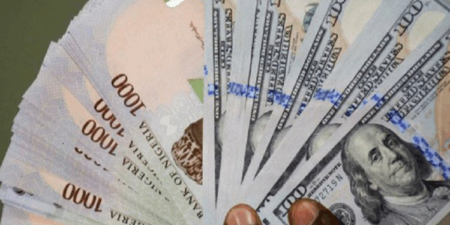
In a similar vein, it says the company finds it difficult to accessing foreign currency, particularly the dollar, this is as Multichoice relies on imported equipment and content, which can be affected by fluctuations in exchange rates.
Given the foregoing facts, the company has justified its increase by saying that these challenges impact its operations and are reflected in the pricing adjustments.
However, according to Mr. Joe Nmoye, a brand expert, Multichoice’s frequent price adjustments can have a significant negative impact on its brand reputation for several reasons.
He said, “Frequent changes in pricing can erode customer trust. Customers may feel uncertain about the value of the service and question the company’s pricing strategy. This can lead to a perception that the company is unreliable or attempting to exploit its customers.
In a similar vein, he explained that “Price is often associated with quality, and constant price adjustments can confuse customers about the quality of the service being offered.
If prices are raised too often, customers might feel that they are not getting good value for their money. Conversely, if prices are lowered frequently, it might signal that the service is of lower quality.
Regarding the impact of the frequent price adjustments on the company’s brand image, he said “A brand’s image is built on consistency and reliability.
Inconsistent pricing can harm the brand’s image by creating a perception of instability or lack of confidence in the company’s services”.
Speaking from the perspective of the competitive position of the company, Mr. Emmanuel Ogieva, a PR practitioner said, “If a company is known for frequent price changes, it may be seen as less competitive compared to firms with more stable pricing. This can affect the company’s position in the market and its ability to attract and retain customers.
On loyalty of the company’s customers, he said, “Loyal customers expect consistent pricing. When prices change often, it can frustrate customers who may feel penalized for their loyalty, leading them to switch to competitors”.
He added, “Regular price changes can also lead to operational inefficiencies, as the company must spend time and resources updating marketing materials, training staff on new pricing, and dealing with customer inquiries and complaints about pricing”.
Against the backdrop of the foregoing voices, Daily Independent gathered that research has shown that a price increase of 1% can lead to a decrease of 3%-5% in the average rating of a firm.
This indicates that price adjustments can directly affect a business’s reputation, highlighting an important downstream consequence of pricing decisions.
Mr. Fred Onyeka, in his reaction said “While strategic price adjustments can be necessary for various reasons, such as cost changes or competitive pressures, incessant price changes can damage a service company’s brand reputation, customer relationships, and market position.
It is crucial for companies to carefully consider the frequency and communication of price adjustments to maintain a strong brand reputation.
He noted that: “Multichoice’s strategy of frequent price adjustments is a double-edged sword when it comes to its brand reputation. On one hand, these adjustments can be seen as a necessary response to the dynamic economic conditions and the company’s need to maintain financial sustainability. For instance, factors such as currency depreciation and rising operational costs can compel a company like Multichoice to revise its pricing.
“However, on the other hand, frequent price hikes can lead to customer dissatisfaction. Consumers may perceive these adjustments as a lack of consideration for their financial constraints, especially if the increases are significant or occur within a short span of time.
“This perception can be detrimental to the brand’s image, as it may lead to a loss of trust and loyalty among its customer base. The potential fallout could include subscription cancellations, downgrades to lower-tier packages, or even a shift to competitors offering more stable pricing”.
He added that businesses that rely on Multichoice’s services for entertainment or communication purposes may also feel the pinch which the increased subscription fees add to their operational costs, and which could result in reduced budgets for such services or seeking alternatives.
He said that despite these challenges, Multichoice has been proactive in trying to mitigate the negative impact on its brand reputation.
“The company has ramped up investment in technology and local content, which can be a way to add value to its services and justify the price adjustments. By enhancing the quality and variety of its offerings, Multichoice aims to retain its customer base and attract new subscribers, even in the face of price changes.
He noted that “While Multichoice’s frequent price adjustments are a strategic response to external economic pressures, that the company’s marketing team must balance their strategies with customers’ expectations and market competition.
He added, “The Company’s focus on improving its service offerings is a positive step, but it remains crucial to communicate the rationale behind price changes effectively and empathetically to maintain a strong brand reputation”.
As gathered by Daily Independent, the public sentiment against Multichoice’s frequent price adjustments is quite vocal, with consumers and businesses expressing their discontent.
Mr. Ikechukwu Obsai, an operator of a viewing Centre within Ojodu/Berger axis in Lagos, says, “Households are feeling the financial strain as subscription rates for popular DStv packages like Premium and Compact Plus have seen significant increases. This has led to a reassessment of entertainment budgets, with many considering subscription cancellations or downgrades”.
The foregoing sentiment can be understood from the fact that businesses that rely on DStv for entertainment and communication are facing increased operational costs. This is as the higher subscription fees are impacting budget allocations for these services, which is particularly challenging amidst higher taxation and economic uncertainties.
Mr. Peter Emodi, in his submission says, “Despite a court ruling prohibiting the price hike, Multichoice Nigeria proceeded with its planned increase for DStv and GOtv subscribers. This defiance of the court’s directive has likely contributed to likely negative perception of the company.
He added, “While Multichoice attributes the price hikes to factors like foreign exchange crunch, high electricity tariffs, and operational costs, the successive increases within a short period have exacerbated consumer sensitivity to pricing”.
Against the foregoing backdrops, it is expedient to surmise that the collective voice of the people suggests a growing frustration with Multichoice’s pricing strategy, which could potentially lead to a loss of subscribers and a shift towards more affordable alternatives, and consequently impact on the brand reputation of the broadcast company, negatively.
Read the full article here