






(Kabir Yusuf,Mariam Ileyemi, Fortune Eronmosele and Zainab Adewale)
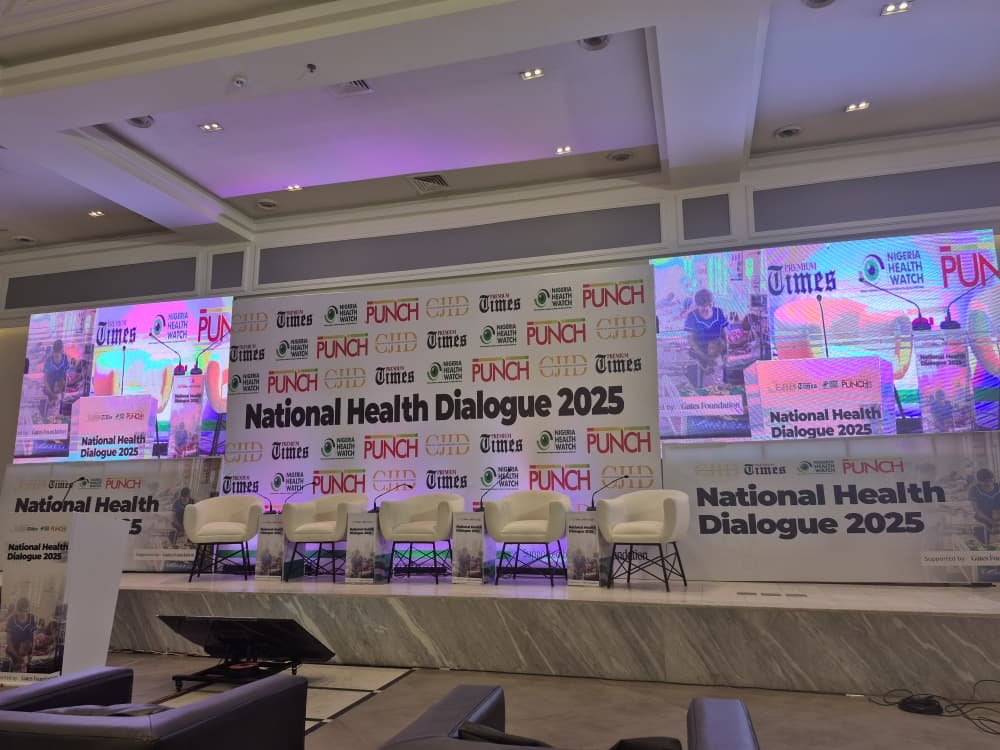
PREMIUM TIMES, in partnership with the Centre for Journalism Innovation and Development (CJID), is hosting the 2025 National Health Dialogue today at Fraser Suites, Abuja.

The event convenes key voices in Nigeria’s health sector for crucial conversations on reform and accountability.
The forum, themed “Evidence, Innovation, and Financing for a Healthier Nigeria,” brings together senior government officials, global health leaders, journalists, civil society groups and health innovators for a full day of discussions on the state of Nigeria’s health system.
The Minister of Health and Social Welfare, Muhammad Pate, will headline the Dialogue in a fireside discussion focused on Nigeria’s reform priorities, the future of primary healthcare, and the shifts required to improve outcomes nationwide.
Other key participants include the World Health Organisation Country Director, Pavel Ursu; the Director-General of the National Primary Health Care Development Agency (NPHCDA), Muyi Aina; the Director-General of the National Agency for the Control of AIDS, Temitope Ilori, alongside several state commissioners of health.


The event will open with investigative journalism showcases from PREMIUM TIMES, Nigeria Health Watch, and Punch, highlighting the role accountability reporting plays in exposing system failures and informing reforms.
Throughout the day, panels will explore primary healthcare performance, financing gaps, state-level implementation challenges, and innovations in maternal and digital health.
There will also be a health-innovation showcase featuring technology founders working on service-delivery solutions.
READ ALSO: How Jigawa’s underfunded rural health system fuels infant, maternal mortality
According to Akintunde Babatunde, Executive Director of CJID, the Dialogue marks the beginning of “deeper nationwide engagements aimed at improving health outcomes across the country.”
Stay with us for live updates from the 2025 National Health Dialogue scheduled to commence at 9:00 a.m.
9:11 a.m.
The Head of the Development Programme at the Centre for Journalism Innovation and Development (CJID), Ifeanyi Chukwudi, welcomed guests and participants, noting that the programme will begin in 10 minutes.
9: 38 am: Event commences. The moderator, Mr Chukwudi, introduces the Chief Executive Officer of CJID and Publisher of PREMIUM TIMES, Dapo Olorunyomi, for his opening address.
9:40 a.m. In his opening address, Mr Olorunyomi underscored the urgency of fixing Nigeria’s struggling health system, noting that “the nation’s health system is one of the clearest indicators of whether governance is working.”
He said the theme: “Evidence, Innovation, and Financing for a Healthier Nigeria” reflects the pillars every functional health system depends on, and emphasised that Nigeria’s persistent gaps are “not a resource problem, but a prioritisation problem.”
Mr Olorunyomi also highlighted the importance of evidence-based journalism in exposing failures and driving reforms, recalling how investigative reporting contributed to Akwa Ibom State declaring a health emergency.
He added that when citizens have access to credible information, they can demand better services and hold institutions accountable.
9:45 am: On innovation, Dapo Olorunyomi said he is proud of the homegrown health innovation happening across Nigeria.
“Young Nigerians are building digital health platforms, improving maternal care through technology, strengthening diagnostic capacity, and reimagining how health services are delivered,” he said.
The PREMIUM TIMES publisher emphasised that these innovators “are not waiting for perfect conditions” but are building solutions with minimal support.
Speaking on financing, he noted that while money alone does not fix a broken system, “without adequate, sustained, well-managed financing, nothing else works.”
He referenced the recent “red letter” issued by the Federal Ministry of Health to state governments, calling it a recognition that “business as usual is failing Nigerians” and a demand for more oversight and accountability.
“We are not just underfunding health, we are also mismanaging what little we allocate,” he said, citing problems such as unreleased budgets, unaccounted funds, unused equipment, and facilities built without staff.
“This must change,” Mr Olorunyomi said.
9:50 am:
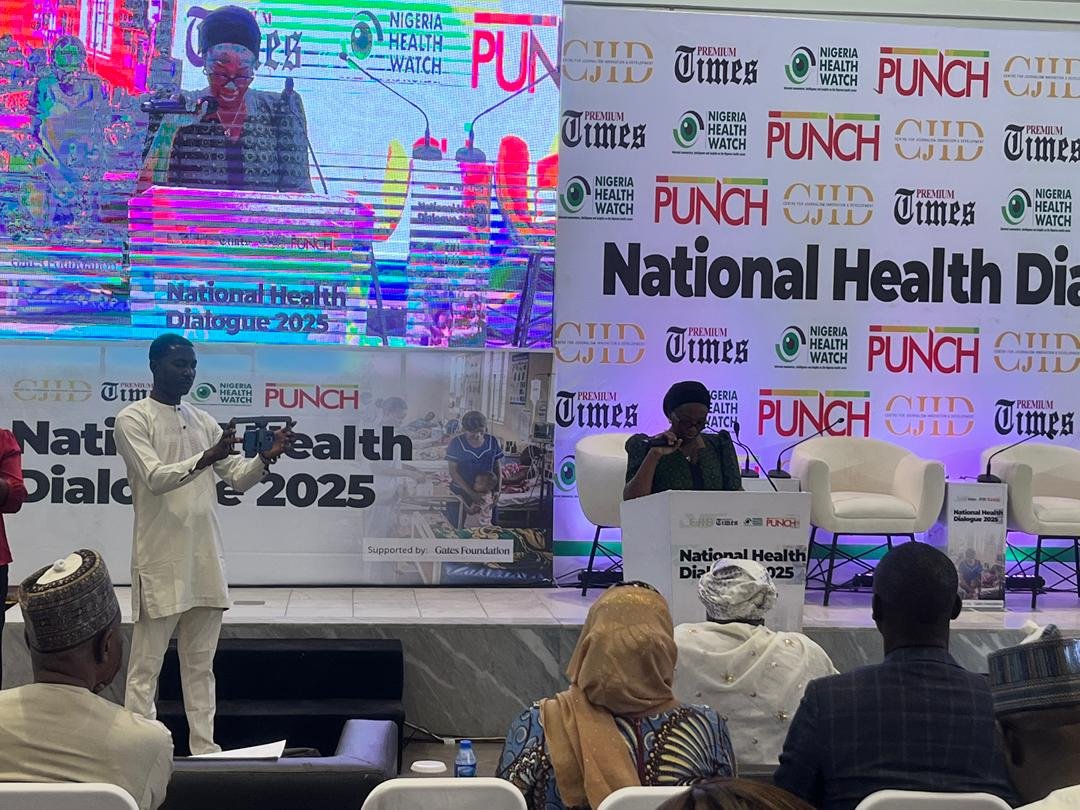
In her goodwill message, the Senior Communications Officer at the Gates Foundation, Fatima Abubakar-Alkali, highlighted that Nigeria’s health sector challenges extend far beyond inadequate funding.
She pointed to weak oversight, inefficiencies, and a culture of micromanagement that hinder meaningful reforms.
Ms Abubakar-Alkali urged commissioners and state representatives to uphold the commitments they make as they approach 2026, stressing that this expectation stems not from criticism but from confidence in what is achievable when leaders embrace transparency and accountability.
She also underscored the role of journalists, civil society, and citizens in tracking budgets, monitoring implementation, and demanding accountability.
Addressing the global shift in health financing, Ms Abubakar-Alkali framed declining donor funding as an opportunity to build a sustainable, people-centred health system that prioritises local needs and relies on robust data.
10:04 am
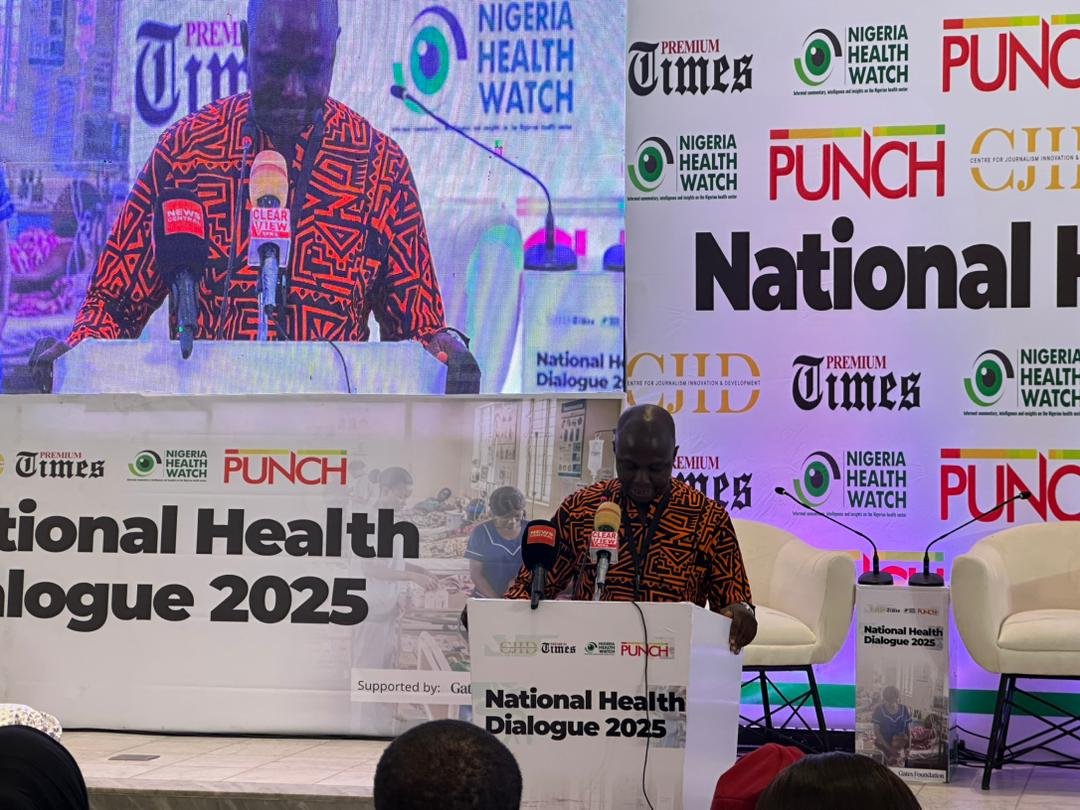
Mr Idris said Premium Times is proud to co-host the symposium, bringing together policymakers, experts, journalists, and other stakeholders to discuss ways to improve Nigeria’s health outcomes and enhance the quality of life for all Nigerians, young and old.
“As we all know, healthcare is not solely the responsibility of the federal government. Yet our research across several states shows that state governments are not prioritising healthcare as they should. We understand that states have limited funds, but the facts show that many are focusing on the wrong areas,” he said.
Referring to President Bola Tinubu’s declaration of a national security emergency yesterday, Mr Idris noted that the president outlined six key steps his administration plans to take, some of which are bold and require fundamental legal changes.
“While we commend the president for these initiatives and hope he follows through, true security cannot be achieved without addressing human development. And when we speak of human development, we are primarily talking about education and healthcare—the latter being the reason we are gathered here today.”
10:06 am: He noted that Nigerian youth are frustrated and disillusioned because they have been denied proper education, healthcare, and opportunities for development. “That is why many turn to social media complaints, emigrate (‘japa’), or engage in criminal activities, from cybercrime to terrorism,” Mr Idris said.
Citing two examples from the 2024 Nigeria Demographic and Health Survey (NDHS), he said Jigawa State has the highest under-five mortality rate in the country at 161 deaths per 1,000 live births. The neonatal mortality rate has risen from 46.8 in 2018 to 52 per 1,000 live births in 2024.
Despite renovations of some primary health centres (PHCs), many remain poorly equipped and understaffed. Yet, Jigawa spent N3.2 billion on government house renovations and luxury vehicles last year—more than the N2.8 billion allocated to all PHCs by the state’s Primary Health Care Development Agency.”
“Take oil-rich Akwa Ibom as another example. Most PHCs there have fewer than five staff members—far below the 24 recommended by the NPHCDA. This shortage contributes to preventable deaths among mothers and children. The NDHS 2024 shows that only 38.6 per cent of births in Akwa Ibom occur in health facilities, the lowest among the 17 southern states. Births attended by skilled providers stand at just 51.5 per cent, again the lowest in the region. Earlier this year, the state government announced it would hire 1,000 medical personnel—far from sufficient to close the staffing gap.”
“Our analysis shows that fully staffing Akwa Ibom’s 468 PHCs with 24 personnel each would require 11,232 staff, not including support personnel. Currently, the state has around 2,164 workers. Adding the planned 1,000 recruits still leaves a shortfall of 8,068. The question arises: where would the state get the funds to fill this gap?”
“Based on the 2024 budget performance, personnel costs for the current 2,164 staff are N37.1 million. Employing all 8,068 additional staff would cost about N222.6 million. By comparison, Akwa Ibom spent N1.3 billion on luxury SUVs for 13 federal lawmakers—money that could have funded all PHC personnel and salaries for three years, potentially saving thousands of lives,” he said, adding that “these issues are not unique to Akwa Ibom or Jigawa. We observed similar trends in Bauchi, Adamawa, and Bayelsa.”
He concluded that this dialogue aims to discuss why states are not prioritising healthcare, why frivolous spending often takes precedence over the health of residents, and how together we can identify solutions and chart a path forward.”
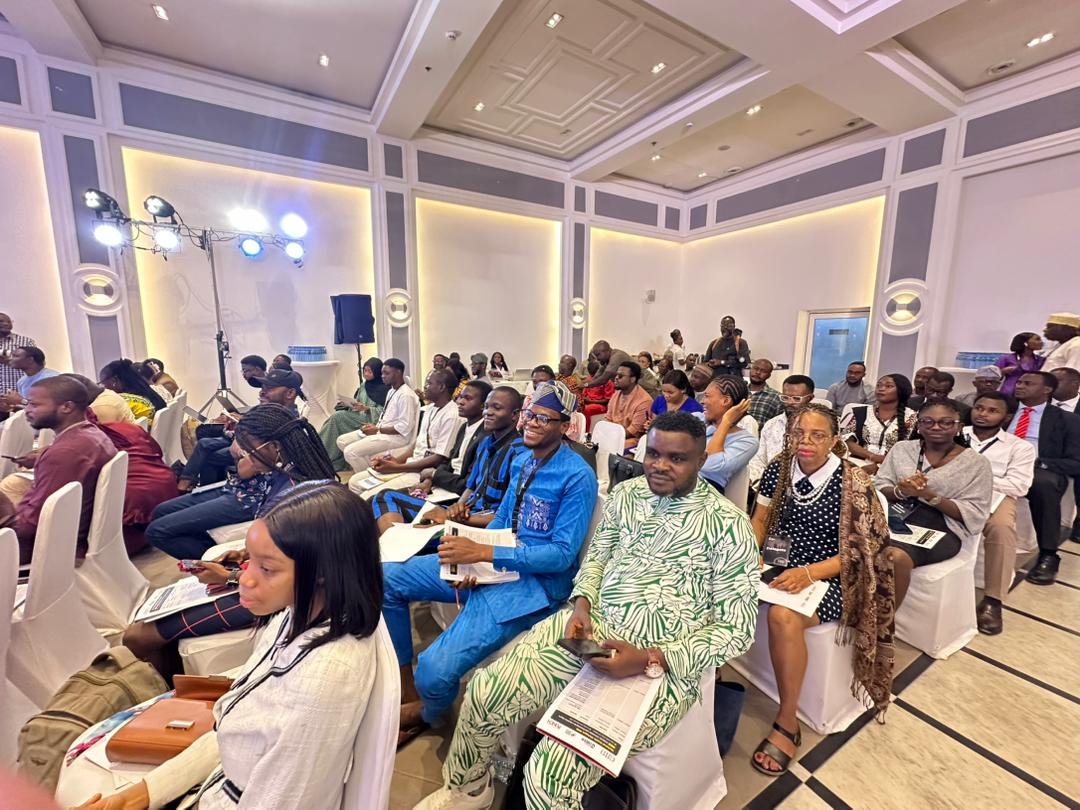
10:15 a.m.: In her goodwill message, the Director-General of the National Agency for the Control of AIDS (NACA), Temitope Ilori, praised the critical role of journalism in shaping Nigeria’s health sector and called for stronger collaboration among stakeholders to tackle persistent and emerging public health challenges.
Ms Ilori highlighted the importance of partnerships between journalism and public health as a cornerstone for an accountable health system.
She noted that quality reporting not only informs citizens and influences policy but can also save lives by exposing gaps that require urgent attention.
“While Nigeria has made significant progress in its HIV response, sustaining these gains will require stronger partnerships, better coordination, and continued investment in prevention, treatment, and health system improvements,” she said.
The NACA DG described the dialogue as a timely platform to reflect on progress, address persistent bottlenecks, and chart pathways toward a more sustainable, people-centred health sector.
10:20 am:
Similarly, she expressed optimism that insights from the forum would support ongoing national health reforms and bring the country closer to achieving universal health coverage.
Concluding her remarks, Ms Ilori congratulated the organisers and participants, urging them to push for solutions that enhance the well-being of Nigerians.
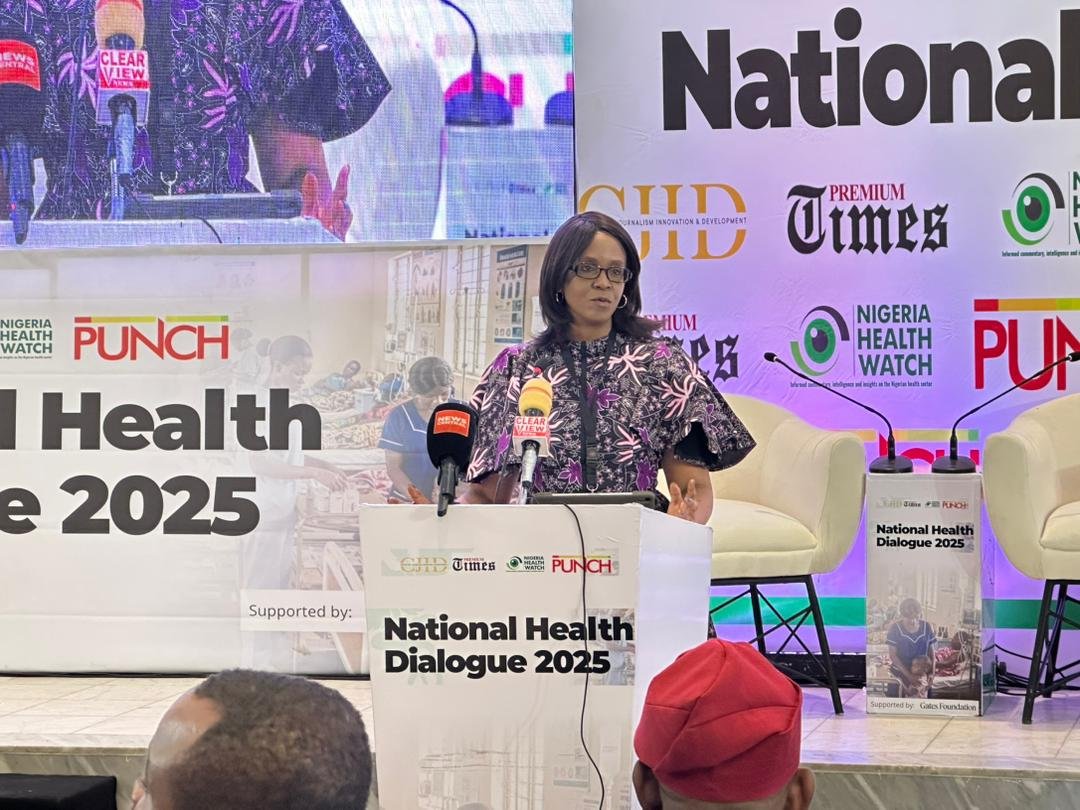
10:22 a.m.:
In her goodwill message, Vivianne Ihekweazu, Managing Director of Nigeria Health Watch, highlighted the importance of evidence-based reporting in shaping public health debates.
Ms Ihekweazu said credible information sources empower citizens to hold the government accountable and promote transparency in health policy and service delivery.
She stressed the significance of community-level reporting, citing Nigeria Health Watch’s Community HealthWatch project, which trains journalists to track healthcare delivery in local facilities.
“Fixing primary healthcare is not just about buildings; it is about the quality of care people receive in these communities,” she said.
10:24 a.m.:
Ms Ihekweazu also spoke about the role of technology and innovation in improving access to healthcare, maternal care, and health system accountability. She noted that achieving universal health coverage requires informed citizens and an evidence-driven approach to policymaking and funding decisions.
She concluded by urging participants to use the dialogue as a platform to engage officials, share evidence, and push for practical, sustainable health reforms.
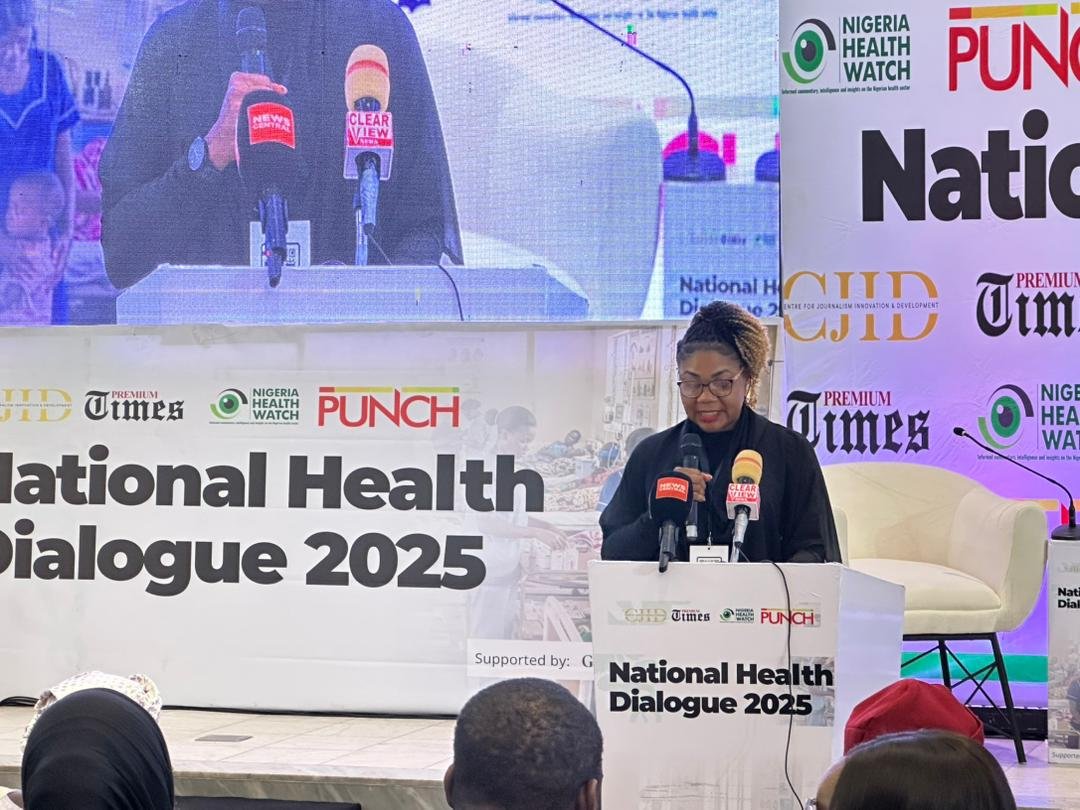
10:30 a.m.
Representing the Managing Editor of the Punch Newspapers, Tessy Igomu, Acting Deputy Editor, Weekend Titles at the Punch, highlighted the role of credible and fact-based journalism in shaping Nigeria’s health sector.
She noted that platforms like the National Health Dialogue are essential for policymakers, journalists, researchers, and civil society to reflect on health challenges, exchange ideas, and recommend solutions for a healthier nation.
10:40 a.m
In his keynote address, the Executive Director, National Primary Health Care Development Agency (NPHCDA),
Muyi Aina, highlighted the progress and ongoing priorities in Nigeria’s primary healthcare system.
Mr Aina noted that there is the need for evidence, innovation, and adequate financing to strengthen health service delivery.
10: 45 am:
He highlighted that the government has completed over 2,000 additional primary healthcare facilities in the last two years, many of which are fully equipped and staffed.
More than 70,000 health workers have been trained, and over 46–47 million primary healthcare service visits have been recorded, Mr Aina said.
10: 50 am
He added that efforts focus on maternal and child health, with millions pregnant women being followed, and a 22.5 per cent increase in antenatal care attendance observed.
Mr Aina noted that some of the innovations include digital tracking, digitised financial management, and expanded connectivity for vaccination campaigns, ensuring funds are properly monitored and services delivered efficiently.
10:57 am
In terms of collaboration with state governments, he stressed the need for local authorities, and media to partner in order to achieve sustained accountability, improved access, and building community trust in the primary healthcare system.
11:14 a.m.
The planned fireside chat with the Minister of Health and Social Welfare, Muhammed Pate was cancelled as the Minister was called in for a state welfare programme.
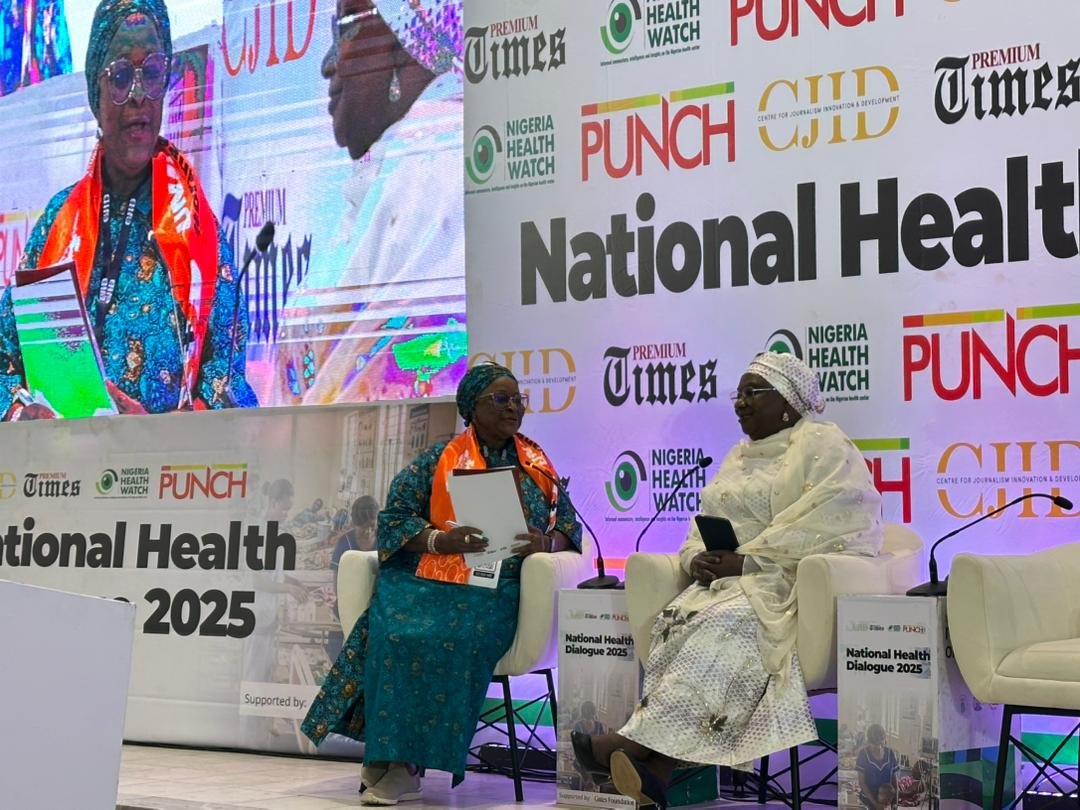
11:18 a.m
Fireside Chat with Deputy Governor Hadiza Balarabe
Moderated by Moji Makanjuola, a veteran journalist and presenter, the session opened with a recognition of the ongoing 16 Days of Activism Against Sexual and Gender-Based Violence (SGBV).
11:23 a.m. – Mrs Balarabe highlighted the Kaduna State’s commitment to driving change in health.
She noted that health has consistently received 15 per cent of the state’s total budget under the administration of Governor Uba Sani which came on board in 2023. The Deputy Governor emphasised the importance of involving young people in governance, as they represent the future of the state’s leadership and development.
11:29 a.m: Mrs Balarabe further emphasised the importance of educating and empowering future leaders, noting that the quality of leadership depends on the opportunities provided today.
She highlighted Kaduna State’s multi-sectoral approach to health, linking education, nutrition, and healthcare to build resilience and sustainability.
She also mentioned efforts to strengthen emergency care and advance health service delivery across the state’s facilities.
11:30 a.m.
During the fireside chat, Mrs. Balarabe highlighted Kaduna State’s initiatives to strengthen primary healthcare, including upgrading facilities, expanding emergency care, and increasing the ambulance fleet.
She noted that the state has recruited and trained 1,800 healthcare workers, implemented monitoring and tracking systems, and partnered with organisations such as the Gates Foundation to enhance financing and service delivery in rural communities.
Mrs. Balarabe emphasised the importance of robust referral systems, integrating innovative healthcare solutions, and improving access to high-quality maternal and child health services across the state.
11:40 a.m
Speaking on maternal and neonatal mortality, Hadiza Balarabe, Deputy Governor of Kaduna State, acknowledged that the state has yet to make a significant impact on maternal mortality but has seen improvements in neonatal outcomes.
“We’re operating at level two, focusing on providing emergency support for women. We cannot continue to have children while mothers are lost, so we are putting systems in place to ensure they receive the care they need,” she said.
Also, government officials from Jigawa and Katsina states shared the challenges their states face and the measures being taken to address them.
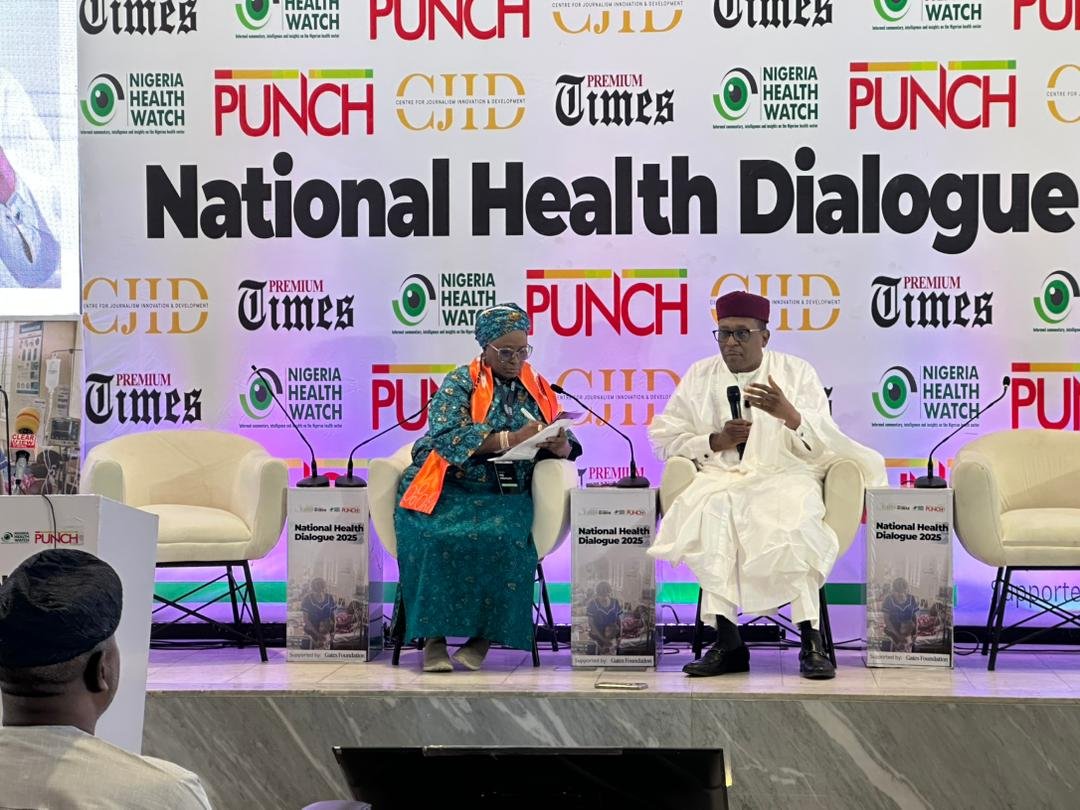
Health Minister Pate takes the stage.
11:49 a.m.
In his contribution, the CEO of Nisa Premier Hospital, Ibrahim Wadda, reflected on Nigeria’s healthcare progress and shared insights from public-private partnerships.
He underscored the importance of merit-based staffing, well-functioning equipment, and computerised hospital systems.
Mr Wadda stressed that healthcare must not be politicised or driven by sectional interests.
He emphasised that while Nigeria has the resources to provide quality care, achieving this requires equitable wealth distribution and sustained investment in the health sector.
11:50 am
During the session, Ms Makanjuola announced that in Kaduna State, 17 of the 23 ambulances referenced by the Deputy Governor had been delivered to enhance the state’s emergency healthcare capacity.
With regards to the role of academia, Umaru Pate, a professor of media and society, noted that academia has recently made significant contributions to strengthening journalism training, particularly in broadcasting.
“We have specifically designed programmes on health communication, developed in collaboration with UNICEF and UNESCO, and with input from industry professionals. I can assure you that the next generation of journalists will be professionally competent. They will possess the confidence, knowledge, and skills needed to handle information strategically—attracting the attention of policymakers, engaging communities, raising public interest, and generating the support required for effective communication,” Mr Pate, the Vice Chancellor, Federal University of Kashere, said.
“For decades, we had not invested” in healthcare, leading to decay of facilities. “The political consensus to invest in health had been shut,” the minister says.
At 12:00 p.m., the Minister of Health, Professor Ali Pate arrives.
A documentary highlighting the current state of healthcare is being screened.
The moderator announced that a fireside chat with the minister follows.
The pool of revenue that government has is limited, the minister says.
2004 was when Nigeria tried to fix the constitutional lacuna to tackle it’s healthcare crisis, the minister says. He thanks the then late health minister, Prof Lambo.
12:15 p.m.
Fireside chat with the minister of Health commences
Mr Pate said dialogue is a serious conversation, as well as a quiet time. “We need to give it the attention it deserves.
“I hope we will come to an understanding at the end of the dialogue.”
The documentary is very touching.
It took ten years from then (2004) to pass the health Act that established the BHCPF in 2014, the minister says.
Since this government came, the revenue to GDP has increased, the minister says, saying all tiers of government must now increase health spendings.
Nigeria has individual capacities but all were working at silos until the Tinubu administration came on board and brought everyone together, LGs, states, FG, development partners, etc to address the country’s health challenges.
12:19 p.m.:
Mr Pate said Nigeria has been pumping less than $8 per person per year.
We spent a lot of money on other priorities. Neither the government nor the private sector has invested enough in the health sector. Yet we have been spending on other things
Nigeria’s revenue to GDP is also one of the lowest in 2023.
We are beginning to see at least some reduction in maternal mortality, although that is still too small, the minister says.
“What has taken decays to atrophy, it will take time to fix,” the minister says.
There are some things that have begun to happen, we’ve seen improved PHC utilisation, reduced maternal mortality, increase private sector investment, and other growth, the minister says but acknowledges a lot of problems still remain.
The minister acknowledges the gaps between Budgetary allocations and releases in the FG and states, but says the federal government is tackling it’s side of the problem. He gives an example of a recently released N68 billion for vaccine procurement.
Have we earned enough of the trust of citizens? the minister says. He says governments must work to earn citizens trust.
Mr Pate noted that in every country, there is health inequality but the degree of inequality varies.
“To understand where we are coming from, we need to revisit the past, how the health care system was,” he said.
According to Mr Pate, local governance is saddled with the responsibility of primary health care while state governance is saddled with secondary health care. Federal government’s responsibility is research, policy and framework.
But that is not the case tooday, the minister said, adding, “The federal government has no business building primary health care in every local governments,” Mr Pate said.
12:20 p.m.
Minister Pate also emphasised that health is a life-critical issue. He noted that building an effective health system is ultimately a political choice, shaped by citizens, governments, and both public and private sectors.
Reflecting on trends over the past 30 years, he explained that resource allocation across local, state, and federal levels has historically been extremely low, averaging just $7–$8 per person per year, with most of the spending coming directly from households rather than governments.
Currently, spending has risen to about $15 per person per year, but this remains insufficient for robust healthcare delivery. He observed that budget allocations for health have been deprioritised compared to sectors such as telecommunications and digital infrastructure. “This underinvestment is evident in the state of health infrastructure, including inadequate equipment, facilities, and staffing.”
The federal government plans to allocate more resources and improve support for Primary Healthcare Centres. Citing research on maternal deaths in northern Nigeria from 30 years ago, he highlighted that maternal mortality is influenced by determinants beyond healthcare. He stressed: “We are trying to change these things. It takes time to fix. What has taken decades to destroy will take time to repair, and we are fixing it without distraction. Instead of complaining, we are working with stakeholders to address the health problems.”
12:25 p.m.
Mr Pate explained that Nigeria’s health system has long suffered from unclear responsibilities under fiscal federalism: local, state, and federal governments all have roles, but accountability has been weak. “In 2004, reforms sought to assign primary health care to local governments, secondary care to states, and tertiary care to federal authorities. However, implementation lagged, resulting in decades of underperformance,” he said.
He noted that the National Health Act, passed in 2014, was designed to create a framework for basic health care, but meaningful execution has only accelerated in the past two years. Two-thirds of Ministry of Health contracts over the last decade were only implemented recently, focusing on revitalising primary health care even where it was not strictly a federal responsibility.
12:27 p.m.
To address these challenges, the Health Sector Renewal Investment Initiative, launched in December 2023, focuses on four pillars: trust, governance, coordination with states, and engagement with development partners.
“The initiative establishes structures for transparency, accountability, quarterly performance reviews, and joint assessments to better respond to citizens’ needs,” the minister said.
Health services can be a part for the establishment of trust between the government and the people, the minister says. He makes reference to Nigerian community without schools, good roads and electricity but which still had successful vaccination.
12:29 p.m.
Mr Pate highlighted that the federal government has increased its health budget to nearly N2.7 trillion, effectively doubling prior allocations, with an expectation that states will match this effort.
He emphasised that increasing funds alone is not enough; budgets must be allocated efficiently, prioritising primary health care, hospitals, cancer care, and ICUs, while ensuring affordability for citizens.
He said initiatives like Maternal Cash Transfers are beginning to show early improvements in health outcomes, though results are still at an initial stage.
Mr Pate acknowledged Nigeria’s reliance on imported medical devices, with domestic production meeting only 75 per cent of demand, emphasising the need for private-public collaboration.
Minister pledges to use outcome of today’s dialogue to demand more funding for healthcare in Nigeria.
12:35 p.m.
Mr Pate emphasised that addressing Nigeria’s health challenges requires inclusive governance and collective responsibility across federal, state, local governments, and the private sector.
He highlighted the importance of amplifying positive achievements, rather than only focusing on problems, to build momentum for ongoing health initiatives.
He noted that primary health care is being strengthened, with some local governments already contributing over half of the efforts in implementation, and that attention to leadership and oversight at all levels is critical.
The minister noted that engaged leaders, including commissioners, governors, and private sector actors, are essential to identifying gaps and delivering solutions, rather than merely critiquing the system.
Mr Pate also cited examples of cross-country learning, with professionals from Nigeria and other African countries sharing expertise, demonstrating that progress is possible when resources, leadership, and attention are aligned.
He urged civil societies, the media, and citizens to focus on solutions and constructive engagement, supporting both public interest and private sector participation to improve service delivery.
Read the full article here