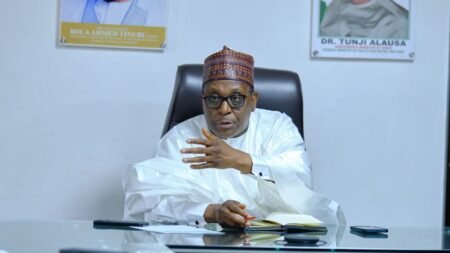







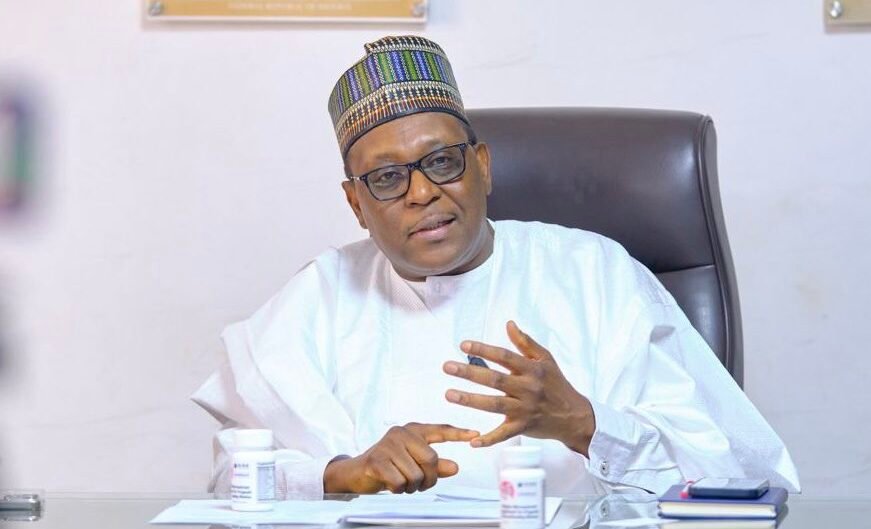
The Coordinating Minister of Health and Social Welfare, Muhammad Pate, has said that 74 per cent of patients in Nigeria are satisfied with healthcare facilities and primary healthcare services nationwide.
Mr Pate stated this in Abuja during the 2025 Joint Annual Review of the Health Sector, themed “All Hands, One Mission: Bringing Nigeria’s Health Sector to Light.”
The review, one of the government’s major accountability platforms, brings together key stakeholders to assess performance, review progress, and align priorities for the year ahead.
According to Mr Pate, citizens’ perception surveys conducted in 2023, 2024, and 2025 showed growing public confidence in the health system.
“The proportion of citizens who believe that government considers their views in health decision-making now stands at nearly half the population. Confidence in the overall direction of the health system has risen to 55 per cent, while confidence in the government’s capacity to manage health emergencies is now at 67 per cent,” he said.
“Patient satisfaction with healthcare facilities and primary healthcare services remains strong at 74 per cent. This is a commendable result, given the challenges our system still faces.”

However, he noted that affordability remains a major barrier for many Nigerians despite improvements in service delivery.
“Citizens have clearly indicated that affordability remains a major concern. Access to services is improving, but affordability must improve further,” he said.
Mr Pate said the federal government, in collaboration with the Ministries of Finance and Budget, is implementing social protection programmes such as the Medical Relief Programme and expanded health insurance for vulnerable groups to reduce financial hardship.
Insurance coverage grows
Mr Pate said health insurance coverage has doubled in two years, rising from about seven per cent to 12 per cent, driven by the enforcement of mandatory health insurance and the operationalisation of the Vulnerable Groups Fund.
“These results show that the measures we have put in place to reduce fragmentation, improve coordination, and enhance national ownership are beginning to yield real results,” he said.
The minister noted that the ministry would consolidate these gains by strengthening primary healthcare and expanding financial protection mechanisms for the poor and vulnerable.
“We must strengthen the primary healthcare system, which remains the foundation of our journey to Universal Health Coverage,” he said. “We also thank the National Assembly for its unwavering oversight and support. Appropriations and releases of funds are increasingly reflecting in real sector performance, and we will continue to ensure that every naira invested in health translates into measurable outcomes for Nigerians.”
Health outcomes across states
Mr Pate disclosed that 84 per cent of key performance indicators under the Presidential Health Sector Bond have been achieved as of the third quarter of 2025, with 35 states and the FCT conducting their State Joint Annual Reviews.
“All 774 local government areas now have National Health Fellows and Public Financial Management Officers, surpassing our targets,” he said, adding that maternal deaths had declined by 17 per cent and newborn deaths by 12 per cent in high-burden areas under the Miyami model.
The minister said that by focusing on 172 priority LGAs, Nigeria is already seeing measurable impact.
“We have moved from faith-based policy to evidence-based programming,” he said.
He also highlighted improvements in reproductive and child health indicators, noting that “the percentage of deliveries attended by skilled birth attendants now exceeds 90 per cent,” while antenatal care coverage and family planning uptake have continued to rise.
He added that vaccination coverage for key antigens, including measles, rubella, and HPV, has also met most targets, reflecting progress in immunisation programmes supported by development partners.
Financing and local manufacturing
Mr Pate reiterated the government’s resolve to build a more sustainable health financing system that reduces dependence on foreign aid.
“To achieve our goals, we will advance the localisation agenda, reducing dependency on external assistance by mobilising domestic resources, boosting local manufacturing of medicines, vaccines and health technologies, and building resilient supply chains,” he said.
He added that states and local governments must also invest more in health, education, water, sanitation and nutrition, in line with President Bola Tinubu’s ward-based development strategy.
“We are exploring innovative financing options such as fiscal measures on sugar-sweetened beverages, public-private partnerships, and digital solutions that enhance transparency and accountability in the use of health funds,” he said.
New health workers
The minister announced that over 20,000 frontline health workers have been recruited into federal tertiary hospitals in the past year to fill longstanding gaps.
“Within the last few months, over N50 billion has been approved to address arrears, allowances, and professional needs across cadres,” he said.
He added that the ministry is engaging constructively with professional groups to resolve lingering disputes.
“Our call to all health workers is simple: put the Nigerian person at the centre of attention. If we do that, all other issues can be resolved,” he said.
Economic returns
In his remarks, the Minister of State for Health and Social Welfare, Iziaq Salako, said the government’s National Health System Reform and Investment Initiative represents a strategic economic investment with clear returns.
“We estimate an economic return worth N4.8 trillion annually saved from losses to preventable diseases. We are equally poised to achieve a significant reversal of medical tourism, with the potential to domestically retain an estimated N850 billion spent abroad annually by Nigerians,” Mr Salako said.
He added that the reforms could lead to a potential 50 per cent reduction in preventable maternal and child deaths, and close the almost 19-year life expectancy gap between states.
READ ALSO: Tinubu’s health agenda to save N4.8 trillion annually- Official
“At the last count, under the roadmap, we have introduced no fewer than 21 new strategic policies, over 500 high-impact projects, 13 new federal tertiary health institutions and six cancer centres of excellence,” he said.
Mr Salako acknowledged that while the national health budget remains below the Abuja Declaration target of 15 per cent, progress has been made.
“The Federal Ministry of Health strongly supports ongoing advocacy to increase the Basic Health Care Provision Fund from one per cent to two per cent of the consolidated revenue fund,” he said.
Read the full article here