



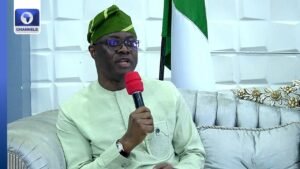



LAGOS – Minister of Power, Mr Adebayo Adelabu, says without an increase in electricity tariffs, the subsidy would have surged to about N3 trillion, a figure the government could not afford.
He also said the introduction of Band A which has a higher tariff has reduced electricity subsidy to N1 trillion from approximately N3 trillion.
He spoke during the investigative hearing organised by the Joint Committees on Power, Commerce, National Planning & Economic Development and Delegated Legislations,
Speaking, the chairman of the Nigerian Electricity Regulatory Commission, Mr Sanusi Garuba, said that energy invoices submitted by the DISCOs were N260 billion per month, while the GENCOs pay the sum of N20 billion.
According to him, the 2023 fiscal year closed with an electricity subsidy of N460 billion as a result of GENCOs refusal to pay for the gas supply.
He maintained that the change in the government’s economic policy as announced by the current administration in May 2023 which led to the fuel subsidy removal, and hike in foreign exchange, among others has a significant correlation with the hike in electricity tariff.
He noted that the N240 billion electricity subsidy per month in the 2024 fiscal year is unsustainable, adding that the country cannot afford the N2.8 trillion for this year.


The only budgetary provisions in the 2024 Appropriation Act stand at N450 billion, he said.
Speaker Tajudeen Abbas, who was represented by his Deputy, Hon. Benjamin Kalu affirmed that the hike in the electricity tariff “has not been well-received by our citizens. Numerous voices, including organized labour and industry experts, have voiced their strong opposition to this decision.
“The fears expressed by many are valid – that such a sharp increase in electricity tariffs will only exacerbate the economic hardships already faced by our people. There are genuine concerns that higher utility bills resulting from this tariff hike could have a ripple effect on operational costs for businesses, potentially leading to increased prices for goods and services.”
Chairman of, the House Committee on Power, Hon. Victor Nwokolo explained that the special committee was set up under a resolution of the House approving an investigation into the circumstances and rationale for the recent tariff review announced by the Nigerian Electricity Regulatory Commission.
He added: “NERC as regulator of the Nigerian Electricity Supply Industry (NESI) approved a request by the eleven distribution companies to increase tariff for the so-called Band A customers from N64 to N225 per kilowatts hour. NERC announced that by this new tariff, customers in Band A would be receiving at least 20 hours of electricity supply every day.
“Since this announcement, we have received a lot of complaints about misgivings on both the process and the substance of the regulatory action of NERC.
“Many of the complaints relate to the lack of consultation by the regulator as required by law before approving the increase. Others relate to the lack of 20 hours of electricity supply as promised by the regulator which has not been delivered.”
Read the full article here