



Welcome to a new year. In the history of Nigeria’s education sector from 1960 to 2024, the annual percentage budgetary allocations to the education sector by the Federal Government of Nigeria recorded its highest value of 17.59%; which is only higher than the UNESCO’s 15% benchmark in 1997, followed by the second highest value (13.00%) in 2008; while the very least values that are less than 1% , which are 0.69%, 0.53%, 0.62% and 0.88, occurred between 1970 to 1973, respectively.
Number of Schools
According to Universal Basic Education (UBEC) you 72022 National Personnel Audit of basic education institutions in the country, there are more than 177,027 basic education institutions with a total enrolment of 47,010,008.
According to Statista, In the school year 2018/2019, Nigeria had 27 thousand senior secondary schools (Public/Private) with about 5.2 million students.
Currently, Nigeria has a total of 274 universities (62 Federal, 63 States and 149 Private); 217 colleges of education (32 Federal, 50 States and 135 Private); and 156 Polytechnics (36 Federal, 50 States and 71 Private)
2025 Budget
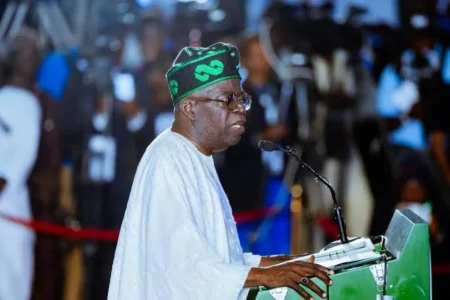
President Bola Tinubu in the proposed 2025 budget has budgeted N2.4 trillion representing 7.04 per cent for the education sector. On the priority of the government list, the education budget came third behind Defence and Infrastructure.
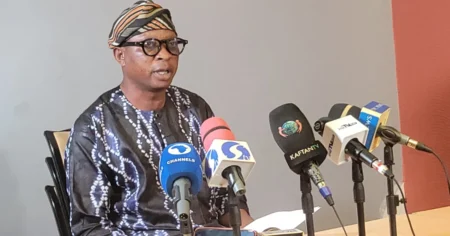
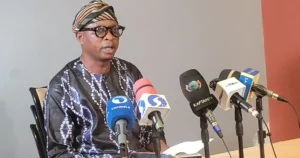
In this publication, Dr Femi Mosaku-Johnson as Administrator, Association of Corporate Governance Professionals of Nigeria; Chairman Hero Advisory Group and former part-time lecturer at the Lagos State polytechnic for 8 years. He examines the education and proffered solutions in this maiden agenda setting endeavour for the Minister of Education, Dr Olatunji Alausa in the New Year. Excerpts:
History has it that Olaudah Equiano was the first Educated Nigerian and first Africa author. Olaudah Equiano was born in 1745 to the Igbo people in the region now known as Nigeria.
The youngest son, he had five brothers and a younger sister. In the late 1800s, the British colonial government began to establish schools in Nigeria, primarily to train civil servants who would work in the colonial administration.
The curriculum in these schools included subjects such as English language, mathematics, and science. The 1930s saw the establishment of the University of Ibadan, which was Nigeria’s first university.
The university initially offered courses in the arts, sciences, and medicine. In the following decades, several other universities were established in Nigeria, including the University of Lagos, Ahmadu Bello University, and the University of Nigeria.
During the post-independence era, Nigeria experienced a significant expansion in the education sector, with the government taking a more active role in education provision. Western Nigeria Government led by Chief Obafemi Awolowo introduced Free Education which made a lot of people acquire education.
Universal primary education was introduced in the 1970s, by the military regime of General Yakubu Gowon and this was followed by the establishment of new schools and universities across the country.
Education is pivotal to nation building and the introduction of Western education in Nigeria changed the education and national landscape significantly. Going by historical context, the first mission school was established in Badagry in 1843 by the Methodist Missionary Society, and the curriculum focused on teaching the English language and basic arithmetic.
A few years later, in 1854, some Christian missionaries started CMS grammar school in Lagos which became the first secondary school in Nigeria. Along this path, of Baptist mission also in the early 1900s started a Baptist mission primary school which was later named after its progenitor W.J. David.
Late Akintola Williams was enrolled in this school in 1927 and this writer 1972. Military regimes however, saw a decline in the quality of education in Nigeria, with inadequate funding and poor management being the major challenges facing the sector.
This decline continued into the 1990s, with many Nigerian students seeking education abroad due to the poor state of the country’s education system. Nigeria has lost billions of Dollars to Japa syndrome.
This fund could have been utilised to strengthen and improve our education system in our country.
Series of negative impacts on our education system were observed over the years which includes; poor funding and thus poor educational infrastructures, inadequate classrooms, teaching aids (projectors, Computers, Laboratories and libraries), are almost nil with paucity of quality teachers and poor/ polluted and inhospitable learning environment.
The educational sector in Nigeria has been fraught with numerous challenges, ranging from inadequate funding, corruption from nursery schools to university such as immorality, bullying, buying of results, sex for marks, irresponsible faculty members and dismal infrastructure, as well as low-quality teaching that is bereft of any modern technology.
Another hiccup in Nigeria educational system is the widened educational gap between the north and south of Nigeria with the predominantly Muslim areas of the north lagging behind due to some historical antecedents.
The Almajiri system up till now is not standardised and millions of out of school children are roaming around the streets of the north. Our national educational policy has not addressed this ugly trend. We had a post -independence National Policy on Education in 1977.
Changes have resulted in three revised editions of the national educational policy. Nonetheless, the disparity is still significant and unacceptable. The future is bleak for these children. We are in a post-literate era in which no illiterate can survive.
“You need to operate a system of identification, phone and registration that you cannot achieve without basic education. There is the need to also train and retrain the teachers from time to time. If you don’t train them, they will drain you.
“Even many university lecturers are barely literate and functional illiterates. What do you expect from students that pass through these institutions?
Also politicizing of the institutions and embezzlement are the order of the day. The private sector including banks now prefers graduates of private universities because of obvious malaise.
Research is totally bereft of any meaningful impact and the academic communities are endemically oblivious of what’s happening in the industry. Thus, graduates of these institutions are near worthless to the industry.
Apart from infrastructure and funding issues, corruption is a critical disease that has to be cured in our education system. As early as 1977 when I sat for Common Entrance, I saw corruption face to face. My primary 5 (Nigerians) and 6 (Ghanaians) teachers were criminals. So, where do we go from here?
Sex for marks is the order of the day and up till now, we get this report that lecturers are bent on having carnal knowledge of the female students otherwise they cannot go forward. There is a total lack of checks and balances in our institutions. A case in point is the ongoing legal battle between the University of Calabar (UNICAL) and a Law professor who was alleged to have carnal knowledge of female students and male has to bribe him for mobilizing them for Law School. All must stand up to sanitize educational environments and ensure learning and character is taken to excellent levels.
The areas that the Minister of education should as a matter of compulsion work on are as follows;- Review of the syllabus to meet industry requirements- Education should prioritise ensuring adequate funding for public schools, implementing comprehensive curriculum reforms that align with market needs.
There is need to address teachers’ quality through better training and compensation; ensure increase access to quality education in rural areas, closing the gaps and ensuring all children in Nigeria are in school; actively collaborating with state governments and stakeholders to monitor and evaluate educational progress; making education more practical, relevant to the job market, and accessible to all children regardless of background.
Read the full article here