







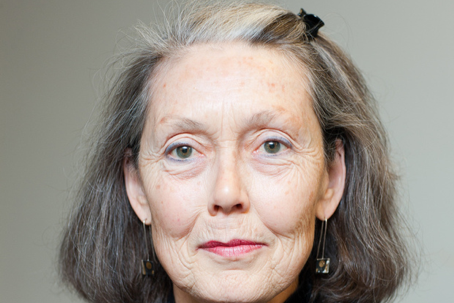
Canadian writer Anne Carson has won the 2026 Nobel Prize in Literature, according to an announcement by the Nobel Prize on Thursday.
Ms Carson won the prize for her “bold and inventive” body of work, which the Swedish Academy said has created new forms of contemporary literature through its “playful dialogue” with classical literature.
The 76-year-old writer is known for combining poetry, translation, and classical studies. She often uses stories and ideas from ancient Greek literature while finding new ways to present them to modern readers.
The award is not Ms Carson’s first major literary honour. She has previously received the Griffin Poetry Prize, the T.S. Eliot Prize, and the MacArthur Fellowship, among others.
Ms Carson is the second Canadian to win the Nobel Prize in Literature, after writer Alice Munro received the award in 2013. She is also among a small group of writers whose work has brought together poetry, translation, classical studies, and other art forms.
Nigeria has also had a writer receive the prize. Professor Wole Soyinka became the first Nigerian to win the Nobel Prize in Literature in 1986. He was also the first writer from sub-Saharan Africa to receive the award. The Nobel Prize’s profile of Professor Soyinka describes him as a writer whose work covers drama, poetry, essays and novels.




Nobel nominations are kept secret for 50 years, and the prize does not accept entries from writers themselves.
Nominations are made by eligible people such as members of the Swedish Academy, university professors, previous Nobel laureates and certain literary organisations.
Who is Anne Carson?
Ms Carson was born in Toronto, Canada, in 1950.
She studied Classics at the University of Toronto and completed her doctoral thesis, Odi et Amo Ergo Sum, in 1981.
Her academic background has remained an important part of her writing.
Ms Carson has taught at several universities and has worked as a poet, translator and scholar.
Her interest in ancient Greek literature appears in many of her works, including her translations of Sappho’s poems and plays by Sophocles and Euripides.
Why did she win?
The Swedish Academy praised Ms Carson for creating new literary forms while drawing on the classical tradition.
Her writing does not stay within one form. She has written poetry, essays, translations, and verse novels, and has also worked with theatre, opera, visual artists, and choreographers.
The Academy said this freedom has made her work important to the international art and literature scene.
Her best-known work
One of Ms Carson’s best-known books is Autobiography of Red: A Novel in Verse, published in 1998.
The book is based on the story of Geryon, a red, winged monster from Greek mythology.
Instead of simply retelling the ancient story, Ms Carson turns it into a modern story about love, rejection and growing up.
The book helped establish her as an important contemporary writer.
Carson’s other works
Ms Carson published Eros the Bittersweet in 1986. The book explores love and desire through ancient Greek literature.
In 1995, she published Glass, Irony, and God, which includes The Glass Essay, a long poem that combines personal experience with literary ideas.
She later published Float in 2016, a collection made up of 22 separate booklets that can be read in different orders.
Her 2024 work, Wrong Norma, also brings together different types of writing.
Ms Carson has continued to translate ancient Greek works, including writings by Sappho and plays by Sophocles and Euripides.
A career built around words
Much of Ms Carson’s work is centred on words, their origins and how their meanings can change.
The Nobel Committee said she has combined “the philologist’s obsession with words” with “the poet’s desire for new meaning.”
In simple terms, her work brings together the careful study of language with the freedom of poetry.
That approach has allowed her to move between academic writing and creative work throughout her career.
What the prize means
The Nobel Prize in Literature is awarded each year to a writer whose body of work is considered to have made an important contribution to literature.
Ms Carson’s win adds her name to a list of writers from around the world who have received the award.
For Canada, it marks another Nobel Literature victory 13 years after Ms Munro won the prize.
For Nigeria, Ms Carson’s win also brings back the record of Mr Soyinka, who remains the country’s only Nobel Literature laureate.
The Nobel Committee will formally present Ms Carson with the 2026 Nobel Prize in Stockholm in December.
Discover more from Premium Times Nigeria
Subscribe to get the latest posts sent to your email.
Read the full article here