








Health experts have warned that millions of Nigerians displaced by conflict and insecurity are being denied access to cancer prevention, diagnosis and treatment.
They said violence continues to cripple healthcare delivery across large parts of the country, worsening inequalities in access to life-saving services.
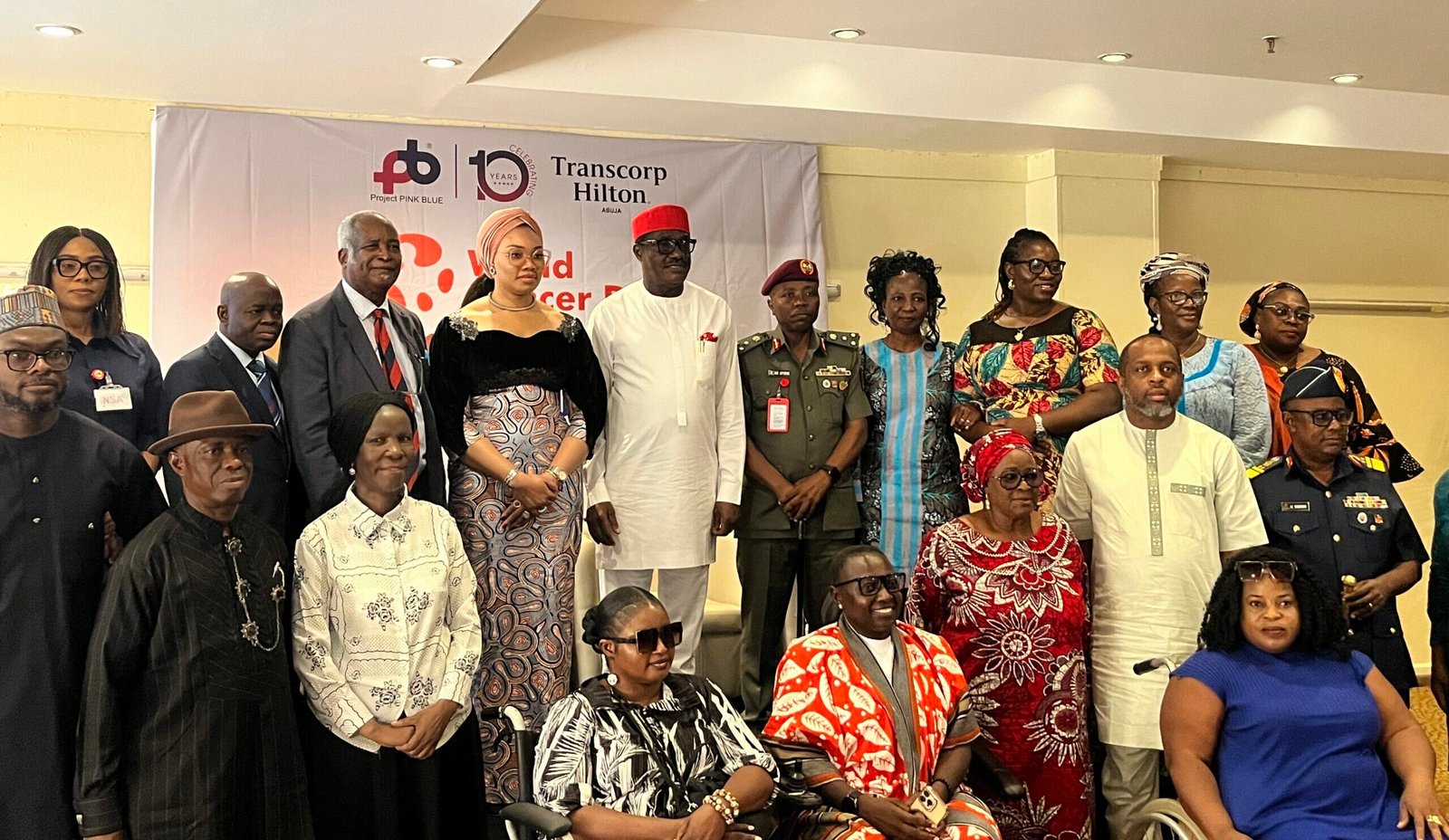
The concern was raised in Abuja on Tuesday at a World Cancer Day symposium organised by Project Pink Blue, where health professionals, advocates and policymakers examined how insecurity is worsening Nigeria’s cancer burden and deepening inequalities in access to care.
Speaking at the event, the President of the Nigerian Medical Association (NMA), Bala Audu, said cancer services are almost non-existent in internally displaced persons (IDP) camps, where an estimated 3.5 million women and children currently live across Nigeria.
Mr Audu explained that conflict disrupts the entire cancer care continuum, from screening and diagnosis to treatment and follow-up, as health facilities are destroyed, health workers displaced and referral systems broken.
“Insecurity makes travel unsafe, disrupts supply chains and forces the closure of clinics. Cancer care requires continuity, but conflict destroys that continuity,” he said.
He added that healthcare workers are often reluctant to work in high-risk areas, leaving many facilities understaffed and unable to provide even basic cancer-related services.
“Cancer care requires continuity, but insecurity disrupts diagnosis, treatment and follow-up, especially for people who are already displaced,” he said.
Preventable cancers still killing Nigerians
Mr Audu stressed that the most common cancers in Nigeria, including breast, cervical, prostate and colorectal cancers, are largely preventable through standard screening and early detection.
He noted that despite global efforts to eliminate cervical cancer as a public health problem by 2030, it remains the second leading cancer among Nigerian women, highlighting serious gaps in prevention and access.
He also cited examples from IDP camps where preventive services such as the human papillomavirus (HPV) vaccine were excluded from routine immunisation, despite the vulnerability of women and girls living in those settings.
“This shows that cancer care, both preventive and curative, is not prioritised, even outside periods of conflict,” he said.
He urged stronger collaboration between government agencies, healthcare providers and civil society groups to expand screening for preventable cancers and improve access to care in conflict-affected communities.
Conflict disrupting healthcare delivery
Mr Audu reiterated that insecurity across different parts of the country, including insurgency in the North-east, banditry and kidnapping in the North-west, separatist violence in the South-east, communal clashes in the North-central region and militancy in the Niger Delta, has severely disrupted healthcare delivery.
He noted that health facilities have been destroyed or shut down, healthcare workers kidnapped or forced to relocate, and referral systems broken, making continuity of cancer care difficult to sustain.
“In conflict settings, even basic healthcare services are affected. You can imagine the impact on something as complex as cancer diagnosis and treatment,” he said.
He added that the movement of health workers away from unsafe areas has worsened staffing shortages and contributed to both internal and external brain drain.
Growing burden
Also speaking at the symposium, Chioma Uzodinma, the First Lady of Imo State and Chairperson of First Ladies Against Cancer (FLAC), said cancer remains one of the most serious public health challenges facing Nigeria.
Mrs Uzodinma said the country records approximately 128,000 new cancer cases each year, placing a heavy burden on individuals, families and the health system.
According to her, breast cancer is the leading cause of cancer-related deaths among women, claiming over 16,000 lives annually, while prostate cancer remains the leading cause of cancer mortality among men.
“These figures are not just statistics. They represent mothers, fathers, children and communities devastated by a disease that is often preventable and treatable if detected early,” she said.
She warned that progress in cancer prevention and care is increasingly undermined by conflict and insecurity, particularly in the North-east, North-west and parts of the South-east, where attacks on health facilities and healthcare workers have disrupted services.
Mrs Uzodinma said insecurity has also worsened late presentation, with studies indicating that more than 70 per cent of breast cancer cases in Nigeria are diagnosed at advanced stages.
She expressed concern over Nigeria’s limited cancer treatment capacity, noting that the country requires an estimated 220 radiotherapy machines but currently has fewer than 15.
“In conflict-affected areas, disrupted transport networks, under-resourced facilities and high out-of-pocket costs leave millions without access to life-saving treatment,” she said.
Mrs Uzodinma added that women in rural and displaced settings often resort to self-medication or traditional remedies, further delaying professional care and worsening outcomes.
READ ALSO: How insecurity, poor access is worsening cancer care in Nigeria- Experts
Call for action
Godwin Kagior, a senior administrative officer at Project Pink Blue, said the organisation convened the meeting to confront how conflict and insecurity worsen existing gaps in cancer care and to identify practical strategies to ensure continuity of services in fragile settings.
Mr Kagior said the annual World Cancer Day symposium serves as a platform for high-level engagement, policy dialogue and accountability.
He added that behind every statistic is a human life, and the symposium must translate into stronger partnerships and tangible solutions to ensure no one is denied cancer care because of insecurity or displacement.
Read the full article here