







ABUJA – The Federal Capital Territory Emergency Management Department (FEMD) recorded significant achievements in 2024, rescuing over 3,500 lives from various emergencies and introducing initiatives aimed at strengthening disaster preparedness and response.
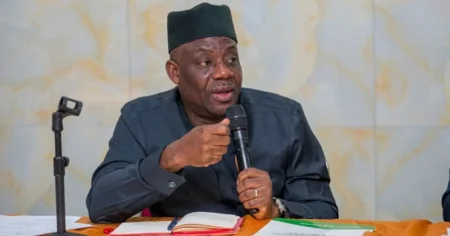
Speaking during the 2024 media parley with the FCT Minister’s Press Corps, the Acting Director-General of FEMD, Engr. Abdulrahman Mohammed, outlined the department’s milestones, challenges, and projections for 2025. Among the major incidents tackled were flooding, building collapses, fire outbreaks, road crashes, and an attempted suicide.
Engr. Mohammed revealed that FEMD’s proactive measures, such as partnerships with local divers, traditional rulers, and stakeholders, played a pivotal role in mitigating disasters.
“Emergency management must be a bottom-to-top approach involving traditional rulers and local government authorities.
This synergy has yielded positive results,” he said. In 2024, the department conducted over 165 emergency responses, rescuing 75 individuals from floods and 105 from col-lapsed buildings.
While FEMD successfully saved 1,230 persons from fire incidents without fatalities, four lives were lost to building collapses and floods.
Moreover, FEMD provided relief materials to affected communities, including displaced persons and households impacted by disasters. FEMD also collaborated with stakeholders like the Nigeria Meteorological Agency (NIMET), the Nigeria Hydro-logical Services Agency (NIH-SA), and traditional rulers to mitigate the impact of disasters.
Early warning systems and community based disaster management approaches proved vital in addressing flood risks, which affected several areas in the FCT, including Angwan Hakimi in Orozo, Dutse Makaranta, and Nyanya.
Notably, the department saved 105 individuals from building collapses, although four fatalities were recorded in incidents at Guzape, Garki 2, Kubwa, and Sabon Lugbe. FEMD also responded to earth tremors in Mpape, Katampe, and Maitama Extension, which left over 2,000 residents traumatised.
In its drive to improve preparedness, FEMD engaged schools through sensitisation campaigns, established disaster management clubs, and conducted anti-terrorism simulation exercises.
The department also partnered with the National Space Research and Development Agency (NARSDA) to enhance disaster response through geospatial data sharing and early warning systems.
FEMD distributed relief materials to disaster victims, including food items to 200 persons living with disabilities and Ramadan packages to internally displaced persons in Kabusa and Bwari.
Additionally, the department donated hospital equipment to Kuje District Hospital and school beds to Government Secondary School, Kuje. Looking ahead, Engr. Mohammed revealed plans to leverage technology for disaster management, including satellite-based risk assessment and real-time data monitoring to improve response time.
“Disaster management is a collective responsibility, and with your partnership, we will make the FCT safer for all,” he said.
Despite challenges such as obsolete equipment, inadequate funding, and limited office space, FEMD remains committed to its mission. Engr. Mohammed reassured FCT residents of the department’s dedication to protecting lives and property while calling on stakeholders, including the media, for continued support.
“Our goal is to enhance efficiency and effectiveness in disaster response. We will deepen collaboration with traditional institutions and area councils while expanding campaigns on traditional and social media,” he added.
Read the full article here