






1
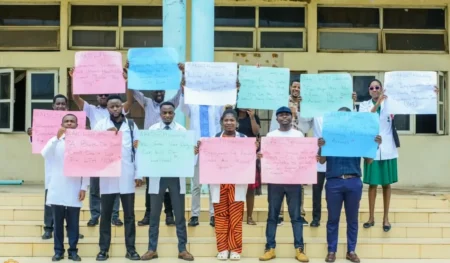
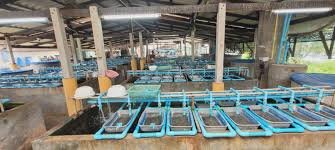
AWKA – The business of fish farming was the crux of the matter at a national fish breeding workshop organised by the Federal Cooperative College Oji River, Enugu State, and Kasersart University ,Thailand.
The workshop which was held at FCCO multi-purpose college auditorium was an exposition on the nitty gritty of fish breeding and the power of aquaculture to transform lives especially when built on systems that empower people, afforded participants opportunity to interface with expert fish farmers from Thailand and their counterparts in Nigeria.
Provost and Chief Executive Officer of the college, Dr. Jude Ejikeme Obidiegwu, underscored the importance of the summit as he described it as a platform for fish farmers across the country to obtain firsthand information on mechanised methods of fish productions not just for subsistence but on a commercial scale to enhance food security in the country.
Obidiegwu advised participants to leverage on the workshop to broaden as well as expand their knowledge of fisheries and aquaculture, emphasizing that fish breeding is a delicate venture but very lucrative if the right approach is applied.
Meanwhile Professor Kornsorn Srikulnath, who was part of the Thailand delegation to Nigeria, said they were in the country to expose Nigerians to better ways of fish productions and aquaculture in general.
Srikulnath stated that the partnership with Federal Cooperative College Oji River would be sustained inorder to consolidate on teachings and trainings of local fish farmers in Nigeria on modern methods of fish productions.
The Managing Director and Chief Executive Officer of the Fisheries and Aquaculture Business Development Agency (FABDA) in Anambra State and keynote speaker at the workshop, Mr. Emeka Martins Iloghalu, noted that the Nigerian catfish sector was more than just a cluster of ponds and processors.
Iloghalu noted that the sector is a dynamic value chain ranging from hatcheries, seed fish and feed production to harvesting both seed fish and grown fish, processing logistics and market distributions.
He said at the heart of scaling and sustaining the value chain lies strategic powerful force which he mentioned as the cooperative movement even as he argued that there has to be impetus and targets to drive the cooperative movement.
He said to advance Nigeria’s objective in the fisheries and aquaculture sector, partnerships were important to strengthen investments and support in the areas of economic development which borders on infrastructure with corresponding operational models and human capital development that borders on human resources.
Read the full article here