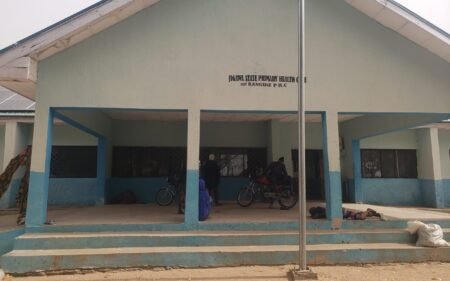









On a sweltering night in February 2024, Abdullahi Ibrahim, 56, a resident of Gwadabawa community in Yola North LGA of Adamawa State, collapsed. Family members rushed him to a nearby hospital, but he was pronounced dead shortly after arrival.
“The temperature was so high, coupled with epileptic power supply. At night, with no sufficient air circulation, he collapsed,” Yusuf Attah, another resident of the community, recounted.
Mr Attah described the incident as part of what residents now call a “recurrent disaster” — a pattern of extreme heat episodes between February and April that has intensified in recent years.
“This has been happening every February, March and April. It is increasing yearly,” he said, noting that communities now routinely advise residents to drink more water, sleep outdoors when possible, and seek medical check-ups during peak heat periods.
The case in Gwadabwa reflects a broader climate pattern that experts say is compounding public health risks across Nigeria.
Shifting climate patterns
Nigeria has two distinct seasons — the dry and rainy seasons — each with defining ecological and economic implications.
Nigeria’s northern region is typically characterised by low rainfall and longer dry spells, while the southern part experiences heavier rainfall and richer biodiversity.
Traditionally, the rainy season runs from late March or early April through October, bringing relatively cooler temperatures. The dry season spans November to March, often accompanied by the Harmattan — a dry, dusty wind from the Sahara.
However, in recent years, these seasonal boundaries have blurred. Unusual rain and dry spell patterns have emerged.
Rainfall patterns have become increasingly erratic, with heavy downpours recorded outside their usual periods. Over the past three years, Nigeria has experienced severe flooding across several states that has destroyed farmlands and infrastructure, leaving thousands dead and displacing millions.
At the same time, prolonged heatwaves have swept across large parts of the country, particularly in the North and North-central zones, raising fresh concerns about climate change and its cascading effects on health and food systems.
Heat alerts and public health warnings
Amid rising temperatures, the Nigerian Meteorological Agency (NiMet) has repeatedly issued heat advisories.
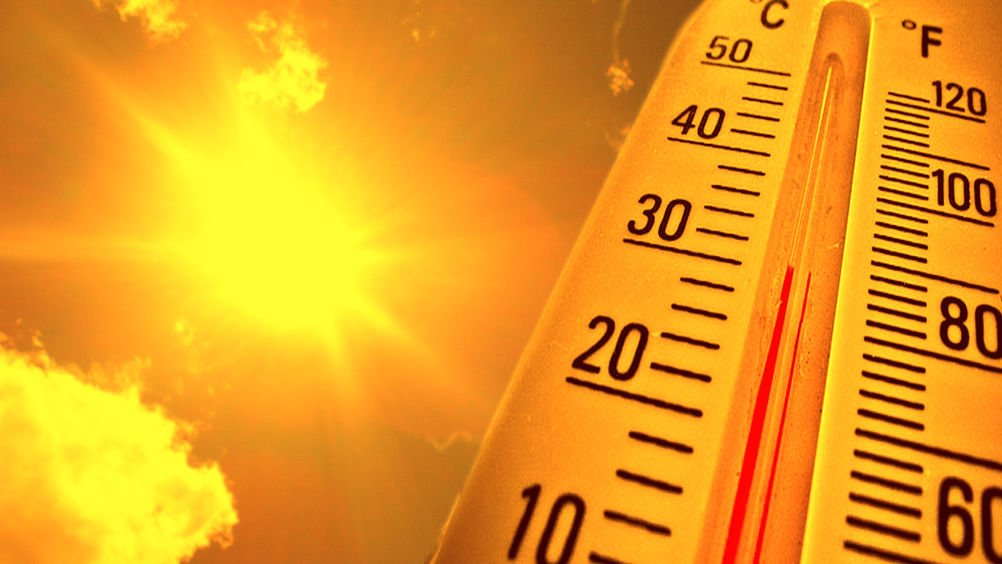
In its February outlook, the agency warned that daytime temperatures across much of the North and North-central states could range between 33°C and 36°C, with some areas nearing 40°C. Warm nights and increased heat discomfort were also projected across the South and the Federal Capital Territory.
NiMet cautioned that high temperatures could trigger dehydration, respiratory complications, and other heat-related illnesses, with northern Nigeria expected to experience more intense conditions.
The agency also highlighted the risk of dust haze during Harmattan periods, reduced visibility, and dry air — factors known to aggravate respiratory infections.
Meanwhile, the World Meteorological Organisation (WMO) announced in January that 2025 was one of the three warmest years ever recorded globally, underscoring the intensifying impact of climate change.
The UN weather agency noted that an analysis of eight international climate datasets showed that global average surface temperatures in 2025 were about 1.44 degrees Celsius above the 1850–1900 pre-industrial average.
In 2024, NiMet warned that high temperatures could lead to dehydration, heat-related illnesses and respiratory complications, among other chronic conditions. The agency also said northern Nigeria was expected to experience more intense heat than the southern region.
The prolonged heat has worsened the spread of heat-related diseases such as meningitis, particularly in northern Nigeria, raising significant public health concerns.
Similarly, the heatwaves have affected food availability, accessibility and affordability in parts of the country. This has prompted food systems advocates to urge farmers to adopt drought-tolerant and disease-resistant seeds to sustain food production throughout the year.
A “perfect storm” for meningitis
Health experts say extreme heat in Nigeria has a direct relationship with outbreaks of cerebrospinal meningitis (CSM), particularly during the peak dry season.
Northern Nigeria lies within Africa’s “meningitis belt,” a region stretching from Senegal to Ethiopia that records the highest global incidence of the disease.
Between March and April — often the hottest, driest and windiest months — outbreaks typically surge. High temperatures, low humidity and dust particles damage the respiratory tract, making individuals more susceptible to infection by Neisseria meningitidis, the bacteria responsible for meningitis.
The disease presents with fever, severe headaches and neck stiffness, and can result in death or long-term disability if not treated promptly. Children, the elderly and immunocompromised individuals are particularly vulnerable.
Public health authorities warn that while vaccination campaigns help reduce cases, climate variability could expand the transmission window and intensify outbreaks.
Heat waves and meningitis outbreaks
Recent data from the Nigeria Centre for Disease Control and Prevention (NCDC) show that Nigeria is battling a sustained outbreak of cerebrospinal meningitis (CSM), with transmission intensifying during the peak dry and heat season.
There has been an active meningitis outbreak in the country, with over 4,000 suspected cases and significant deaths reported between February and May 2025, primarily driven by a bacterium called Neisseria meningitidis serogroup C (NmC). NmC outbreaks are more common during the dry season, when low humidity and dusty conditions facilitate transmission
In its situation report (Epi Week 14, 31 March–6 April 2025), the agency recorded 296 suspected cases and 10 deaths in one week. Cumulatively, since the beginning of the current season in late 2024, more than 2,900 suspected cases and over 200 deaths have been reported across 24 states, underscoring the scale of the public health challenge.
According to the NCDC, the outbreak has been concentrated largely in northern states such as Kebbi, Sokoto, Katsina, Yobe, Gombe and Jigawa — areas that experience the most intense heat and dry Harmattan conditions.
Children aged 5–14 account for the highest burden of infection, while males represent a slightly higher proportion of cases. Health authorities say the combination of extreme temperatures, low humidity and dust creates favourable conditions for the spread of Neisseria meningitidis, reinforcing concerns that rising heat levels linked to climate variability may be worsening seasonal meningitis outbreaks.
The NCDC said emergency response measures — including enhanced surveillance, laboratory testing, case management and targeted vaccination — are ongoing in affected states.
However, public health experts have warned that unless climate adaptation, early warning systems and community awareness are strengthened, the convergence of extreme heat and fragile health systems could continue to fuel recurring outbreaks.
Sleepless nights, rising insecurity


In Akwa Ibom, Mfoniso Akpan described the fluctuating weather as “confused seasons,” noting that rainfall now extends into December and January — months previously considered part of the dry season.
“There used to be clear seasons. When one stops, another starts. Now it is mixed,” he said.
He described unprecedented night-time heat that forces families to sleep outdoors when they cannot afford fuel to power generators and fans.
“In this era of insecurity, it is risky. But inside the house, you are swallowed by sweat. You cannot sleep,” he said.
Such coping mechanisms — sleeping outside, increased generator use, and reliance on private cooling systems — highlight the intersection between climate stress, energy poverty and security concerns.
Impact on vulnerable groups
For persons with disabilities, the heat crisis presents additional burdens.
Joy Ubong, a social inclusion advocate and South-South Zonal Youth Coordinator of the Joint National Association of Persons with Disabilities, said traditional weather patterns have shifted noticeably.
“When I was younger, harmattan was intense — cracked lips, dusty legs. Now we hardly experience that. What we see is scorching sun causing heat rashes and skin defects,” she said.

She noted that persons with albinism face heightened risks from extreme sun exposure, which can severely damage their skin.
“How many hospitals in Akwa Ibom State provide sunscreen? Is the government funding free sunscreen distribution? Most quality sunscreens are imported and expensive. The cost of climate change on health is high for us,” she said.
Beyond health, she added that altered seasonal patterns are affecting fruiting cycles and agricultural productivity, undermining food security.
Food systems under strain
Beyond health, prolonged heatwaves are affecting food availability, accessibility and affordability.
Advocates have urged farmers to adopt drought-tolerant and disease-resistant crop varieties to maintain year-round production. However, smallholder farmers — who produce most of Nigeria’s food — often lack access to improved seeds, irrigation systems and climate-smart technologies.
With rising temperatures projected to continue, experts warn that the combined pressures of heat stress, disease outbreaks and food inflation could deepen vulnerabilities across communities.
Environmentalists attribute the intensifying heat patterns to global climate change, driven largely by greenhouse gas emissions. For Nigeria — already grappling with infrastructure deficits, fragile health systems and energy challenges — the implications are profound.
As heatwaves become more frequent and prolonged, health experts say adaptation must go beyond advisories.
Improved disease surveillance, expanded vaccination campaigns, urban planning that enhances ventilation, access to cooling systems, and targeted support for vulnerable populations are increasingly urgent.
For residents like Mr Attah, however, the crisis is deeply personal.
“We now know it is serious,” he said. “But knowing is not enough. Something must be done before more lives are lost.”
Medical expert speaks
Richard Jonathan, a medical practitioner in Borno state, said it is no longer news that heat waves have been a common occurrence in the Northern region of Nigeria, particularly in the North eastern and western parts of the country.
He explained that the situation is worsened by climate change, land degradation, and frequent deforestation, resulting in the loss of trees and vegetation.
In these regions, he said temperatures as high as 38-43 degrees centigrade have been recorded, similarly Cerebrospinal Meningitis also known as Meningococcus has been a common occurrence, especially around the heat, harmattan and dry seasons.
Mr Jonathan said there has been an increase in heat-related illnesses such as dehydration, heat exhaustion, and occasional heat stroke.
“Dust exposure, respiratory and eye conditions like allergic rhinitis, conjunctivitis, asthma exacerbation in asthmatics,” he noted are part of what is prevalent in the state.
READ ALSO: NCDC warns of Lassa fever, meningitis, foodborne diseases during festive season
“It’s worthy of note that the peak incidence of CSM coincides with heat and dry season conditions, which is explained by environmental factors and social determinants that favour its spread,” Mr Jonathan said.
He said there is, however, no direct causal link between heat waves and CSM, but that numerous scientific studies show a strong meteorological (atmospheric) relationship between weather conditions and meningitis outbreaks.
He recommended that people from 1-29 years and others, who are at-risk during peak season to get vaccination (Meningococcal vaccination)
“Avoid over- crowding, poorly ventilated places. Practice good respiratory hygiene by covering your mouth and nose when coughing or sneezing and wash hands frequently,” he added.
He urged individuals to seek early medical attention if symptoms such as higher fever, neck stiffness, headache, nausea, and light sensitivity, among others, appear.
“Stay hydrated and try to avoid strenuous activity in peak heat hours. Use a face mask to reduce the inhalation of dust during harmattan and dusty weather,” he said.
Read the full article here