








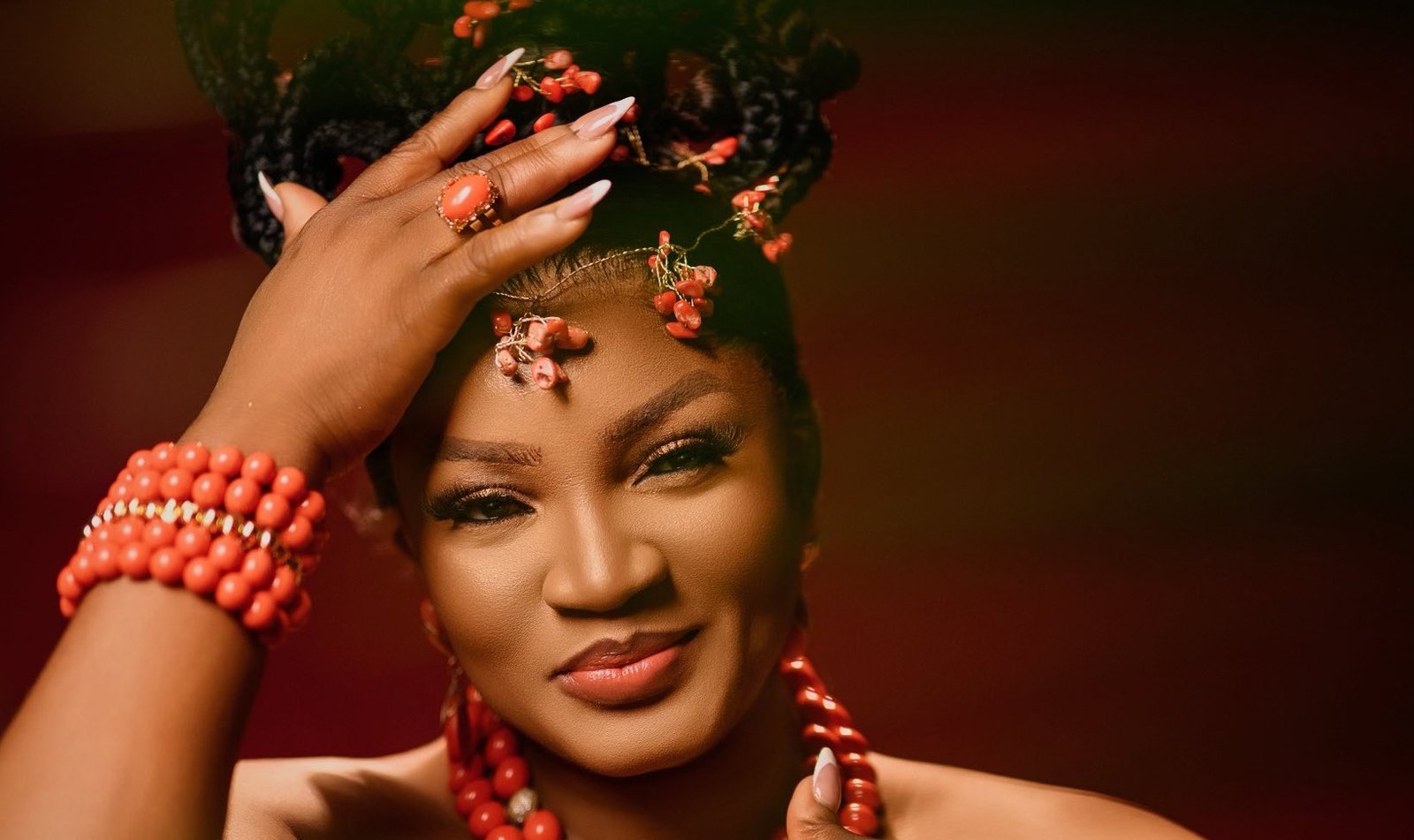
Twenty-one years after venturing into music and releasing two studio albums, veteran Nollywood actress and filmmaker Omotola Jalade-Ekeinde has revealed an interesting aspect of her 32-year-long entertainment career.
The award-winning actress made the remarks during an interview on Rubbin’ Minds on Sunday.
Asked whether there were decisions she would reconsider if she had the chance to relive her career, she said:
“No, I’ll do everything just the same. Well, maybe I would do more of my music. That’s the only thing that sometimes I go, okay, I shouldn’t have stopped. I should have just continued, because I started really strong”.
Explaining why she paused her music career, the actress, who was banned from Nollywood in 2005, said the industry’s intensity at the time made it challenging to balance both paths.
“I think I just got carried away by Nollywood. You know, Nollywood is very intense,” she explained.
Music career
The 48-year-old actress, who won an AMAA in 2005, recalled that her return to music initially gained strong international traction.
“I went, did my album. It was amazing. I followed up with a second album. That’s the one that got signed to Universal Studios in Hollywood. That’s when I got invited to the Grammys. It was great. It was an international standard.”
However, she eventually struggled to manage both careers.
“If I understood it the way I understand it now, I would have gone away from Nollywood for a minute for that alone. At the time, I hadn’t mastered that balance. They wanted me to stay back in LA to continue my musical career, but I came back and continued my movies and didn’t have time again.”
She dismissed suggestions that criticism or social media backlash influenced her decision to step back from music.
“No, no, talks never affect me. I understand the game and that there are various voices and opinions,” she said, adding that scheduling and career focus were the real challenges.
Three Decades In Entertainment
The actress, who is celebrating a rewarding acting career, said hers is a journey of adaptation and learning.
“When we started in 1995, it wasn’t really an industry. We had to learn quickly, adapt and observe what was happening in more exposed climes and ask how we could better what we do here to meet international standards.”
Reflecting on her relevance from the analogue era to the age of streaming, the 48-year-old actress attributed her longevity to constant reinvention while staying grounded.
“It’s about reinventing yourself, constantly finding your foundation and staying rooted to it. I don’t go with trends. I don’t do things to please people. I’m very true to my core. In the long run, people get to know you, and whatever you represent will shine through,” the filmmaker said.
She highlighted her work beyond acting, including activism, music, reality television, and international advocacy, noting that she rarely pauses to reflect on her achievements.
“Every time I achieve something, I don’t sit down and go, ‘yay.’ I say thank God, and then I ask, ‘What next?’ That’s what keeps me inspired,” the 48-year-old actress said.
Nollywood Standard, Action Films
Nollywood has grown through three eras: the VHS/CD Era, focused on quick, low-budget films; the Cinema Era, which brought higher production values to theatres; and today’s Global Era, where streaming platforms put Nigerian films on the world stage. Meanwhile, top filmmakers are driving the industry forward.
But the 48-year-old actress also identified inadequate funding as a significant obstacle to producing large-scale action films in Nigeria.
“I don’t think Nigerian filmmakers are afraid to tell any story. The problem is we don’t have finance, we don’t have money, and we don’t have enough investment,” she said.
She explained that action films are capital-intensive, making large-scale productions difficult.
“So naturally, it looks like fear, because you don’t want to do stuff and look funny doing it. We’ve done action films on a low scale because it requires a lot of money.”
#EndSARS, Threats To Her Children
The award-winning actress also spoke candidly about her experience during the 2020 #EndSARS protests, revealing that her children received death threats.
“I am used to death threats; I have received them many times. But I have never seen anything like what happened during #EndSARS. My kids started getting death threats. That was when it became weird.”
She said she was deeply involved in the movement, both locally and internationally.
“I was on the streets. I was doing international advocacy. I spoke with CNN, engaged with international NGOs and embassies.”
However, the escalation of threats forced her to reconsider her approach.
“When people started coming physically to my home and place of work to look for me, I knew I had to worry about other people and not just myself.”
She explained that she shifted from street activism to focused advocacy to protect her family better.
READ ALSO: Genevieve Nnaji isn’t my enemy; our fans fueled our alleged feud for decades – Omotola Jalade-Ekeinde
2027, ‘Tribal’ Politics
Weighing in on Nigeria’s political future, the actress, who has been vocal on activism, called for selfless leadership, insisting that the country’s challenges stem from governance, not its citizens.
“Until we find leaders in Nigeria who are ready to die for this country, we haven’t started,” she said.
Clarifying her statement, she stressed that she was speaking about courage and integrity, not violence.
“It’s a mindset. You can’t be afraid, and you can’t be materialistic. But I pray that tribalism will not be on the table in this election. Sadly, people are still doing this when there are bigger issues.”
The actress is one of Africa’s most influential filmmakers, with over 300 films to her credit.
She has received numerous honours, including being named among Time magazine’s 100 Most Influential People in 2013 and receiving the Member of the Order of the Federal Republic (MFR) in 2014.
Read the full article here