







The fight against the HIV/AIDS epidemic continues beyond the commemoration of the 2024 World AIDS Day. Dennis Onotu, the Branch Chief for the Continuum of HIV Care and Treatment at the US Centres for Disease Control and Prevention (CDC) in Nigeria, shares insights on the critical role of antiretroviral therapy (ART), the challenges of adherence, and innovative strategies to improve outcomes for people living with HIV (PLHIV).
In this interview with PREMIUM TIMES, Mr Onotu, a doctor, discusses how the US.CDC collaborates with local and global partners to strengthen Nigeria’s HIV response and achieve the ambitious UNAIDS 95-95-95 targets by 2030.
PT: Could you explain how antiretroviral therapy (ART) works to improve the health and quality of life of People Living with HIV (PLHIV)?
Mr Onotu: It is important to first understand what HIV does to the human body. The virus destroys the immune system of the person infected with it as it rapidly replicates and ultimately resulting in the inability of the human immune system to fight invading microbes such as viruses, fungi, protozoa and bacteria.
The microbes that take advantage of the weakened immune system of the human body are referred to as opportunistic infections and are responsible for most of the sicknesses experienced by People Living with HIV (PLHIV). Antiretroviral therapy (ART) is the treatment of HIV, using a combination of three or more antiretroviral drugs. ART prevents the virus from replicating and allows the immune system of the PLHIV to recover and mount the ability to protect the body against infections. ART does not cure HIV – hence the need for the patient to be on treatment for life or at least until a cure is found.
The goal of using ART is for PLHIV to achieve and sustain viral suppression to an undetectable level, meaning HIV has been reduced to a level below the limit quantifiable using a blood test. When this is achieved, the PLHIV can enjoy good health and have an improved quality of life.
PT: Why is adherence to ART so critical for PLHIV, and what are some common challenges they face in maintaining adherence?
Mr Onotu: Adherence is the patient’s ability to consistently take their drugs daily as directed by the doctor or healthcare provider. It also entails keeping all hospital or clinic appointments, as care of HIV includes ongoing monitoring to make sure that the ART is keeping the virus under control. Adherence to ART is the key to achieving viral load suppression and for the PLHIV to stay healthy.
PLHIV have some challenges that can affect their adherence to treatment. Some of these challenges include self-stigmatisation, which is often called internalised stigma. It is a situation whereby a PLHIV believe and accept some of the negative ideas and stereotypes about PLHIV and apply that to themselves. This can lead to them having feelings of shame or fear of disclosure of their status. This can ultimately affect their adherence to treatment.
Closely linked to that is discrimination, and this is basically the challenge PLHIV face whereby people treat them differently, especially within the health care facility. If they perceive being treated differently from others who are uninfected, this can affect their continuous engagement with that facility or provider. This can further affect their adherence to treatment.
Forgetfulness is another major challenge facing PLHIV. Some of them can forget to take their drugs and closely link to that is the issue of non-disclosure of HIV status. Many PLHIV fail to disclose to any member of their family that they are infected. Hence they result to taking their drugs secretly. So, when it’s not convenient because people are around, they may decide to skip the medications. Competing priorities also affect adherence to ART.
Sometimes, they have work, businesses or social engagements to attend to, and they are torn between going for the engagements or going to the health facility for their drug refill, check-up/follow-up.
The issue of alcohol and substance abuse generally can affect ability to adhere to medication. Other factors that can affect adherence are poor treatment literacy, cost of transportation to healthcare facilities, poor attitude to health, lack of dedicated caregiver and Gender-Based Violence, among others.
PT: How does non-adherence to ART affect public health, particularly regarding the transmission of HIV within communities?
Mr Onotu: Non-adherence negatively impacts not only the health of the PLHIV but also the population. Non or poor adherence leads to an increase in viral load in the blood, as well as an increased risk of the virus developing resistance to the drugs.
PLHIV with a high viral load can easily transmit the virus to other people through any of the established modes of transmission, especially through sex in the absence of condom being used or pre-exposure prophylaxis (PrEP). In summary, we can see that the issue of poor adherence to treatment not only impacts PLHIV but also impacts the population.
Non-adherence can lead to poor health for the PLHIV, transmission of HIV to others, and increased health costs from managing HIV drug-resistant cases.
PT: Could you share some specific initiatives or strategies that the US CDC has implemented to encourage adherence among PLHIV in Nigeria?
Mr Onotu: The US CDC, with funding from the US President’s Emergency Plan for AIDS Relief (PEPFAR) supports the government of Nigeria in the delivery of comprehensive HIV services including HIV prevention, treatment, provision of antiretroviral drugs and other support services. It also provides laboratory infrastructure and resources to support monitoring of and assess patients on treatment to ensure the drug is actually achieving its goal of keeping them virally supressed.
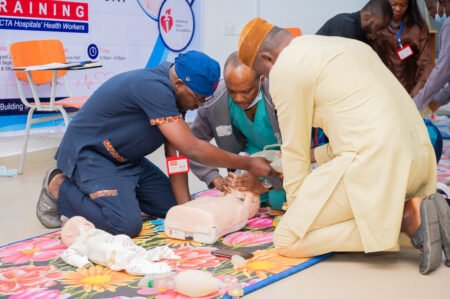
Specific examples of strategies that the US CDC has implemented to encourage adherence among PLHIV include training of healthcare workers to provide quality adherence counselling to PLHIV before and after ART initiation.
We also support the provision of job aids and information, education, and communication materials to educate PLHIV. We support the engagement of peer educators, support groups for PLHIVs and Operation Triple Zero (OTZ), an initiative that empowers adolescents and young people living with HIV to commit to achieving zero missed appointments, zero missed drugs, and zero viral loads.
PT: What role do implementing partners play in these efforts, and how do you coordinate with them to improve treatment outcomes?
The US CDC implementing partners are funded to work with governments across 18 supported states to provide direct service delivery at health facilities while other states are supported by USAID and the Global Fund. Our partners train healthcare workers to provide quality treatment services including the provision of adherence, counselling, job aids and standard operating procedures. We also provide human resources for health to support treatment services within the health facility.
We also provide funding for support groups and adolescent clubs. Our implementing partners also support the provision of viral load monitoring services for PLHIV as US CDC tracks viral load coverage and suppression among PLHIV as a way of assessing patients’ adherence to treatment in order to achieve undetected viral load.
PT: “Undetectable = Untransmittable” (U=U) has been a powerful message in HIV care. How is US CDC promoting this message among PLHIV in Nigeria, and how effective has it been in encouraging treatment adherence?
Mr Onotu: The Undetectable=Untransmittable is a strategic and powerful tool for promoting adherence. The US CDC supports the training and retraining of health workers to keep them abreast of recent developments in the management of HIV disease such as the U=U strategy. The message of U=U is integrated into the health talks given by the health workers in supported health facilities in waiting areas such as outpatient departments and during one-on-one counselling sessions with PLHIV.
The US CDC also supports the development of IEC materials on U=U, which are printed and distributed to patients in the hospitals and during community engagements.
READ ALSO: 120,000 Lagos residents with HIV receive treatment – LSACA
In 2019, the US CDC supported Nigeria in launching the U=U campaign in the country, aimed at increasing awareness about the benefits of adherence, sustained viral suppression and driving home the message that those who achieved undetectable viral load cannot transmit the virus to their sexual partners. Similarly in 2023, together with our implementing partners and Nigeria Health Watch, we supported an enhanced 12- week long U=U social media campaign that helped increase awareness of HIV treatment and adherence.
PT: How does the US CDC work with local healthcare providers to ensure they are equipped to support and encourage adherence among their patients?
Mr Onotu: The US CDC works through its implementing partners to train healthcare providers and equip them with counselling skills and job aids to enable them to provide quality adherence counselling and support to PLHIV. Also, our partners support healthcare facilities to provide HIV services that are convenient to the patient, depending on their condition. An example is providing people who are stable, healthy and have maintained viral load suppression with multiple months of ARVs, so they do not need to return to the clinic as often or linking them to community pharmacies or drug pick-up points, so they don’t have to travel long distances to get their drugs.
PT: What are US CDC’s goals in strengthening the HIV programme in Nigeria over the next few years?
Mr Onotu: Our goal is to support the government of Nigeria at national and subnational levels to reach its goal of ending HIV as a public health threat and achieving the UNAIDS 95-95-95 targets by 2030. Together with our implementing and government partners, we are making efforts towards achieving this goal. As at the end of September 2024, 82 per cent of the estimated PLHIV in US CDC- supported states know their HIV status, 97 per cent of those who know their HIV status are currently on treatment and 95 per cent of those on treatment have achieved viral suppression.
Read the full article here