




If the current plan by the Lagos State Government to birth a second airport in Lagos sail through, business organisations and the travelling public would be the most beneficiary of the project. OLUSEGUN KOIKI writes.
The plan by the Lagos State Government to construct another airport in Lagos is an audacious step, which will go a long way in boosting the sector’s economic contribution to the Gross Domestic Product (GDP) of Nigeria.
Apart from the facility helping to ease the traffic congestion on the road, especially for travellers from the Island to the Mainland for the purpose of air travel, it would also enhance competition in the state, increase ease-of-doing-business, while the scores of investments springing up in the Lekki-Epe axis would heave a sigh of relief.
The plan for the construction of Lekki-Epe International Airport by the State Government, dated back to 2009 when Mr. Babatunde Fashola as the governor of Lagos then, mooted the idea under the Public Private Partnership (PPP) scheme.
In 2011, as part of the competitive tender process for the construction of the airport, the State Government, through its consultants, advertised a request for pre-qualification (RFPQ) and 33 Nigerian and international firms indicated interest to participate in the ambitious project, but the project was delayed by opposition from landowners and difficulties in raising finance.
Of the 33 firms, 20 were Nigeria-based. They were to compete against 13 foreign companies, including Munich Airport Germany, Hyundai Engineering and Construction Co Limited and Canadian Commercial Corporation, among others. The project was estimated to cost $450,000 as at 2012.
But since Fashola left office in 2015, not much was heard of the project until in 2022 when Mr. Babajide Sanwo-Olu, the Lagos State Governor revived it with approval from the Federal Government.
Sanwo-Olu had said that construction on the new airport, would commence in 2023, would be built alongside the Lekki–Epe Expressway and would be on 3,500 hectares of land in the area.
By September 2024, the State Government announced discussions with the Portuguese construction firm Mota-Engil Consortium as a potential partner for the airport’s development.
Like the past attempts, the project went into oblivion until the governor through his verified social media handle on Saturday February 8, 2025, said it had a Memorandum of Understanding (MoU) with Summa Group, a Russian firm for the development and construction of the airport.
Sanwo-Olu had described the project as a transformative initiative aimed at improving connectivity in Lagos, boosting economic growth, and attracting global investments.
He emphasised that the Lekki-Epe International Airport would enhance travel and create new opportunities for businesses and residents across the state.
The airport is expected to be completed by 2027, according to Gboyega Akosile, the Special Adviser to the Governor of Lagos State on Media and Publicity.
Competition To Revenue Generation Of FAAN?
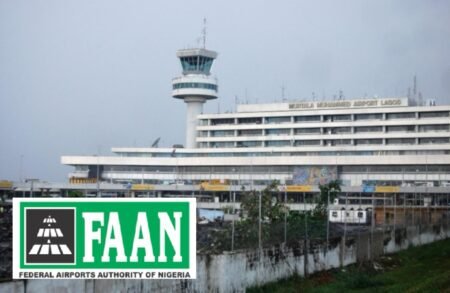
However, unlike the other state-owned airports like the Dutse International Airport in Jigawa, Anambra International Airport, Ebonyi Airport, Sokoto Airport, Bauchi Airport, Maiduguri Airport, Lafia Airport in Nasarawa and Birnin Kebbi International Airport and Kebbi State, among others that are not commercial viable, asking for refunds from the Federal Government and their burdens transferred to the Federal Airports Authority of Nigeria (FAAN), a second airport in Lagos would be a game changer.
A second airport in Lagos would bring a healthy competition between FAAN and the State Government, while the public would be the eventual beneficiary of the project.
Intermodal Transportation Coming To Fruition
Mr. Nuhu Adam, Managing Partner, TMSS Consulting, said that the signing of an MoU with the Summa Group by the State Government was a good development and a game changer for the state.
He explained further that the new airport would enhance connectivity to the proposed coastal road, the Lekki-Victoria Island and Eko Atlantic, which is presently the hub of activities for residential and companies.
Adam further expressed that the signing of the MoU was a bold statement by the Lagos State Government to put intermodal transportation infrastructure in the emerging industrial axis from Lekki-Epe axis.
He pointed out that the new airport would act as an economic driver for Lagos, maintaining that an additional airport in the state would not affect the revenue generation of FAAN, rather would propel it to increase its service delivery.
“The population of Lagos is big enough to service two airports. It will be to the interest of the people, investors and Nigerians as a whole.
“The coming up of another airport will not affect the revenue generation of FAAN. Airport Revenues are sourced from two major areas – aeronautical and non-aeronautical. If the management of FAAN scales up its operations, the proposed new airport will not have any negative impact on its operations, rather, it will only increase competition. The focus should be on service delivery in a competitive environment.
“The focus should be better service delivery in a competitive environment for an earned revenue. In the case of Lagos, a reliever airport is overdue. With the emerging commercial and industrial activities in the Lekki axis, the airport will be a vital outlet not only for commercial and cargo flights, but for flight training, military, search and rescue operations, and corporate and recreational flying,” he said.
Mr. Amos Akpan, aviation expert, described the airport as an infrastructure provided as a launchpad for socioeconomic development of the territory it is located.
Amos explained that the argument for prioritisation among contending development projects was left for the development agenda, matched against the needs of the people in that territory.
According to him, the State Government would have put this project through a thinking process, weighing it against others like speed rail linking Ikeja to Lekki/Epe, water for all houses, electric/alternative power sufficient to run homes and businesses, modernised and available modes of mass transport, e-security infrastructure fit for 24hours lifestyle and others.
“Lagos knows what is needed now and how to reach out to private partnership to get these infrastructure in place. We request that the interest of the estimated 25 million Lagosians is captured in each project and also, to grow its status as a mega city and the commercial headquarters of West Africa.
“My point is that instead of arguing if the airport is necessary, let’s check if it is the priority for now amongst the needed projects for the state. And if it passes the test check, let’s do it,” he said.
On the implication on FAAN revenue, Amos advised the agency to focus on innovative services and customer satisfaction and not only on “money making.”
He posited that the Lagos airport generates sufficient financial resources to cater for its sustenance and other airports in the country, pointing out that the airport currently has the highest traffic in terms of aircraft, passenger and cargo movements in West Africa.
He added: “You don’t treat investment in an airport like N20 billion invested and you harvest by financial balance sheet of N40 billion in five years. Airport is an infrastructure investment whose yield spans 30 years to 50 years and you are still harvesting the gains from all sectors of your state.
“The concern should be to have a management that can attract patronage such that the revenue can pay for its operational expenses and leave a positive balance sheet to back up funding for newer facilities. Investors want returns on their investment and the people want a platform for trade and tourism expressed in air movement of goods and services.”
He also advised the Lagos State Government to get a management team irrespective of race, colour or political affiliation and give them the enabling environment to perform optimally.
Mr. Olumide Ohunayo, the Director, Research, Zenith Travel Ltd, said Lagos needed an additional airport to accelerate growth in the state.
He doubted if the proposed airport would operate international flights, maintaining that Lagos State Government required complementary airports to improve traffic into the state that would be beneficial to all airlines, travellers and the economy of the state, provided the airports have some level of costs and service efficiency.
Ohunayo also explained that the Lekki-Epe Airport would peak at the low-cost carriers and passengers to the Island, adding that international and scheduled flights would still retain the MMA.
Ohunayo also observed that the coming onboard of Gateway Airport at Remo-Ikenne axis, may affect the projection for the new airport in Lagos due to proximity.
“Another fear I am having about Lekki-Epe Airport is that another airport is coming up in Shagamu, which will split the vibrant Ijebu, Okorodu, Epe travellers. These are airports that springing up within and around Lagos should ginger FAAN to improve its quality of services, cost efficiency, aeronautic project and the choked airside space for aircraft parking.
“Quality services and cost are the things that will determine what happens to any airport and for any airport to be used by airlines. Luckily, the Lagos State Government is also tying an airline to that airport, which would be owned by the State Government. I look forward to it and I don’t see any threat to FAAN, but FAAN should up its game and ensure that they get more revenue for their services from the airports under their domain,” he said.
On the model of operations, Ohunayo said it was necessary for the government to allow the airport to commence operations first before deliberating on the model to be adopted.
He, however, suggested that a a reputable airport company should be allowed to manage the facility on behalf of the State Government, rather than full concession.
“It should remain owned by the Lagos State Government if they really want it to be an airport that will compete with others within regions, considering the proximity of other airports,” he proposed.
Read the full article here