








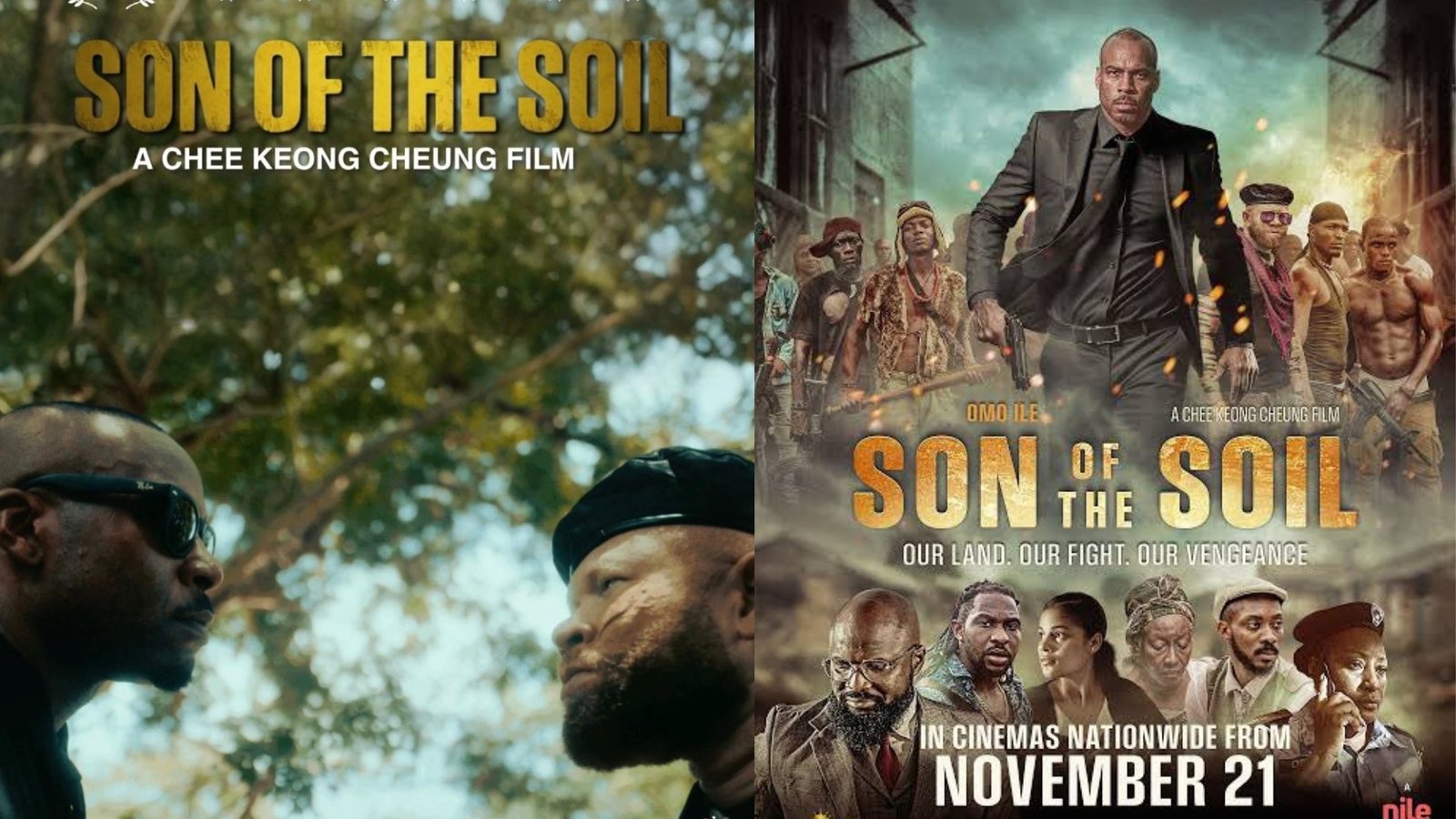
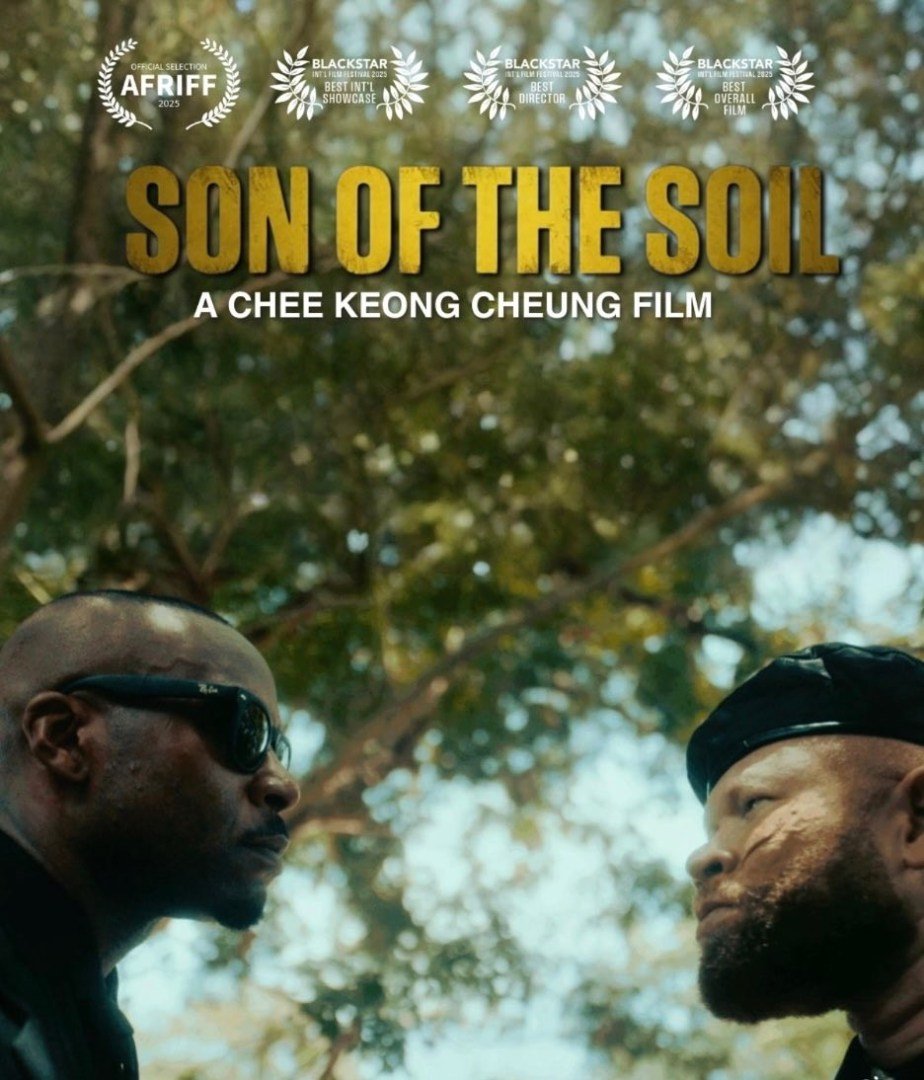
In an era when Nollywood is stretching its limbs toward the global market, ‘Son of the Soil’ (2025) arrives with quite a bit of intrigue.
Though initially released in December 2025, the movie only became available on the international streaming platform Netflix on 1 March 2026.
A UK–Nigeria co-production directed by Chee Keong Cheung and written by and starring Razaaq Adoti, the film clearly wants to be Nigeria’s John Wick.
The action movie featured all the stunts and gimmicks of the genre, but it didn’t make an impression.
Instead, what audiences get is a muscular but uneven revenge drama, a film brimming with ambition, kinetic violence, and Lagos grit, yet weighed down by thin characterisation and a script that mistakes intensity for depth.
Plot
The movie opens with a news report on the outbreak of a drug called ‘Matrix’, that was responsible for the death of many in the streets of Lagos.


Shortly after, it tells the story of Ronke, a young woman running late for work. Her colleague had arranged one of the hotel rooms so she could quickly change into work outfit.
However, while she was at it, the occupant of the room came in, and she witnessed a murder. In a bid to video the event, she got caught, leading to her untimely death, but before her death, she sent a voice message to her brother Zion.
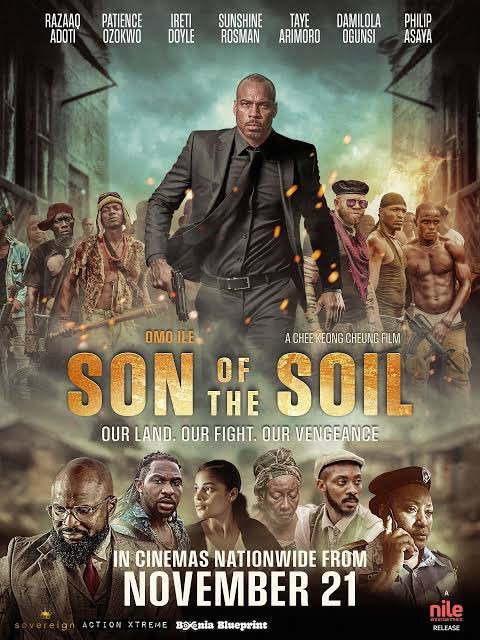
Zion Ladejo (Adoti), a dishonourably discharged Nigerian Special Ops soldier now living in the United States, is summoned home by a desperate SOS from his sister Ronke (Sharon Rotimi). By the time he arrives, she is dead, framed as yet another casualty of a deadly fentanyl cocktail called “Matrix.”
The drug, we learn, is flooding Lagos under the watchful eye of Dr Baptiste (Philip Asaya), a polished medical professional who doubles as a calculating narcotics kingpin.

Ronke’s murder was quickly dismissed by the police, forcing Zion to investigate his sister’s death himself, but it was only the beginning of trouble.
Performance
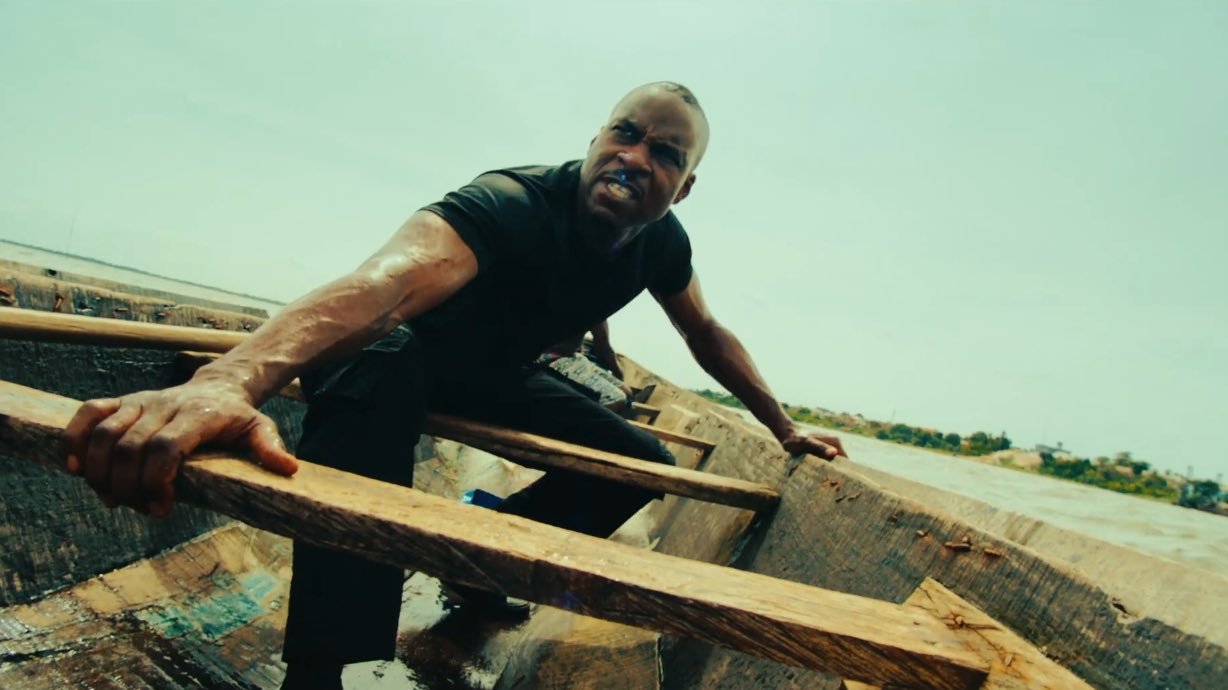
Adoti, as the protagonist, commits physically to the role. His role as Zion is imposing, intense, and convincingly dangerous. The actor clearly understands the physical grammar of action cinema.
His appearance in a Black suit and soft-spoken nature closely match the Hollywood character John Wick.
But emotional vulnerability, the element that might have elevated the character, rarely surfaces. Zion suffers, yes. But we are told this more than we feel it. Good acting shows rather than tells.
Supporting performances vary. Some Nollywood veterans like Patience Ozokwor and Ireti Doyle inject theatrical flair that adds texture; others feel underwritten.
Sharon Rotimi’s Ronke, in particular, is given too little screen time to register as more than a tragic catalyst.
Strengths
Let us give credit where it is due. Cheung directs the action with admirable confidence. Shot entirely on location, in the slums and streets of Lagos, ‘Son of the Soil’ captures Lagos in all its claustrophobic intensity; crowded danfos, yellow tricycles (Keke), chaotic open-air markets, neon-lit backstreets and noise from different daily activities.

The fight choreography is raw and bone-crunching rather than balletic. The camera lingers on impact, such as knives cutting close and blood spills, giving the movie the sense of action it needed.
There is even a moment, absurd yet oddly daring, when Zion staggers from an intensive-care ward straight into a bustling street market wearing nothing but a backless hospital gown. It might seem excessive, but it’s undeniably not a common stunt in Nollywood. And in those moments, the film feels alive.
The movie captures the streets of Lagos in all their natural detail; it spares no detail. Also, it shows the deplorable state of some Nigerian police cells, and the movie exposes some realities about corruption in the Police Force.
Weaknesses
Where Son of the Soil falters is in its writing.
Adoti’s script frames Zion as a mythic avenger, unstoppable, brooding, and haunted. But beyond grief and vague references to past sins, we learn little about the man beneath the muscle. Unlike John Wick, where grief is textured and world-building meticulous, Zion operates in a moral vacuum.
READ ALSO: MOVIE REVIEW: In ‘For Better or Worse’, love survives, but at what cost?
His sister Ronke exists primarily as narrative fuel, a device to justify carnage. The film gestures toward themes of diaspora identity, family loyalty and systemic corruption, yet never fully interrogates them.
Even the villains, though serviceably menacing, lack dimension. Dr Baptiste’s dual identity as healer and destroyer is ripe for psychological exploration. Instead, he remains a stock antagonist with expensive suits and evil intentions.

The film’s dialogue oscillates between earnest melodrama and action-movie cliché. Emotional beats feel rushed. Plot conveniences pile up. Stakes that should devastate instead merely propel the next fight sequence.
Balance
Still, dismissing Son of the Soil outright would be unfair.
The film represents something important: Nollywood’s willingness to experiment in a genre long dominated by Hollywood and Asian cinema.
Action filmmaking in Nigeria is still evolving, and this production demonstrates technical growth, tighter choreography, more disciplined cinematography, and international collaboration.
It signals intent. But ambition alone does not equal excellence.
Son of the Soil wants to be Nigeria’s John Wick. It delivers the violence, vengeance, and a brooding protagonist. What it lacks is the narrative precision, emotional resonance and mythic world-building that made that franchise iconic.
The movie is entertaining, but ultimately a weak Nigerian John Wick.
Verdict
6/10
Son of the Soil is streaming on Netflix
Read the full article here