







The World Health Organisation (WHO) has launched a Strategic Preparedness and Response Plan to combat the ongoing Mpox outbreak which has been declared a public health emergency of international concern.
WHO said in a statement on Monday that the plan covers a period of six months from September 2024 to February 2025.
The plan outlines a coordinated global, regional, and national response to stop human-to-human transmission of the virus.
Mpox, formerly monkeypox, is a rare infectious disease spread through contact with infected animals or people. Symptoms include fever, headache, muscle aches, and a rash. It can lead to severe complications.
Appeal for funding
The organisation has appealed for $135 million in funding to support the plan’s implementation, which focuses on surveillance, prevention, readiness, and response strategies.
It added that the plan also emphasises the need for research, equitable access to medical countermeasures, and community empowerment.
WHO noted that to combat the outbreak, strategic vaccination efforts will target high-risk individuals, including close contacts and healthcare workers, to break transmission chains.
It said that globally, the focus is on leadership, timely guidance, and access to medical countermeasures for vulnerable groups adding that it is collaborating with international partners and networks, including the ACT-Accelerator Principals group, the Standing Committee on Health Emergency Prevention, Preparedness and Response, the R&D Blueprint for Epidemics, and the Interim Medical Counter Measures Network, to enhance preparedness, readiness, and response.
This coordinated effort aims to strengthen global response and protect the most at-risk populations.
Also, a virtual scientific conference will be held on August 29-30, 2024, hosted by the WHO R&D Blueprint in collaboration with Africa CDC, CEPI, and the National Institute of Allergy and Infectious Diseases.
The conference aims to align Mpox research with outbreak control objectives, bringing together experts to share knowledge and coordinate efforts towards a unified response.
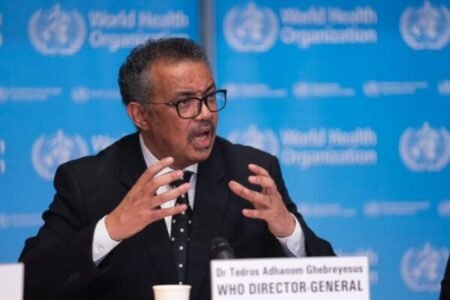
WHO Director-General, Tedros Ghebreyesus, said the prevalence of Mpox could be curtailed.
“The Mpox outbreaks in the Democratic Republic of the Congo and neighbouring countries can be controlled and can be stopped.
“Doing so requires a comprehensive and coordinated plan of action between international agencies and national and local partners, civil society, researchers and manufacturers, and our Member States. This SPRP provides that plan, based on the principles of equity, global solidarity, community empowerment, human rights, and coordination across sectors,” he said.
READ ALSO: Mpox not new COVID – WHO
WHO intensifies Mpox response efforts
WHO headquarters and regional offices have established incident management support teams to lead preparedness, readiness, and response activities, significantly scaling up staff in affected countries.
Within the Africa Region, where the need is greatest, the WHO Regional Office for Africa (AFRO) and Africa CDC will jointly spearhead the coordination of Mpox response efforts.
They have agreed on a unified approach, adopting a one-plan, one-budget strategy as part of the Africa Continental Mpox Strategic Preparedness and Response Plan, currently under preparation.
At the national and sub-national levels, health authorities will adapt strategies in response to current epidemiological trends, ensuring a targeted and effective response to the evolving outbreak.
Read the full article here