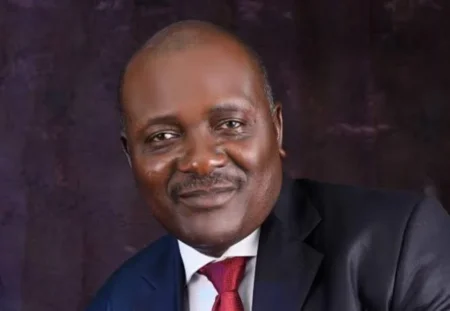








Mr. Oluseun Olawore is the Founder and Chief Executive Officer of Olawore Motor Company (OMC), a company that fabricates and manufactures cars in Nigeria. In this interview with IIKECHI EZEAKO, he said that the company is poised to get its manufacturing licence from the National Automotive Design and Development Council (NADDC) and become the leading local vehicle manufacturing company in the country. He asserts that there is a critical need to develop technical know-how if any serious manufacturing is to take place in the country. He also speaks on other issues in the Nigerian automotive industry. Excerpts:
Please, can you us about the company and what does?
It is into the fabrication of cars from scratch. We like to see ourselves as the first indigenous car manufacturer in Nigeria. We are into designs of all cars, the making of components for all car parts. We only borrow the engine and wiring, every other thing is ours.
We try to take it 80 to 85 percent mark whereby we say the local content in this particular vehicle is about 85 percent. We are about getting our manufacturing licence from National Automotive Design and Development Council (NADDC). Once that is done, we will announce to the entire world that we are here.
How did you get into auto manufacturing?
I have been a car mechanic for 23 years. I studied mechanical engineering in LAUTECH, Ogbomoso. I also did exclusive engineering, self taught automotive engineering, which also included design, fabrication, and welding. I have done that for more than two decades. As a normal Nigerian that tries to aspire to bigger things, I thought that I can’t just be a mechanic for two decades; I decided to go into manufacturing. Not just cars, anything that moves on wheels, including motorcycles. And very soon we are going to get into marine space as well.
What is the motivating factor that is driving you?
We love speed, if you remember as little boys, when you give a child a toy he will play with it until he breaks the toy. He goes to the parent to repair it. In my own case if the toy is broken, I will fix it before my parents get back because as Nigerians, they will discipline you. From trying to put things together at that age, I knew I was focused from a young age to fixing things and being a mechanical engineer and working in the automotive space.

How has it been over the years?
It has been lovely; I would not have another way, if I were to do it again, I will do it the same exact way.
What have been the challenges?
They are regular challenges every business or entrepreneurial adventure always has. Some people will say the main challenge is funding, I think that is secondary. I think the primary challenge is the technical know-how. We spend a lot of time learning what people are not learning and that is why we are able to exist in a space where not a lot of people exist.
What is pushing you despite the challenges you mentioned?
Passion, this is our life, we don’t have any other life. Whether the country is bad or not we have to eat. And we have to do what I have to do, which is engineering, fabrication and manufacturing.
How will you describe the manufacturing space in the country?
The manufacturing space in the country needs a lot of development. I won’t say that we are not really manufacturing but we are not operating at the top end of manufacturing. We bring in already manufactured parts then we put them together and we call them a whole. If we are to develop ourselves like the Chinese and the Europeans and the Americans then we have to understand that learning the design of component parts and manufacturing those tiny little pieces of parts is the real beginning. Then you can then assemble those things you have manufactured.
What do you think that the government can do to make the environment less hostile to businesses?
For us, we try to exit without the government intervention. When the government tries to make the space conducive for business, it is an advantage to us. I am using China as an example, China never had it easy, there was a time they depended on Russia 100 percent to build stuff, and Russia closed their doors, and they looked inwards and began to build stuff for themselves. Regardless of how the environment is, we can actually make things happen if we know where we are going. If you are going to Benin, there is no need to head towards Badagry. We need to develop the technical know-how to build things for ourselves.
What skills would you recommend to a young man or woman who wants to do what you are doing?
The person has to understand Science, Technology, Engineering and Mathematics (STEM),it is very important. It’s when you understand these as basics that you can now blow it up into other industries including aeronautics, marine, automobile, rail etc. So welding, metallurgy, engineering and of that are very important.
Let’s talk about the Nigerian attitude towards manufacturing and doing things. What do you think can be done to change Nigerians’ attitude to science and technology?
I think it starts from the schooling, the education system. For me, the most important part of schooling is secondary school. When you get it wrong from secondary school, you hardly get it right. But when you get your science, technology, engineering or mathematics right from secondary school, it helps you to direct yourself properly into what courses you want to learn in the university and you can apply yourself in whatever area you want. In our company, we are not dependent on whether the environment is conducive or not, we want to create the conducive environment by ourselves whether the environment likes it or not.
In the next five years, where do you think the company will be?
We are hopeful that we will be in mainstream manufacturing at that time; I cannot put a number to it. We will keep doing what we do and keep putting one step at a time. I know we will get to where we want to get to.
Read the full article here