


![LIVE [EDO]: CITY BOYS SOUTH SOUTH RALLY](https://www.talkaboutnigeria.com/upsoophu/2026/04/1777338451_hqdefault-300x225.jpg "LIVE [EDO]: CITY BOYS SOUTH SOUTH RALLY")





1
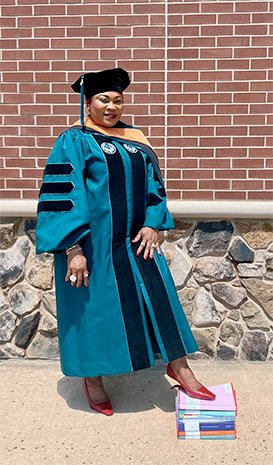
Dr. Ngozi Philomena Anonyuo is from the Ogboli Quarters of Ibuzor in Oshimili North Local Government Area of Delta State. Dr. Anonyuo, who recently bagged the Doctor of Nursing Practice (DNP) degree from Walden University in the United States of America (USA), in this interview she granted EJIKEME OMENAZU from her base, speaks on how she took her Nursing studies to the zenith unlike in Nigeria where nurses hardly pursue their course above the first degree. Excerpt:
Could our readers meet you? Can you tell us about yourself and your early life?
Thank you very much for this opportunity. My name is Dr. Ngozi Philomena Anonyuo, a Doctor of Nursing Practice (DNP) and a passionate advocate for quality health care delivery. I was born and raised in Nigeria in a closely-knit family that valued education, discipline, and compassion for others. My early life was shaped by a deep sense of responsibility—both to my family and to my community. I grew up seeing how access to good health care could make the difference between life and death. I witnessed relatives, neighbours, and even friends suffer from illnesses that could have been prevented or managed with the right medical intervention. Those experiences planted in me a seed of compassion and a desire to contribute to health care, even though I didn’t know exactly how at the time. I would describe myself as determined, resilient, and guided by faith. Every milestone in my life has been achieved through hard work, prayer, and perseverance.
Could you tell us about your educational background?
My educational journey started in Nigeria, where I had my basic and secondary school education. I pursued higher education in the United States of America, and it was there that I truly found my path in the health sector. After earning my nursing degree and gaining practical experience in various clinical settings, I advanced into graduate studies. Recently, I was awarded the Doctor of Nursing Practice (DNP) degree from Walden University. My doctoral project focused on improving diabetes care among Black American patients by equipping nurses with targeted education programmes. The project demonstrated significant improvement in both the knowledge and confidence levels of nurses, which directly impacts patient outcomes.
Why did you choose Nursing as a career?
Nursing chose me before I consciously chose it. I have always had a natural inclination to care for people, to listen, to empathise, and to help relieve suffering. When I moved to the United States, I recognised that nursing was a field that combined my compassion with professional skills. It gave me the opportunity not just to work, but to serve humanity. Nursing is more than giving medication—it is about healing, educating, comforting, and advocating. That broader purpose was what inspired me to choose and stay committed to this career.
Did you have the Nursing profession in mind when you travelled to the USA, Or, did you pick it up when you got there?
To be honest, when I travelled to the USA, my initial plans were not set in stone. Like many immigrants, I was searching for a career path that was meaningful and sustainable. It was in the USA that I discovered nursing as both a calling and a profession. Seeing the respect and opportunities accorded to nurses, as well as the impact they make in the health system, convinced me that this was the right path for me. It was not just about securing a livelihood; it was about fulfilling a purpose.
Nigerians hardly study Nursing up to Doctorate level. Could you explain why you took Nursing up to that level?
Yes, that observation is correct. Many Nigerians stop at Diploma, Bachelor’s, or Master’s levels in Nursing. However, I strongly believe that excellence has no limits. For me, advancing to the Doctoral level was not just about academic achievement; it was about gaining the skills and knowledge required to influence policies, design interventions, and mentor the next generation of nurses. A doctorate in nursing empowers you to contribute beyond the hospital ward—it positions you as a leader, a researcher, and a change agent. I wanted to be able to bridge the gap between practice and policy. That’s why I pushed myself to this level, despite the challenges.
People focus more on practical aspects of Nursing than the theoretical aspects. Where do you place your own focus?
I believe both are equally important. Nursing is a practice-based profession, but without theory, practice lacks direction. My focus has always been integrative: combining strong evidence-based theories with compassionate and competent practice. During my doctoral programme, my project centred on staff education interventions. That is theory being applied in practice. I do not separate the two; rather, I believe good theory informs good practice, and good practice refines theory.
Nursing in Nigeria is seen as a career for women. What is your take on this?
That perception is outdated. While it is true that women have traditionally dominated the nursing profession, nursing is not about gender— it is about service, competence, and commitment. Around the world today, we have countless men thriving as nurses, bringing unique strengths to the profession. In Nigeria, I think we need to change that narrative and encourage both men and women to pursue nursing. A patient does not care whether the person saving their life is male or female; what matters is competence and compassion.
As a Nursing Scholar, what practical health issues have you helped to resolve in the course of your studies and practice?
Through my doctoral project, I worked on improving diabetes management among Black American patients by training nurses on culturally sensitive education strategies. The results were encouraging: nurses reported a 25.7-point increase in knowledge and greater confidence in educating patients. This translates into improved patient care, better self-management, and reduced complications. Beyond my project, I have been involved in clinical practice where I participated in patient safety initiatives, preventive health education, and chronic disease management. Each effort may seem small, but together they contribute to healthier communities.
Despite efforts being put on by governments and agencies, incidence of malaria and other common diseases have continued to be on the rise. What is your view on this and how could this trend be checked?
The persistence of malaria and similar diseases in Nigeria reflects gaps in preventive health care, public education, and infrastructure. While policies exist, implementation remains weak. For example, mosquito nets and medications may be distributed, but without consistent community education and monitoring, the impact is minimal. To check this trend, Nigeria needs a multi-pronged approach: Strengthening primary health care centres; investing in public health education at the grassroots; improving sanitation and waste management; promoting research into locally relevant solutions. We must move from reactive treatment to proactive prevention.
How do you think the Federal and State Governments can reverse the trend of medical tourism?
Medical tourism is a symptom of a weak health system. Nigerians travel abroad because they have little confidence in local facilities. To reverse this, governments must invest heavily in infrastructure, technology, and training. Doctors, nurses, and other health workers must also be motivated through proper remuneration and working conditions. If Nigerians can access world-class care at home, the desire to travel abroad will diminish. It is not rocket science; it is about prioritising health.
What is your take on the Federal and State Governments’ budgets on health?
Frankly, the budgets remain inadequate compared to our population size and health care needs. Health should not be treated as an afterthought—it is the foundation of national development. When citizens are healthy, they are productive. The Abuja Declaration recommends that African nations allocate at least 15% of their annual budget to health, yet Nigeria consistently falls short of this. Without significant increase and better accountability in health financing, progress will remain slow.
How will you assess the efforts of private health facilities or hospitals in the Nigerian health sector?
Private health facilities have filled a critical gap in Nigeria’s health sector. Many are innovative, responsive, and willing to invest where public facilities fall short. However, private care is often expensive, creating inequalities in access. I believe the solution is stronger public-private partnerships, where governments set clear standards and work hand-in-hand with private players to make quality care more accessible and affordable
Based on your experiences, what advice would you proffer as regards the Primary Health Care in Nigeria?
Primary Health Care (PHC) is the backbone of any successful health system. In Nigeria, PHC centres should be revamped, equipped, and staffed adequately. Communities must be able to access basic services like maternal care, immunisations, health education, and chronic disease management right at their doorstep. My advice is that Nigeria should: Increase funding and staffing for PHC centres; train community health workers who understand local languages and culture; integrate technology—such as mobile health platforms—for tracking and education and strengthen referral systems so that complicated cases move smoothly from PHC to secondary or tertiary hospitals. If we fix PHC, we reduce the burden on tertiary hospitals and prevent many avoidable deaths.
What is your closing remarks?
My journey has been one of determination, faith, and commitment to excellence. I believe every Nigerian child deserves access to quality health care, and every Nigerian nurse deserves the opportunity to grow to their fullest potential. Nursing is not just a profession for me—it is my life’s mission. And my message to the younger generation is simple: whatever your passion, pursue it with determination, discipline and faith.
Read the full article here