



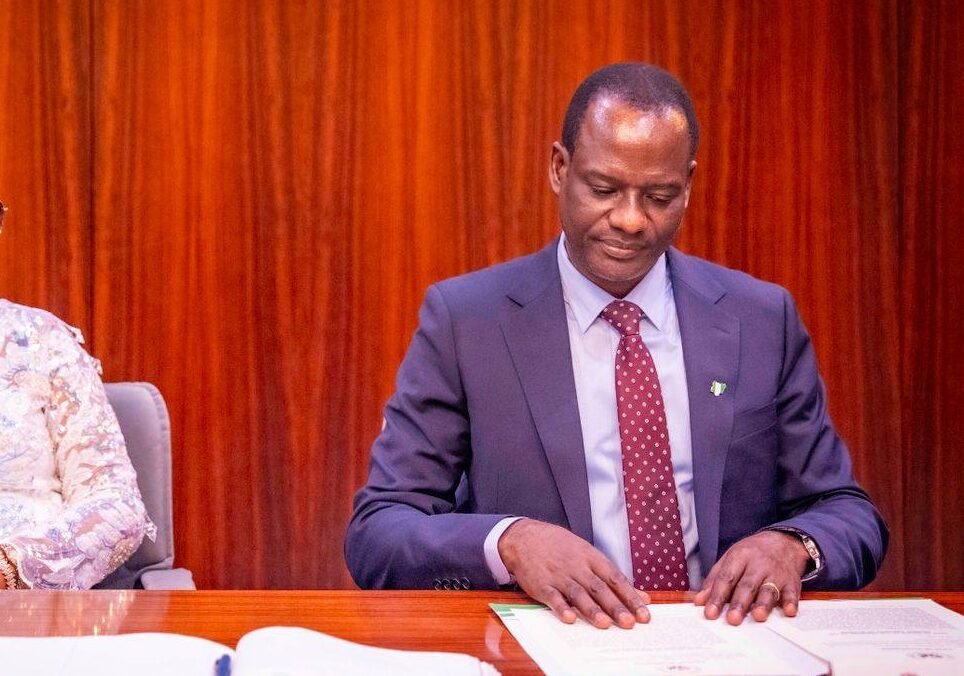
The Minister of Finance and Coordinating Minister of the Economy, Taiwo Oyedele, has confirmed that Nigeria has accessed the first $1.5 billion from its $5 billion financing arrangement with First Abu Dhabi Bank (FAB).
Mr Oyedele disclosed this while speaking to journalists after the Federal Executive Council (FEC) meeting in Abuja on Monday.
He said the financing facility, which had earlier received approval from the National Assembly, is intended to refinance expensive debt, fund infrastructure projects and support budget implementation.
“The approval for that loan went to the National Assembly, so everybody is aware of it. It’s for refinancing of expensive debts, financing of infrastructure, as well as budgets,” he said.
He added that, “So, we don’t want to start making press releases each time we do a drawdown. It is not different from any other loan.”

The minister’s comments provide the first official confirmation that the government has begun drawing on the financing package.
Last week, Bloomberg reported that Nigeria had accessed about $1.5 billion through a Total Return Swap with First Abu Dhabi Bank, marking the first utilisation of the broader $5 billion facility.
Mr Oyedele said the government deliberately structured the financing arrangement to allow funds to be accessed in tranches rather than all at once.
READ ALSO: FEC approves N215bn for CNG buses, $900 million agriculture financing – Minister
According to him, the approach is intended to reduce borrowing costs by ensuring Nigeria only pays interest on funds that have been drawn.
“The loan is meant to be a drawdown in tranches, and one of the advantages of that is, if you need $5 billion and you take everything at once, you start paying interest, even though you’re not spending all of it now. So, this has been structured in a way that makes us even more efficient in the cost of borrowing by taking what we need part time,” he explained.
Mr Oyedele said the phased approach forms part of the government’s broader debt management strategy aimed at lowering financing costs while meeting critical funding needs.
Read the full article here