







When 25-year-old Aisha Muntari delivered her first child nine years ago by a traditional birth attendant in the Sabuwar Unguwa area of Katsina State, north-west Nigeria, she had no reason to register the baby at any birth registry.
Seven years later, Ms Muntari had her second born, and thereafter the third child who is now four years old.
“None of them was registered after birth. We didn’t think birth registration was important to us as parents and to the children. So, we didn’t bother to register them,” the mother of three told PREMIUM TIMES in an interview in Katsina.
Ms Muntari is not alone on this trajectory of poor birth registration.
In Abuja, Nigeria’s capital city, Hannatu Gambo, like Ms Muntari, said she had no reason to document her five children’s births at the registry.
“I don’t know if a birth registry exists in Abuja,” Ms Gambo who lives at Gidan Mangoro, a rural part of Abuja, told this reporter.
With many mothers delivering their babies either at home or rural primary healthcare centres (PHCs), it is an undeniable fact that many births go unregistered, experts say.
Birth and death registrations have remained a major issue tugging at the heart of Nigeria’s development plan, with many births taking place, especially in the hinterlands, without being documented by the authorities.
Over 70 per cent of births take place in rural communities outside healthcare facilities and without any form of documentation, Michael Ijiko, a consultant obstetrician and gynaecologist at the Federal Medical Centre in Makurdi, Benue State, told PREMIUM TIMES.
“The current data (on infant-maternal mortality) are based on data from tertiary health institutions; they are a minute reflection of the burden of infant-maternal problems. The burden is more in northern Nigeria,” Mr Ijiko explained.
“Many of the births in Nigeria are happening outside the healthcare system. Nobody is recording childbirth; we don’t have accurate data for planning,” Emmanuel Ameh, a professor of pediatric surgery and chief paediatric surgeon at the National Hospital in Abuja, Nigeria’s capital city, said, echoing Mr Ijiko’s thoughts on the issue.
These experts’ perspectives are corroborated by the United Nations Children’s Fund (UNICEF). The global body said the low levels of birth registration in Nigeria, which it puts at 62 per cent, “underestimate the true scale” of child health issues.
In its assessment of the health predicaments of women of childbearing age and children between ages five and 15 in Nigeria, UNICEF said Nigeria accounts for “10 per cent of global deaths for pregnant mothers. Latest figures show a maternal mortality rate of 576 per 100,000 live births, the fourth highest on earth.”


According to a 2023 report, titled, ‘Improving maternal and newborn health and survival and reducing stillbirth: Progress Report 2023’, Nigeria accounts for the second-highest number of maternal and child deaths globally, after India.
The report revealed that in 2020, about 788 women and children died ‘per thousand’ in India and about 540 women and children ‘per thousand’ died in Nigeria.
In the same year, India accounted for 17 per cent of global maternal, and neonatal deaths and stillbirths, while Nigeria accounted for 12 per cent.
Another critical sphere of Nigeria’s development where the database is lacking is the education sector where the government disputes the United Nations Educational, Scientific and Cultural Organisation (UNESCO)’s figures on Nigeria’s out-of-school children.
While a 2022 UNESCO report stated that about 20 million of school-age children are not enrolled in school, the country’s Universal Basic Education Commission (UBEC) puts the number of out-of-school children aged six to 18 at 10 million.

The disagreement between UNESCO and the government underscores the chronic problem of inadequate data collection in Nigeria.
Government officials at the Federal Ministry of Health and the Primary Health Care Board in Abuja claim data on children are often harvested during vaccination exercises across Nigeria, but experts question the technical know-how of vaccinators in gathering reliable data for planning purposes.
“What is the capacity of health professionals at the primary healthcare centres and vaccinators to document newborns during routine checks?” Mr Ijiko queried.
He said there are specific persons trained to gather and document statistics of people through biometric processes.
Nigeria’s President Bola Tinubu acknowledged the crucial role data could play in addressing Nigeria’s challenges, but the government failed to allocate funds to the National Population Commission in the 2024 budget for the headcount.
More than half of Nigeria’s under-five deaths – 64 per cent – result from malaria, pneumonia or diarrhoea; an indication that improved investment in healthcare can improve the situation.
Messrs Ameh and Ijiko say there has been improved investment in the health sector leading to a reduction in infant mortality in the country. However, Nigeria still has one of the highest infant mortality rates in the world with marginal progress, because “the proportion of patients able to access appropriate treatment remains low.”
Salma Anas, a presidential aide on health, blamed Nigeria’s high infant mortality rate on dysfunctional primary healthcare centres.
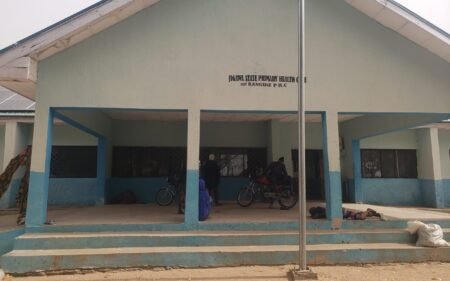
Recently, Nigeria’s House of Representatives said only 20 per cent of the country’s 34,000 primary healthcare centres (PHCs) are functional.
The PHCs, largely located in rural areas, are bedevilled by a lack of medical equipment, drugs, qualified personnel, electrical systems, beds, and road networks, an issue re-echoed by Mr Ameh when he said the number of children’s hospitals in the country are not sufficient to meet the healthcare needs of a fast population of Nigerians.
Data implications for Nigeria’s development
Nigeria’s burgeoning population calls for concern as its youthful population lacks essential skills and education for economic growth. Also, the country is plagued by infrastructure deficits in healthcare, roads, water and education sectors.
The resultant effects of the problems are self-evident – insecurity and poverty remain intractable in Nigeria, with 133 million citizens living in multidimensional poverty, according to the National Bureau of Statistics.
These challenges have been accentuated by inadequate databases for planning, a development expert, Jide Ojo, told this newspaper in a telephone interview.
Law enforcement failure fuelling non-birth registration
In Nigeria, the National Population Commission is statutorily saddled with the responsibility of registering all births and deaths in the country.
There is a legal obligation to register every birth in the country. The Births, Deaths Compulsory Registration Act of 1992, compels parents to register the birth of their babies within 60 days after delivery.
However, Ms Muntari and Ms Gambo are not aware of the legal obligation to register their children even after several years of birth.
“I am not aware that it is mandatory to register every birth in Nigeria,” Ms Gambo said in Hausa, a language widely spoken in northern Nigeria and many parts of West Africa.
Nigeria borrowed the law on birth registration from Britain, its former colonial master. However, awareness of the law and its enforcement remains poor.
While the legislation provides for a timeframe within which every birth must be registered, the law does not stipulate punishment for defaulting parents.
UNICEF says that “a well-developed and functioning civil registration system… promotes efficient government planning, effective use of resources and aid, and more accurate monitoring of progress towards achieving the Sustainable Development Goals.”
A birth certificate serves as a foundational identity for operational identity purposes like education and a passport for travelling.
Even the few registrations taking place are being done manually.
The process of registering births shows that “registered births are sent from all the registration points to the central office every quarter and at the end of the year.”
Digitalisation as solution
Recently, the Nigerian government launched the electronic Civil Registration and Vital Statistics System (e-CRVS), a digital platform for the documentation of birth and stillbirth, birth attestation, adoption, marriage notification, divorce notification, migration, and death.
Experts suggest a transition from the current paper-based data collection system to a digitalised platform that allows the capturing of infant identification. This will enable agencies to tap into the information that helps to provide better responses to the needs of infants.
Mr Ameh, the professor of paediatric surgery, recommended the establishment of a database for the registration of newborns across rural communities.
“There should be policy redirection and incentives for women of childbearing age, and childhood vaccination programmes,” Mr Ijiko suggested as ways of boosting childbirth registration. “Strengthen the primary healthcare centres, where the real gain will be made.”
Francis Fagbule, a healthcare professional at the University College Hospital in Ibadan, Oyo State, called for the enforcement of the birth registration law.
“The government must look for incentives to encourage parents to register births, especially in rural communities.
In other countries, without a social security number, you cannot access social services,” Mr Fagbule, an associate lecturer at the University College in Ibadan, said.
In August 2023, Babajide Sanwo-Olu, the governor of Lagos State, south-west Nigeria, announced free antenatal care and child delivery services to pregnant women residing in the state.
As a measure of incentivising child delivery in healthcare facilities, the Muhammadu Buhari Mother and Child Hospital in Makurdi, Benue State, slashed the cost of childbirth from N10,000 (about 10 dollars) to N5,000.

Luper Uvah, who heads the hospital, told PREMIUM TIMES that the measure was geared towards encouraging pregnant mothers to patronise the hospital for child deliveries. He added that there is an ongoing process of digitalising the hospital’s services for efficient service delivery and planning.
To address the issue, the National Youth Service Corps (NYSC), the National Population Commission (NPC) and UNICEF announced a collaboration geared towards enhancing birth registration in Nigeria.
The NYSC programme is a nationwide exercise mandatory for graduates under age 30. Under the scheme, graduates of tertiary institutions provide services across public and private sectors for one year.
Leveraging on the NYSC’s wide reach, the population agency and UNICEF hope to achieve a digitalised birth registration process in 22 states of Nigeria and the Federal Capital Territory (FCT).
The exercise intends to reach most of Nigeria’s 774 local government areas with benefits to at least 12 million under-five eligible children who will be registered as primary beneficiaries.
This report is produced under the DPI Africa Journalism Fellowship Programme of the Media Foundation for West Africa and Co-Develop.
Read the full article here