








1
Delivering the keynote at the Annual Lecture of the Nigerian Association of Judicial Correspondents (NAJUC), Justice Folashade Bankole-Oki emphasised the need for a tech-driven and people-focused justice system.
The Role of Media in Judicial Reporting
This segment is particularly relevant to many of you in this room. Indeed, majority of the attendees here are somewhat related to judicial journalism.
In jurisdictions like Nigeria, where most of the population lacks direct access to court proceedings, the media plays a vital role in informing the public. Judicial correspondents serve as the bridge between the courts and the people.
Their role is twofold: to inform, and to act as watchdogs.
In Nigeria—and indeed across many African nations—the media has historically served as a tool for exposing judicial inefficiencies, abuses, and injustices, while also highlighting commendable judgments and legal reforms.
However, it is no secret that a degree of friction and mistrust exists between the judiciary and the media. There have been numerous instances of inaccurate or biased reporting of court proceedings. Likewise, speculative reporting on ongoing litigation has sometimes undermined trust in both the judiciary and the media itself.
In this address, I aim to shed light on the responsibilities and boundaries of judicial correspondents as well as the importance of integrity and diligence in their work.
I have attempted to highlight what exactly the role and responsibilities of the media should be.
1. Awareness and Self-Education
Every judicial correspondent must possess a foundational understanding of the law and judicial knowledge. Conferences such as this one are invaluable, but thankfully, the availability of legal resources online makes continuous learning easier than ever. There are numerous non-degree legal courses online that can greatly enhance a correspondent’s competence. For those who do not wish to take any exams, there is enough material out there which suffices.
Legal correspondents have the critical responsibility of translating complex legal jargon into accessible, accurate narratives—without oversimplifying or misrepresenting key details. This knowledge is important because judicial correspondents have a duty to educate the public through concise yet accurate summaries and analyses of court judgments, legal procedures, and legislation.
In covering high-profile cases—especially those involving public sentiment or national interest—objectivity and accuracy must be non-negotiable. This becomes more compelling when there is a nationwide bias towards one of the parties. This also applies to journalists involved in televised broadcasts and legal discussion forums. There is wide coverage of these television shows. Some of these correspondents are so well-informed that they are often mistaken for legal practitioners.
Personally, I find several of these correspondents’ analyses, publications and interviews insightful and engaging.
2. Transparency and Accountability through Responsible Media
A vibrant and well-informed media can promote transparency and accountability within the judiciary. Consistent, unbiased, and professional reporting can act as a deterrent to judicial misconduct or delays, and even spotlight inefficiencies such as court backlogs or administrative corruption—issues that often begin at the registries.
Globally, we’ve seen the media function as a check on both executive and judicial power. Once trust is earned, the media becomes a powerful catalyst for judicial and institutional reform.
There is however a downside to this powerful tool falling into the hands of the wrong judicial reporter because power wielded irresponsibly can be harmful. There have been some very damaging reports which have caused a lot of damage.
I recall a situation in which a disgruntled litigant orchestrated the publication of a defamatory article against a judge—someone I know personally. If not for the judge’s doggedness and integrity, it would have ended up badly. However, they picked the wrong person! She promptly took the paper/ magazine to court, only to find out that it was one of these unidentifiable outfits that people hide behind to vent their frustration.
The reporter behind the article was identified, and apparently, he is now trying to settle out of court, rather than having to face a heavy punitive fine in damages for libel.
Such instances underscore the importance of caution and accuracy. Judicial correspondents need to be extremely careful. Inaccurate reporting can distort public perception, apply undue pressure on agencies like the police or prosecution, and undermine the justice system.
3. Investigative Reporting
Investigative reporting remains one of the most significant aspects of judicial correspondence. This form of journalism demands passion, persistence, and patience.
The impact may not be immediate, but over time, such efforts can bring about meaningful change.
Examples abound—cases involving drug cartels, human trafficking, political corruption, and financial crimes have all come to light through investigative journalism.
Globally, journalists like Emmy Award-winning Katie Polglase exemplify this practice.
If you read about her, you will get a clearer picture of what this type of journalism entails.
Of course, this type of journalism carries significant risk. Only recently, one such journalist was unlawfully detained. However, as the saying goes: “No risk, no gain!”
Challenges and Concerns in Judicial Reporting.
Every coin has two sides. As I pointed out earlier, the media particularly judicial correspondents wield enormous influence—their work can enlighten or mislead, uplift or destroy. It is essential to acknowledge some common pitfalls.
1. Biased vs. Balanced Reporting
Reports on judicial matters must be accurate, impartial, and free from sensationalism. Unfortunately, due to the very nature of Nigerians, there’s often a tendency towards emotional and exaggerated storytelling. This must be avoided.
Emotionally charged words are also to be avoided. For instance, someone charged with an offence is neither a convict nor a judgment debtor. Mislabeling them violates journalistic ethics and legal standards. The report must be objective and there should be no room for drama. Drama provokes outrage, fear or excitement Correspondents must present multiple credible viewpoints, refrain from speculation, and clearly state when details remain unclear. There should be no room for speculation.
A typical example of speculative reporting involves proposed Bills in the National Assembly. Often, before a Bill has even passed its first reading, reports claim that It has been passed into law. This misleads the public and creates confusion.
2. Sensationalised Headlines
Sensationalized headlines should be avoided and left to the soft publications and articles contained in society magazines that focus on storytelling and attention seeking headlines. Legal issues ought to be devoid of levity. One of the main consequences of sensational headlines or reporting is the tendency to mislead and prejudice the reader.
Trial by the Media is not acceptable! I am not unaware of the need to maximise the sales and expand the coverage of the reports, whether by hard copies or soft copies. Correspondents should, however, not sacrifice accuracy and fairness on the altar of sales and profit making.
3. Legal and Ethical Constraints
There is a delicate balance between the public’s right to know and an individual’s right to privacy and a fair trial. Crossing this line exposes journalists to legal liabilities such as ethical complaints, defamation or contempt of court.
It is imperative to remember that once a case is sub judice, journalists must refrain from reporting details that could influence ongoing proceedings. There must be no speculation or criticism in the public domain. This preserves judicial integrity and protects the rights of all involved. Investigative and judicial reporters must respect the right to a fair trial, ensuring that pre-publication scrutiny does not prejudice ongoing proceedings.
It is bad enough that some lawyers seek public accolade by talking to the press and generally playing to the gallery. I implore all the judicial correspondents, not to get caught up in this practice. Undoubtedly, there is the expectation of minimal coverage of the proceedings and description of the parties. After the case has been decided, one way or the other, the correspondents can give a detailed summary with balanced, accurate and objective views.
Importantly, before a judicial story or case law is published, the correspondent must ensure that he or she has verified the publication.
4. Confidentiality and Source Protection
The media’s ability to protect sources is a valued privilege—but one that must be exercised responsibly because it can be abused. Journalists must ensure that source protection does not conflict with legal obligations, especially where court-ordered disclosures are concerned.
At this juncture, it is necessary to bring up the issue of whistleblowers in the Nigerian legal space. The issue of whistleblowers is particularly sensitive in Nigeria. While they are essential in exposing judicial corruption or negligence, they often lack adequate protection. Moreover, malicious individuals sometimes pose as whistleblowers with the sole aim of tarnishing reputations.
We must promote and protect genuine whistleblowing while discouraging its abuse.
Civil society must play a role in this effort by demanding integrity and fairness in both reporting and the judicial process, they must remain a responsible, unbiased watchdog over the judicial process in the country.
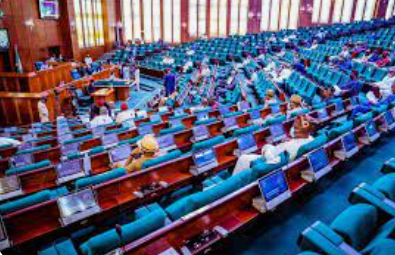
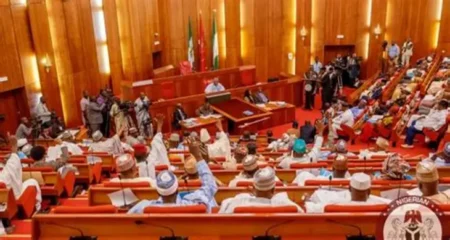
The National Assembly also requires scrutiny. Many proposed Bills serve narrow interests rather than the common good and are sponsored by people who only have their own sectionalised interests at heart. Therefore, bills that are to be passed into law mustbe well considered by the public and the members of the National Assembly. The media must ensure the public is kept informed and actively engaged in legislative processes.
5. Legal Terminology.
Not every journalist is equipped to be a judicial correspondent. Judicial correspondents need to have a strong grasp of legal terms and procedures. Misunderstanding basic legal terms can cause serious misinformation. For example, “dismissal” and “striking out” are not synonymous, yet they are often used interchangeably. Correspondents must ensure that the correct proceeding or ruling is captured.
Similarly, referring to an accused person as a “convict” before a verdict is both unethical and legally incorrect. A clear understanding of legal terms is non-negotiable. We all know that a Defendant is not a convict until he is found guilty by the Court and not the press!
6. Ongoing Self-Education
Journalists must constantly familiarize themselves with fundamental laws of the country, starting with the Nigerian Constitution, followed by laws relating to defamation, contempt of court, and libel. Continuous training and education are essential.
On a lighter note, correspondents should also dress professionally, especially when covering court proceedings. We all know that the courtroom is a sober place.
Correspondents should be smart and proud of their appearance and profession. A polished appearance earns respect and certainly reflects the seriousness of their profession.
Public Feedback
The Nigerian judiciary remains under intense public scrutiny. Social media platforms are awash with self-acclaimed judicial analysts, bloggers, commentators, detractors and, regrettably, haters as well. Despite this, they have a large audience, so these voices influence public perception—often shaping narratives without factual basis. Topics that stir significant public interest include human rights violations, judicial independence, government policies, and legal reforms.
As a developing democracy, Nigeria requires active, constructive engagement from the public.
Consequently, judicial correspondents must rise to the challenge by engaging with the public, responding to legitimate inquiries, and publishing informed legal opinions from qualified professionals. Nigerians have a strong appetite for diverse opinions, whether in print or online.
Television broadcasts also remain an effective way to disseminate accurate legal information. Indeed, we’ve all witnessed situations where public outcry—especially in the face of human rights violations or questionable policies—has forced the government to reverse course.
Activists and journalists wrongly detained have been released as a direct result of media coverage and civic engagement. That said, we still have much ground to cover.To improve feedback management, I recommend setting up a dedicated email address to receive and respond to legal questions and opinions. Additionally, social media platforms should be actively monitored to prevent the spread of misinformation and to flag defamatory or hate-driven content.
Read the full article here