







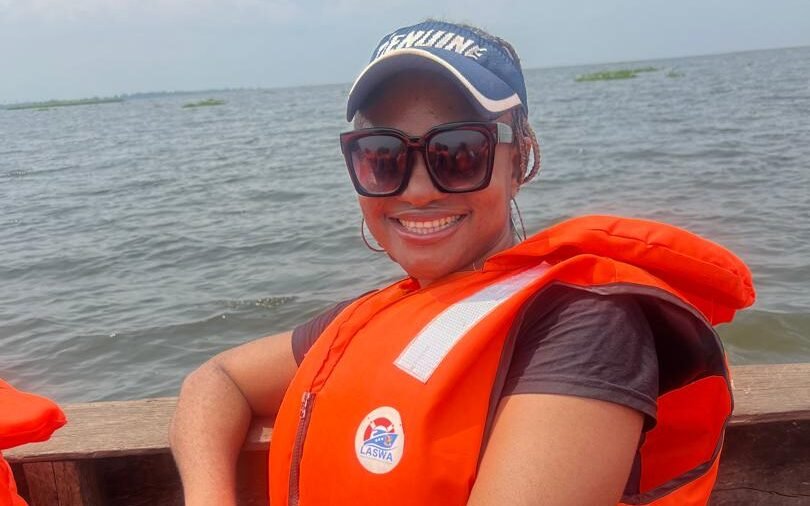
I dread water travel.
To me, it feels like an extreme sport reserved for those with nine lives. You can blame it on a near-mishap over 15 years ago while visiting my late grandmother in Creek Town, Cross River.
So, when Bolaji Alonge—a renowned Nigerian photographer, artist, and journalist celebrated for his visual storytelling—invited me to join a team of journalists and broadcasters on a water-based expedition, my immediate response was a firm no.
Even after he assured me of my safety with life jackets and security in the form of armed police officers, I wasn’t convinced. His message, however, was tempting:
“Be sure of an unforgettable adventure. Wear comfortable clothing—jeans, trainers, or boots—as we navigate land and lagoon.”
Still, I remained hesitant.
But after reviewing the information he shared about his impact projects in three riverine communities along the Lagos Lagoon, I reconsidered.
A Little Backstory
In 2021, Mr Alonge presented Greener Pastures, an exhibition and documentary, at the Didi Museum, Lagos.
Inspired by artists like Claude Monet and the water ambulances of Venice, the project took him to riverine communities in Ejinrin, Oriba, and Saga in Epe, Lagos.

More than just an artistic endeavour, Greener Pastures had a tangible impact—its proceeds helped provide school books for children in Saga village, among other initiatives.
Yet, his work wasn’t without challenges.
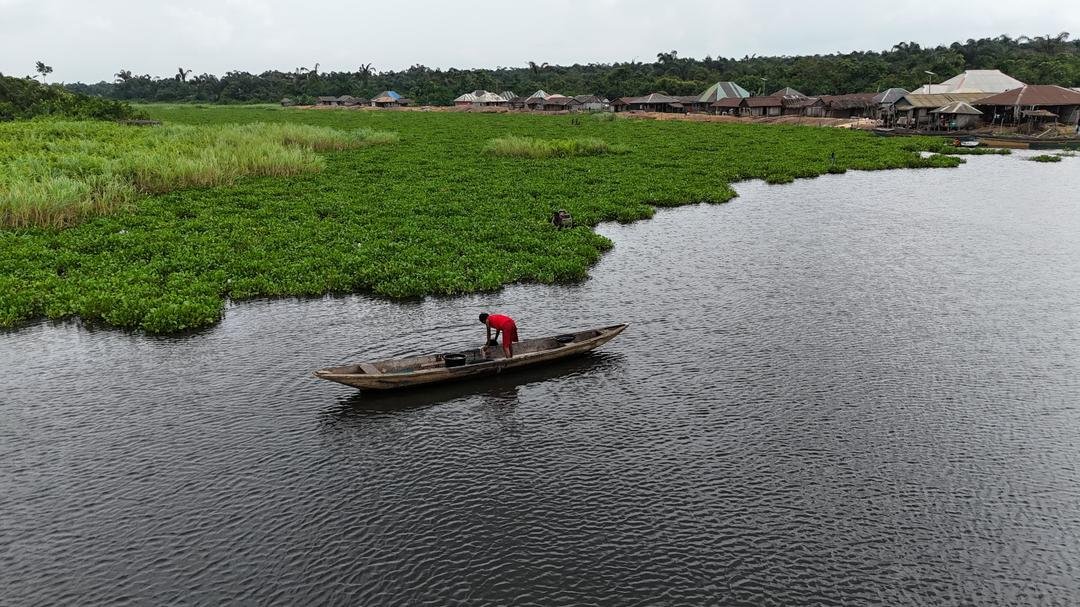
Despite numerous obstacles, Mr Alonge remained steadfast in shedding light on the effects of water hyacinth on riverine communities along the Lagos Lagoon.
His persistence paid off.
Three years later, he secured a breakthrough—a Danish Ministry of Foreign Affairs grant. Through Help Africa Initiatives, efforts are now underway in several villages to support water hyacinth processing while improving healthcare and education.

Journey to Epe, outreach
Epe, a coastal town on the north side of the Lekki Lagoon, is quite a distance from Lagos Island.
So, we set off bright and early on Monday morning, 24 February, from the Lagos State Waterways Authority (LASWA) Station in Falomo, Ikoyi. Our plan was to spend two nights in Epe.
The journey felt endless as we drove past numerous landmarks, including the famed Dangote Refinery. But what truly made this trip an eye-opener was discovering that the Epe road network is known to connect to Ikorodu Itokin and Ijebu Ode. Who knew?
I endured the bumpy roads and the typical chaos of Lagos drivers, entertained by my lively and hilarious tripmates, who would keep me company over the next few days.
Two hours, thirty minutes, and three stops later, we arrived at Epe, a peaceful, rusty town that still boasts traces of colonial buildings and artefacts. The air in Epe smells fresh.
Royal welcome, healthcare and community Impact
Our first stop was the palace of the Elejirin of Ejirin, Oba Rafiu Ishola Balogun. The Oba and his council of chiefs welcomed us warmly, setting the tone for an impactful experience.
By 2 p.m., activities were already in full swing at Lofi Ogunmude Comprehensive Junior and Senior Secondary School in Ejirin. Tuyi Mebawondu, a medical doctor, led the healthcare and medical interventions and shared some remarkable statistics with me.

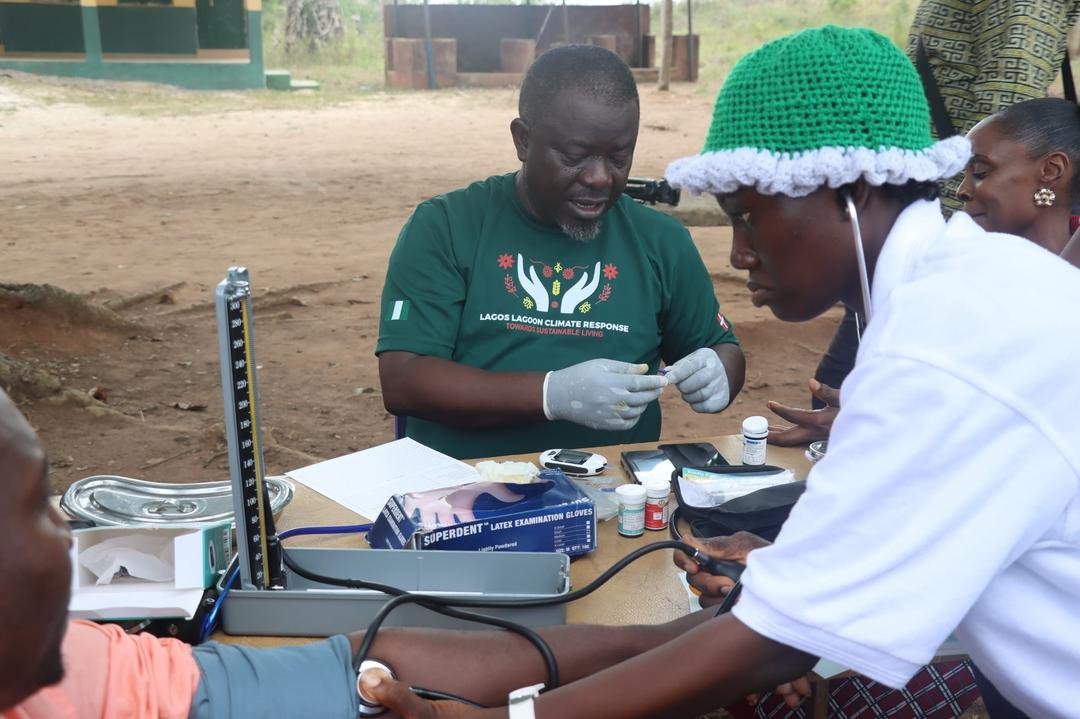
Through his Healthnika initiative, over 1,500 people have received urgent health advice in these communities. More than 600 young people have been educated in collaboration with the Sickle Cell Foundation Nigeria.
At the outreach, Sickle Cell Foundation Nigeria representatives also conducted free genotype tests for the teeming crowd, including children and adults.
Our first stop was the palace of the Elejirin of Ejirin, Rafiu Ishola Balogun, where the Oba and his council of chiefs warmly welcomed us.

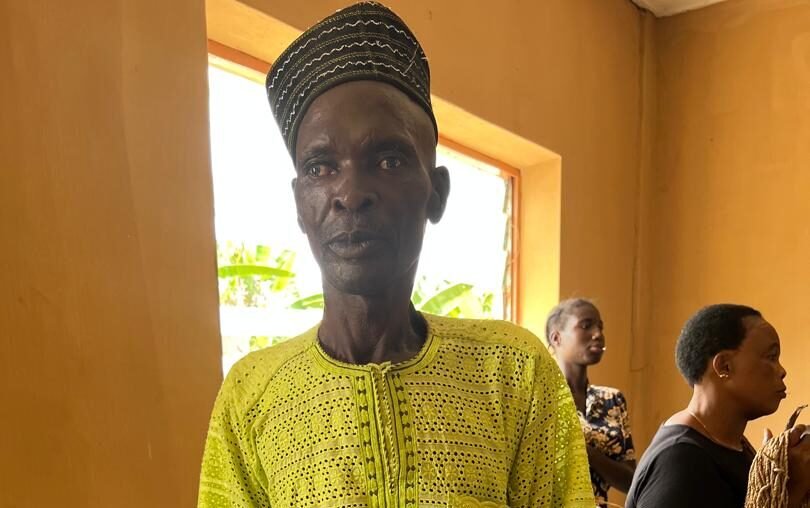
The activities had begun by 2 p.m. At Lofi Ogunmude Comprehensive Junior and Senior Secondary School, Ejirin, a medical doctor, Tuyi Mebawondu, led healthcare and medical interventions.
During my brief interaction with Mr Mebawondu, he told me that over 1500 people had received urgent health advice from Healthnika, his initiative.

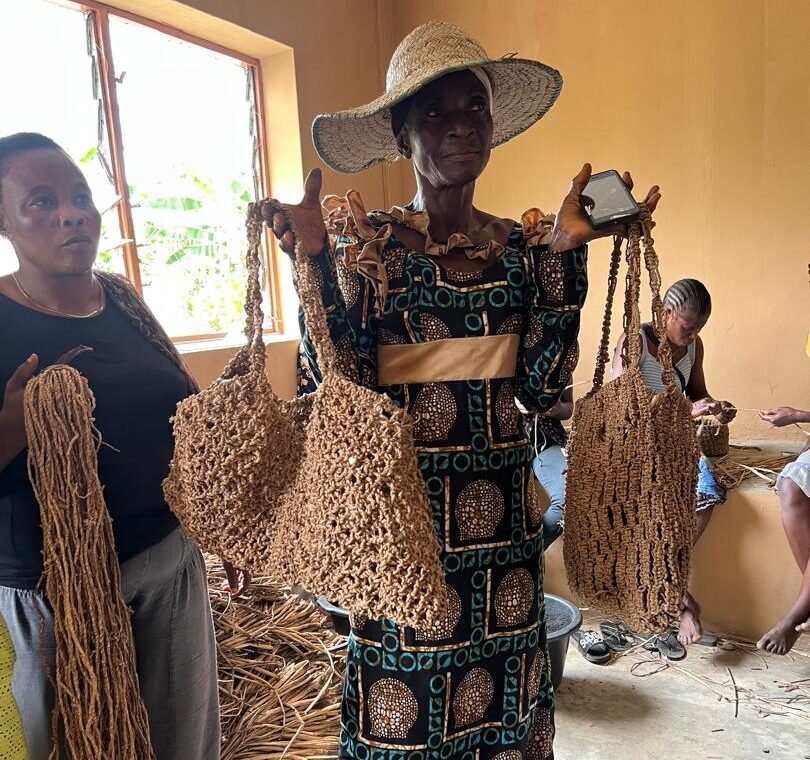
The Sickle Cell Foundation enlightened over 600 children and adults about the avoidable disease.
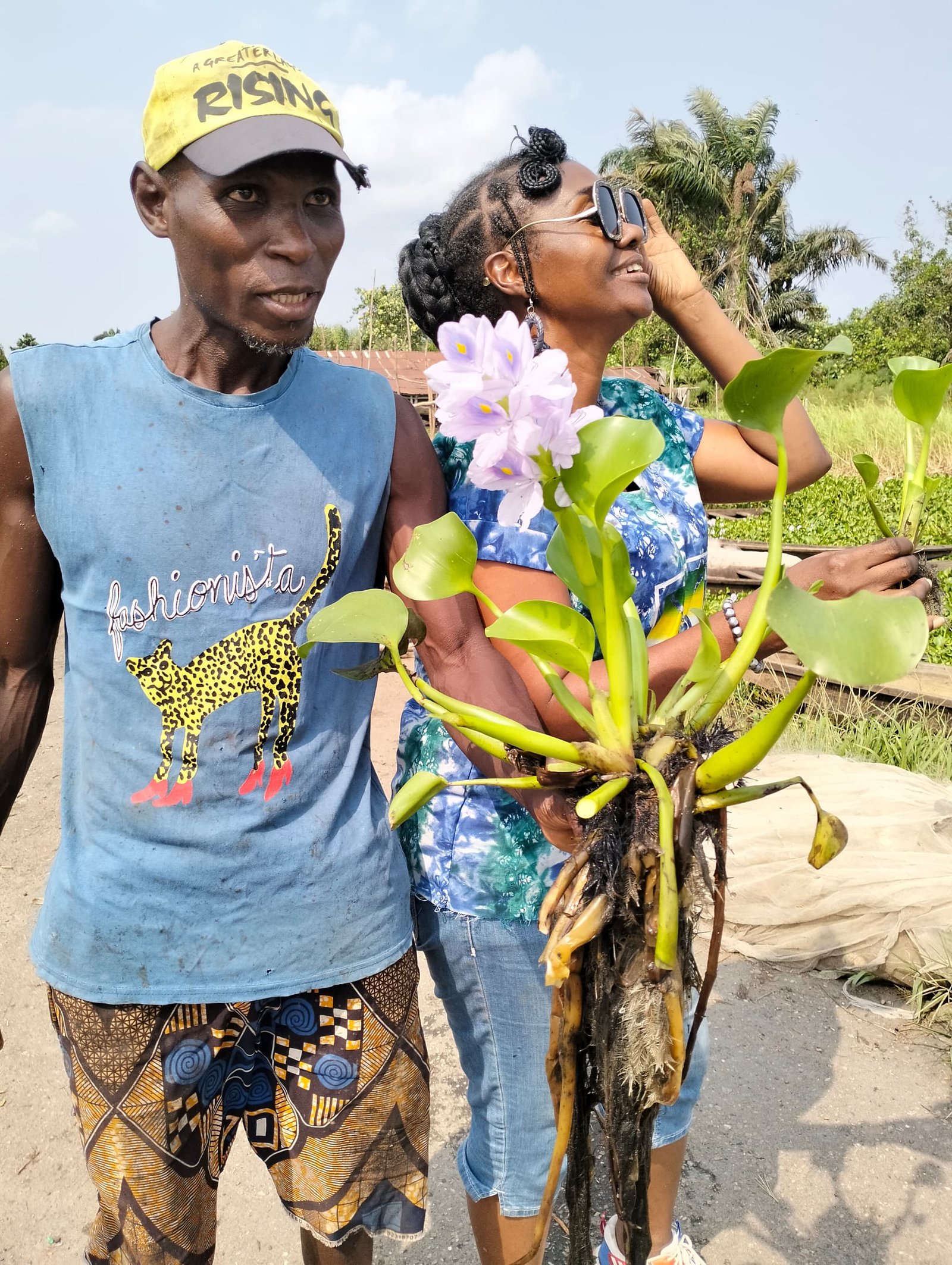
While the medical interventions were ongoing, we visited a vocational centre where MitiMeth trains residents of Ejirin and nearby communities to collect, dry, and transform water hyacinths into beautiful, functional products.

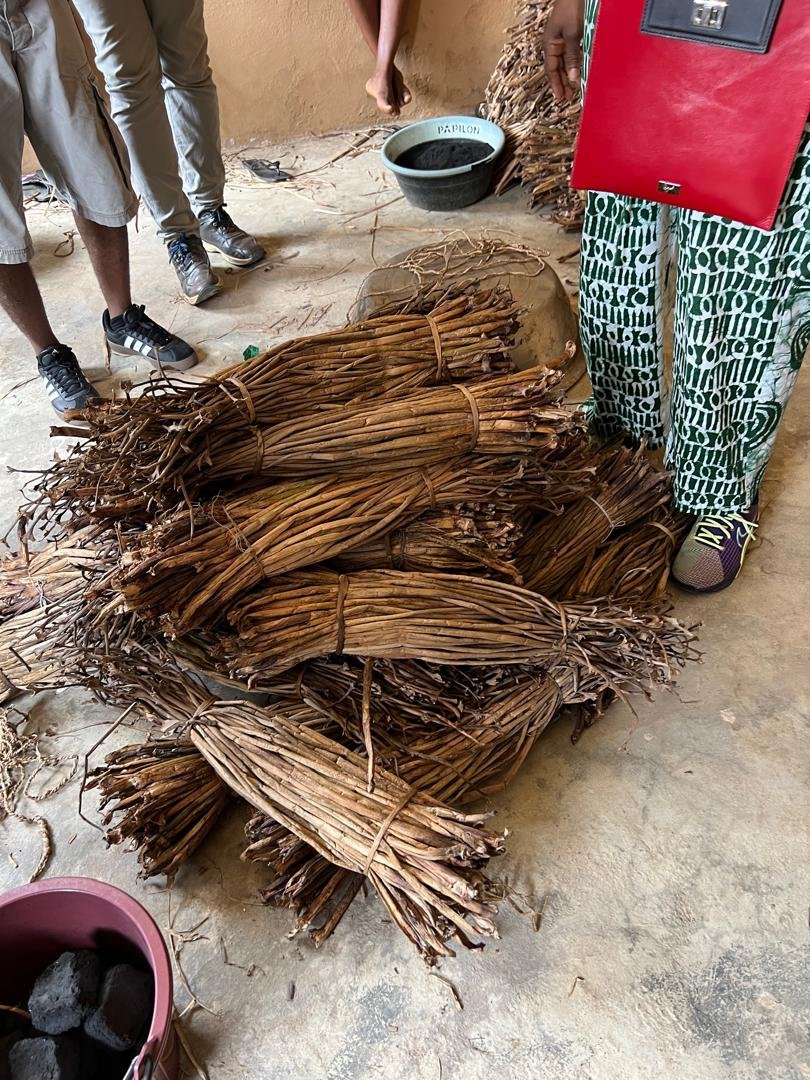
Watching the process unfold was fascinating—a true showcase of innovation and sustainability.
Nature’s beautiful menace and treasure
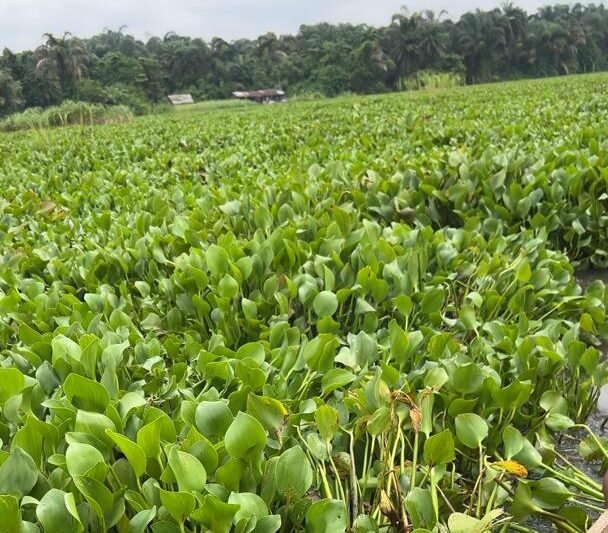
Water hyacinth is nature’s paradox—a plant both beautiful and troublesome. With its delicate lavender flowers and lush green leaves, it floats serenely on the water’s surface, creating a deceptive illusion of tranquillity, but beneath its beauty lies a relentless invader.

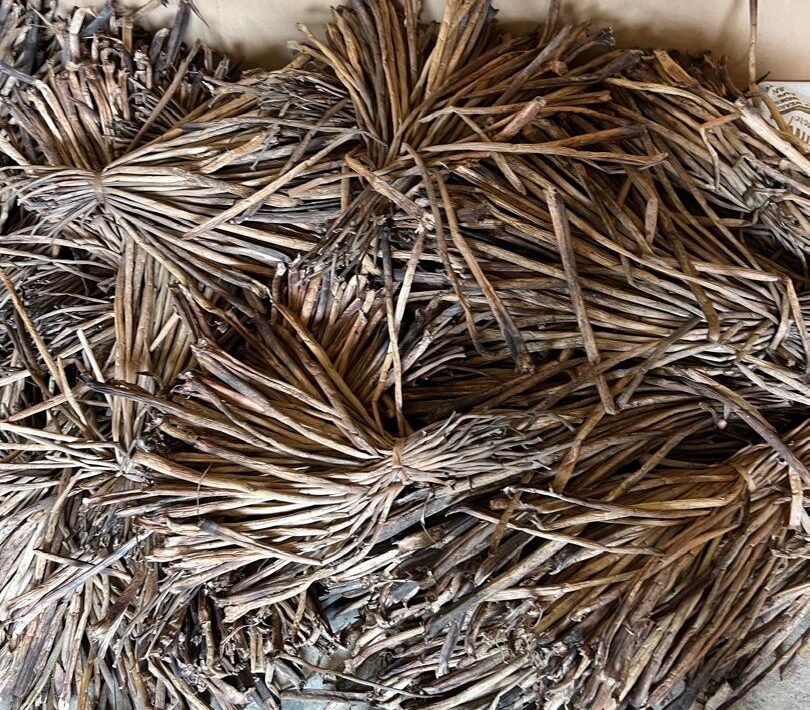
On day two of this trip, I realised firsthand during a boat ride to Saga, another riverine community, that this aquatic plant multiplies at an astonishing rate—almost unbelievable—forming thick mats that choke waterways and bring fishing boats to a frustrating standstill.
In Lagos and many other parts of the world, it’s been a long-standing menace, clogging rivers, blocking sunlight, and depleting oxygen levels in the water.
The boat ride, which lasted over an hour, was surprisingly smooth sailing, but occasionally, I had jitters, but thankfully it was a success.
READ ALSO: TRAVELOGUE: Railways on upswing in Nigeria
Since July 2024, Bolaji Alonge and his team, in collaboration with MitiMeth, have trained over 150 people in Lagos Lagoon communities on using water hyacinths for craft-making and biochar production.
Biochar is a charcoal-like substance made from organic waste that can improve soil health and crop yields. It’s used as a soil amendment and can help mitigate climate change.
The project is ongoing for another three months, with even more impactful activities on the horizon.
On day three, we planned to visit Oriba via water, too, but it was barely 20 minutes before we arrived, and water hyacinths suddenly surrounded us. It was an invasion; we couldn’t move any further or return.
We were held captive by this beautiful menace for over one hour before we managed to meander and find our way back to land, Epe, town. Boy, it was quite an experience.

More than a fun expedition
Mr Alonge explains that his initiative is driven by a mission to support rural communities along the Lagos Lagoon as they navigate the challenges of climate change.
The project promotes sustainable water management, better sanitation practices, job creation, and improved public health services by transforming waste into wealth. It also aims to uplift children in public schools across Ejinrin, Oriba, and Saga.
With a proud smile, he shares the impact so far: 180 beneficiaries have received skills training for economic empowerment, and three specialised training sessions have been conducted on turning water hyacinth into valuable products.
Another 135 people have been trained in water hyacinth harvesting, processing, and biochar production, with two raw material hubs in development.
Training continues through February and March 2025, with future efforts focusing on deepening skills, enhancing employability, and fostering entrepreneurship opportunities for residents.
Read the full article here