




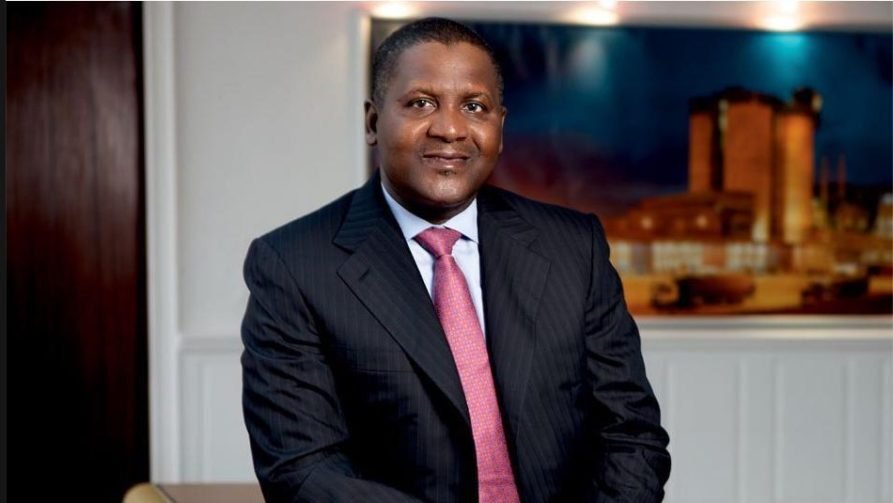
Business mogul and African billionaire Aliko Dangote has said China currently dominates business across Africa because it is more willing than the United States and Europe to provide long-term financing and credit support for major industrial and infrastructure projects.
Mr Dangote made the remarks during an interview with Nicolai Tangen, chief executive officer of the Norwegian Sovereign Wealth Fund, where he gave a blunt assessment of the continent’s business relationships with global powers.
Asked who is helping Africa most in business among China, the U.S., and Europe, Mr Dangote replied: “Honestly, Nicolas, you want me to be very open? Totally. Yeah, so it’s China.”
According to him, China has “really dominated business in Africa because of the absence of the others.”
He said Chinese companies have succeeded by backing their businesses with strong state-supported financing structures that make it easier for African investors and governments to execute large projects.
Why China leads
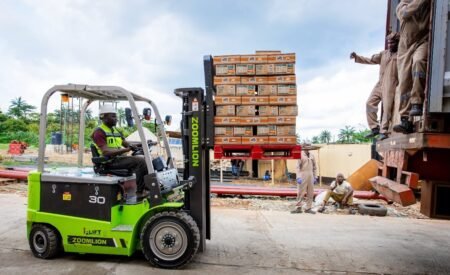
Mr Dangote explained that Chinese suppliers often provide equipment on credit backed by export insurance institutions, allowing African businesses to spread payments over several years rather than paying upfront.
Using his cement business as an example, he said Chinese firms supply equipment and offer credit facilities backed by China’s export credit insurance agency, enabling buyers to finance projects over four or five years.
He noted that the arrangement gives Chinese companies a significant advantage over European competitors.
“If I go to Italy, for example, and they are asking me to write a cheque for a power plant of $500 million… and the Chinese are saying just give me 20 per cent, the rest I will finance for five years, which one are you going to take?” he said.
“Obviously, you take the Chinese one,” he added.
He said such financing structures help businesses preserve cash flow and expand faster rather than tying up capital in single projects.
“These ones will suck out my cash and I won’t be able to do more,” he said.
Expansion plans
Mr Dangote said access to financing is critical to the scale of growth his group is targeting, revealing that the company plans to spend about $45 billion between 2026 and 2030 on expansion projects.
“We want to do projects… we’re spending $45 billion between 2026 and 2030,” he said.
He added that large-scale industrial growth requires strategic leverage rather than overdependence on direct cash payments.
“For me to grow that big, I also need to leverage. I’m not going to over-leverage, but I need to leverage the business to be able to get to where I want to be,” he said.
U.S. showing renewed interest
Despite praising China’s role, Mr Dangote said the United States is beginning to show stronger interest in infrastructure financing in Africa.
READ ALSO: How oil mafia fought hard to stop my refinery — Aliko Dangote
He referenced recent engagement with the U.S. International Development Finance Corporation (DFC), saying the agency has become more aggressive in supporting infrastructure and industrial investments.
“This time around when I went to the Development Finance Corporation of the U.S… they were very hungry for infrastructure. They are very hungry for projects, and they are ready to lend,” he said.
According to him, that shift could create room for stronger U.S.-Africa business partnerships.
Mr Dangote also said he recently told a visiting Japanese delegation that Japan risked remaining absent from Africa’s major investment opportunities unless it changed its approach.
He said foreign partners coming to Africa must arrive with financing capacity, not just proposals.
“What I told them is that Japan will be missing for a very long time,” he said.
“Today when you are coming, make sure that you come with your own balance sheet on the table, because we have choices of buying from many other countries.”
His remarks highlight the growing competition among global powers for influence in Africa’s industrial and infrastructure sectors, where financing terms often matter more than technology alone.
Read the full article here