







0
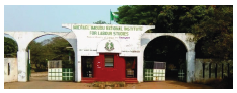
Labour unions blow the whistle on entrenched rot at Michael Imoudu National Institute for Labour Studies, insisting that the recent reappointment of its DG be reversed, writes NICHOLAS UWERUNONYE.
As Comrade Issa Aremu, the embattled Director-General of the Michael Imoudu National Institute for Labour Studies (MINILS), continues a well-oiled media campaign to dismiss growing unrest within the institution, a storm of allegations is gathering force behind the closed gates of the Ilorin-based labour citadel.
An explosive joint petition, signed by leaders of all three unions at the institute—Senior Staff Association of Universities, Teaching Hospitals, Research Institutes and Associated Institutions (SSAUTHRIAI), Academic Staff Union of Research Institutions (ASURI), and the Non-Academic Staff Union of Educational and Associated Institutions (NASU)—paints a picture of a DG more concerned with personal aggrandizement and media optics than with the institute’s statutory mandate of manpower development and labour research.
Their demand: that the Honourable Minister of Labour urgently halt any move to reappoint Aremu, whose first tenure ended in a cloud of controversy and alleged administrative malpractice.
But Aremu has since been reappointed. Rather than dousing tension, insiders say that what to be lull at MINILS is calm before storm. “The agitation is not going away anytime soon,” explained a Trade Union Congress, TUC, state executive member who spoke to Daily Independent, but asked not to be name because he was not authorized to speak officially.
The unions outline an astonishing 18-point charge sheet against Aremu— one that, if substantiated, amounts to dereliction of duty, financial recklessness, policy ignorance, and abuse of office. Aremu is accused of spending less than three days a week at the Ilorin headquarters while routinely claiming duty tour allowances for both himself and his aides. The unions say this has created “an administrative vacuum,” crippling day-to-day operations.
The institute has failed to submit its audited financial statements for three consecutive years (2021–2023)—a flagrant breach of financial regulations. There are also accusations of opaque financial transactions using shell entities, leading to loss of revenue.
There were claims, according to documented petition, that over ₦56 million was allegedly released for a new administrative building that remains incomplete. A ₦50 million youth training budget was only partly implemented, with ₦35 million unaccounted for.
Aremu, it was alleged, reportedly directed that his own medical bills, totaling ₦4.57 million, be paid from institute funds despite earning a consolidated salary—a violation of civil service norms.
Then the DG has been serially accused of verbal abuse and workplace hostility. The petition documents instances of Aremu referring to staff as “witches,” “idiots,” “thieves,” and “deaf and dumb.” Staff morale, the unions note, is at an all-time low.
Still on alleged financial malfeasance, the unions say revenue from high-profile events—such as investitures at the institute’s 40th anniversary and the 2024 Labour Summit—was allegedly funneled into a personal account rather than the Institute’s official treasury.
MINILS, named after labour legend Michael Imoudu, was established to strengthen Nigeria’s labour movement through education, training, and research. The institution serves as a critical bridge between government policy and labour implementation, especially in a country battling unemployment, skills mismatch, and economic instability.
When an institution like MINILS breaks down, it’s not just internal—it weakens Nigeria’s broader workforce pipeline. Analysts argue that any dysfunction at the Institute can translate into poor industrial relations, outdated labour practices, and ultimately, stagnation in national productivity.
“The implications are serious,” said a senior researcher at a federal labour agency who asked not to be named. “If the institute can’t function due to leadership failure, Nigeria loses a key channel for manpower development, especially at a time when we’re supposed to be preparing our youth for the future of work.”
Comrade Aremu’s appointment in May 2021 was seen by some as a political nod rather than a merit-based choice. With no prior experience in the public service or research training environment, staff allege that the DG has consistently demonstrated a lack of understanding of the institute’s mandate and public service procedures.
“It is apparent that the institute will not be able to survive another tenure of the same administrative style,” the petition states.
Staff also cite multiple instances of Aremu flouting procurement laws, including embarking on renovation projects and constructing buildings without Tenders Board approvals—a violation of the Public Procurement Act.
In a tactic that some staff describe as “cosmetic governance,” Aremu has reportedly invested more in media publicity and flamboyant ceremonies than in core institutional development. Unions point to “phantom and bogus projects” like overbranded T-shirts, overhyped commemorative events, and token digitization projects that lack substance.
The so-called automation of the MINILS library, for instance, exists more on paper than in reality. “The shelves are empty, and there’s no functioning digital resource center,” said one frustrated librarian who requested anonymity.
While Aremu has gone on record in several media outlets describing the institute as “thriving,” insiders say he has refused every internal call for social dialogue. Even when he sends representatives to staff meetings, the outcomes are reportedly ignored.
A previous investigation by by Daily Independent in June 2024 had highlighted his poor grasp of governance, but rather than take corrective steps, the DG reportedly doubled down on his leadership style.
“It’s not just insensitivity—it’s arrogance,” said one mid-level academic staff member. “He’s more interested in appearing successful than being effective.”
The labour crisis at MINILS comes at a critical time when the Tinubu administration is banking on institutions like it to deliver the “Renewed Hope” agenda in labour reform, youth employment, and national productivity.
It would also lead to breakdown in training for trade unions and labour stakeholders; poor labour policy feedback to government; loss of institutional credibility in the international labour community and shrinking domestic influence of organized labour
With the institute already suffering a drastic drop in training patronage and poor facilities—dilapidated hostels, broken project vehicles, no consistent power supply—many fear the situation may become irredeemable if not swiftly addressed.
Perhaps the most urgent part of the petition is its call for President Bola Ahmed Tinubu to “consider a candidate with cognate experience and a working understanding of the mandate of the Institute.”
The unions insist that internal candidates—people who understand both the structure and culture of MINILS—are best suited to restore the institute’s lost glory.
They warn that “reappointing Comrade Aremu would not only alienate the workforce but also kill whatever remains of the institute’s integrity and capacity.”
The ball is now in the court of the Honourable Minister of Labour and Employment—and ultimately President Tinubu. With multiple labour crises already simmering across sectors, a dysfunctional national labour institute is the last thing the government needs.
If the allegations are proven true and ignored, critics warn that the administration risks being seen as complicit in allowing mediocrity and corruption to fester at the heart of one of Nigeria’s most strategic manpower institutions.
The future of Nigerian labour development, it seems, may well hinge on the response to this urgent call.
Read the full article here