






The Bill & Melinda Gates Foundation (BMGF) has commended the Nigerian government on the success recorded so far in the attainment of the REACH initiative goal.
The REACH initiative — Resilience through Azithromycin in Children — is a major public health intervention across sub-Saharan Africa, leveraging biannual doses of azithromycin to reduce infant and under-five mortality in high-risk areas.
In Nigeria, the Gates Foundation said the REACH initiative achieved 97 per cent coverage across six states, delivering over 1.3 million doses of azithromycin to children under one year.
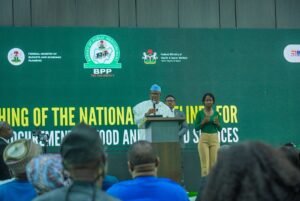
The Interim Director of the Foundation’s Nigeria Country Office, Uche Amaonwu, disclosed this on Tuesday at the 2024 REACH Network Annual Regional Meeting in Abuja, Nigeria’s Federal Capital Territory (FCT).
However, the Foundation said logistic bottlenecks are still threatening to hinder the programme’s efficacy.
“Logistical issues, such as delays in drug sourcing and clearing, have presented obstacles along the way.
But each challenge has also been an opportunity to innovate and improve. We’d appreciate the Coordinating minister’s prioritisation of securing the necessary approvals to clear the d azithromycin throughout the duration of the program,” Mr Amaonwu.
He urged Nigeria’s Coordinating Minister of Health and Social Welfare, Muhammad Pate, to expedite approvals needed to clear d azithromycin shipments.
In addition to the logistic setbacks, the Gates Foundation stressed the critical need for continuous monitoring of antimicrobial resistance (AMR).
As azithromycin usage scales up, there is concern over potential resistance that could compromise the long-term benefits of mass drug administration (MDA).
“AMR surveillance is embedded in the SARMAAN project and remains a top priority,” said Mr Amaonwu, referring to the Safety and Antimicrobial Resistance of Mass Administration of Azithromycin in Nigeria initiative, which said aims to balance life-saving intervention with public health risks.
Achievements amid challenges
Despite these challenges, he said the REACH programme has marked notable progress.
Since its inception, Nigeria has administered over 1.3 million doses of azithromycin to children aged one to 11 months in six states — Abia, Akwa Ibom, Jigawa, Kano, Kebbi, and Sokoto — achieving a 97 per cent coverage rate.
This success, he said highlights the feasibility of large-scale MDA efforts in Nigeria’s complex health landscape, and Amaonwu credited local partnerships and integration with existing health programmes, such as polio eradication and seasonal malaria chemoprevention, for this achievement.
According to him, the programme’s second phase, SARMAAN II, which began in April, has reached nearly 1.2 million children in additional states, including Adamawa, Gombe, Kaduna, and Katsina.
The project is projected to run through 2027, further strengthening Nigeria’s efforts to reduce child mortality.
Calls for support
Mr Amaonwu emphasised the need for ongoing collaboration and government support to maintain momentum.
“While we’ve made meaningful progress, sustaining these efforts is paramount,” he said, calling on Nigerian health authorities to prioritise rapid clearance of d drugs and commit to further AMR research to address potential resistance threats.
As sub-Saharan Africa continues to confront high child mortality rates, the Gates Foundation reiterated its commitment to the REACH initiative, urging stakeholders to collaborate in overcoming challenges and ensuring that every child has a chance at a healthy life.
Read the full article here