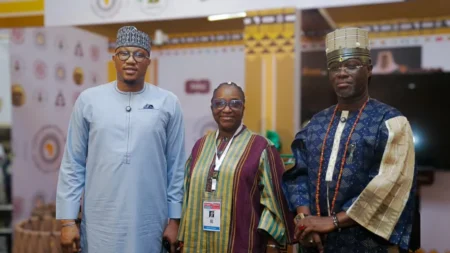





ABUJA – Idi Muktar Maiha, Minister of Livestock Development, has reaffirmed the Federal Government’s commitment to supporting Adamawa State in unlocking its livestock potential while addressing critical challenges such as farmer-herder conflicts and transboundary diseases.
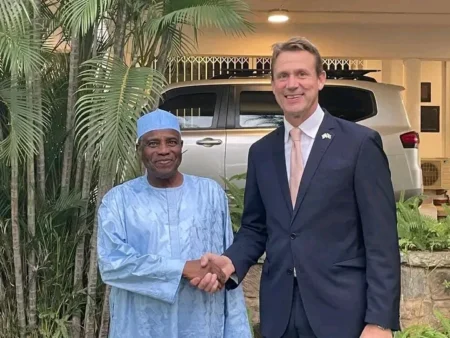
Maiha made this pledge at the weekend during a courtesy visit by officials from the Adamawa State Ministry of Livestock, led by the State Commissioner, Tijjani Maksha.
Maksha conveyed the State Governor’s congratulations to the Minister on his appointment as the pioneer Minister for the Ministry of Livestock Development, commending Mr. President for the wisdom in his choice.
This was contained in a statement issued by Mr. Ben Bem Goong,Director, Information and Public Relations Department, Federal Ministry of Livestock Development.
In his response, the Minister commended Adamawa’s proactive measures in livestock development and conflict resolution, emphasising the Federal Government’s readiness to partner with the state.
He highlighted the importance of harnessing Adamawa’s rich agricultural resources, strengthening grazing reserves, and enhancing breed improvement centres to boost productivity and economic returns.
The Minister also lauded the establishment of a Standing Committee on Farmer-Herder Conflicts, describing it as a commendable approach to fostering harmony among communities.

He assured the delegation that the Federal Government would provide technical and operational support to bolster mediation mechanisms, improve disease control efforts, and develop sustainable solutions for the state’s livestock and fisheries sectors.
During the courtesy visit, the Permanent Secretary of the Adamawa State Ministry of Livestock, Mohammed Suleiman, gave a brief on the State’s ongoing initiatives and areas requiring collaboration.
He highlighted the state’s achievements and challenges in livestock management, revealing that the state generates over ₦120 billion annually from the sale of more than 240,000 cattle, with plans to process and standardise these products to create more economic value.
Key areas of focus include the revival of 69 grazing reserves, operationalising breed improvement centres in collaboration with academic institutions, and enhancing abattoir facilities across the state.
Suleiman also explained ongoing efforts to establish a fish hatchery to address the dependence on imported fingerlings, leveraging the state’s vast river networks.
He further solicited Federal Government’s assistance in training, disease control, and operational support to sustain these initiatives.
Read the full article here