

![LIVE [ABUJA]:NIGERIA’S REFORM SCORECARD](https://www.talkaboutnigeria.com/upsoophu/2026/08/1787302610_hqdefault-300x225.jpg "LIVE [ABUJA]:NIGERIA’S REFORM SCORECARD")






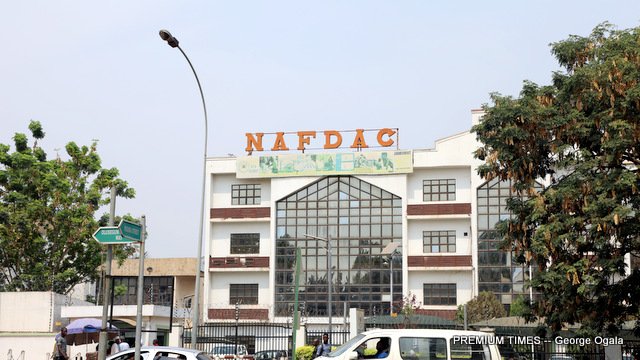
The National Agency for Food and Drug Administration and Control (NAFDAC) has alerted healthcare providers and the public to the circulation of suspected counterfeit batches of Phesgo 600mg, a medicine used in the treatment of breast cancer.
The agency disclosed this in a notice published on Tuesday on its website, following complaints received by the product’s Marketing Authorisation Holder, Roche.
Complaints from LUTH
According to the notice, the complaints originated from the Lagos University Teaching Hospital (LUTH-NSIA), where patients reportedly brought in the suspected products for administration.
Two batch numbers B2346B16 and C3809C5, were flagged. In one instance, the vial volume for batch C3809C5 was observed to be approximately 20 millilitres instead of the expected 10 millilitres.
However, only photographs of the samples were made available to Roche for investigation, limiting the scope of analysis.
Findings confirm falsification
Despite the absence of physical samples, Roche said it scrutinised the images and compared them with genuine retained samples, identifying several discrepancies that confirmed the products were falsified.
These include non-existent batch numbers in the company’s database, incorrect text and variable data, and a Global Trade Item Number (GTIN) that does not match any authentic product.
The tamper-evident label was also missing, alongside notable differences in packaging materials.
Roche noted that chemical analysis could not be conducted because no physical samples were submitted.
The company further revealed that batch number B2346B16 has been linked to at least four confirmed counterfeit cases across multiple countries, including Nigeria, Turkey and the Philippines, with identical false information.
Health risks and regulatory action
Phesgo 600mg, which contains pertuzumab and trastuzumab, is used in the treatment of breast cancer by targeting and inhibiting the growth of cancer cells.
NAFDAC warned that the circulation of counterfeit medicines poses serious health risks, as such products do not meet required standards of safety, quality, and efficacy.
“All NAFDAC zonal directors and state coordinators have been directed to carry out surveillance and mop up the counterfeit products within their jurisdictions,” the agency said.
Advisory to stakeholders
The agency urged importers, distributors, retailers, healthcare professionals and caregivers to exercise vigilance across the supply chain to prevent the importation, sale and use of falsified medicines.
It advised that all medical products should be sourced only from authorised and licensed suppliers, with careful checks on their authenticity and physical condition.
Healthcare professionals and members of the public are encouraged to report suspected cases of substandard or falsified medicines to the nearest NAFDAC office or via its toll-free line.
Reports can also be made through the agency’s website and pharmacovigilance platforms.
Similarly, adverse drug reactions or side effects should be reported through NAFDAC’s official channels, including its Med Safety application.
Safety alert
This warning comes amid a series of recent regulatory actions by NAFDAC targeting unsafe and unapproved medical products in Nigeria.
READ ALSO: NAFDAC recalls male enhancement capsules over safety concerns
Earlier this week, the agency announced the recall of all batches of MR.7 Super 700000 capsules over safety concerns linked to undeclared pharmaceutical ingredients.
NAFDAC said the recall followed an analysis by the US Food and Drug Administration (FDA), which found that the product contained sildenafil and tadalafil, substances commonly used in medicines for erectile dysfunction but not listed on the product label.
The agency explained that both substances belong to a class of drugs known as phosphodiesterase (PDE-5) inhibitors, warning that their undisclosed presence renders the capsules unapproved and potentially harmful.
Read the full article here