



Nigerian air traffic controllers have threatened a strike over deteriorating communication and surveillance infrastructure, warning that continued use of inadequate equipment is straining aviation safety.
The National Air Traffic Controllers Association (NATCA) said the Federal Government is yet to translate announced procurement approvals into functional equipment for the professionals responsible for coordinating aircraft movements and maintaining safe separation between flights.
The association’s national president, Edino Amos, said 2026 has been particularly challenging for air traffic controllers, with little improvement in the systems they rely on to manage the country’s airspace.
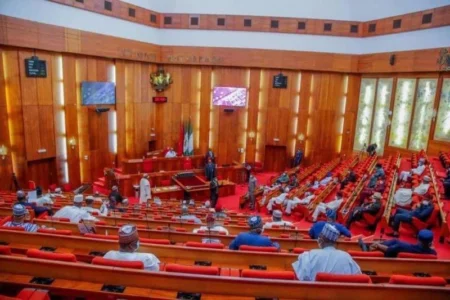
Mr Amos spoke on Tuesday at the 55th Annual General Meeting of NATCA, themed “Beyond Silos to Synergy: Shaping the Future of Nigerian Air Traffic Management”.
He warned that the association could consider withdrawing its services if the government fails to present a clear, comprehensive plan to overhaul the country’s communication and surveillance infrastructure.
“On infrastructure, the year under review has been a difficult one for the association. Despite the considerable challenges faced by ATCOs across the length and breadth of the country, our communication and surveillance infrastructure has not improved significantly.

“We acknowledge the approvals and procurement milestones that have been announced. However, these have yet to translate into a material improvement in the equipment available to controllers at the console,” Mr Amos said.
NATCA said it has made several attempts to draw government authorities’ attention to the infrastructure deficiency, including seeking engagements with the Minister of Aviation and Aerospace Development, the National Counter Terrorism Centre, the Office of the National Security Adviser, and the management of the Nigerian Airspace Management Agency.
However, Mr Amos noted that these engagements have not produced the improvements needed to ease the operational challenges facing air traffic controllers.
The association argued that communication and surveillance systems should not be subjected to funding uncertainties or prolonged procurement processes because of their importance to aviation safety and national security.
It said the possibility of industrial action is becoming increasingly difficult to rule out without concrete government commitments.
“It is with a deep sense of responsibility that I state that this frustrating engagement is pushing the Association towards considering the withdrawal of our services, should there be no clear strategic plan for the total overhaul of communication and surveillance infrastructure in Nigeria,” Mr Amos warned.
Nigeria’s airspace is managed by NAMA, which provides air navigation services, including air traffic control, communication, navigation and surveillance infrastructure.
The agency’s operational responsibilities are distinct from those of the Federal Airports Authority of Nigeria, which manages airports and related facilities.
READ ALSO: Nigerian airline removes passenger after threat to “burn down” aircraft
Mr Amos said investing in reliable infrastructure will improve airspace safety, reduce operational inefficiencies and prevent avoidable economic losses for airlines.
According to him, improved systems could support increased air traffic, boost government revenue, strengthen national security and improve Nigeria’s standing in the global aviation industry.
He also argued that reliable surveillance infrastructure is important beyond civil aviation, particularly in supporting efforts to monitor aircraft movements and strengthen the country’s security architecture.
“Honourable Minister, we make this call not as a threat, but as patriots who sit daily before screens and failing frequencies to keep this country safe,” Mr Amos said.
Discover more from Premium Times Nigeria
Subscribe to get the latest posts sent to your email.
Read the full article here