








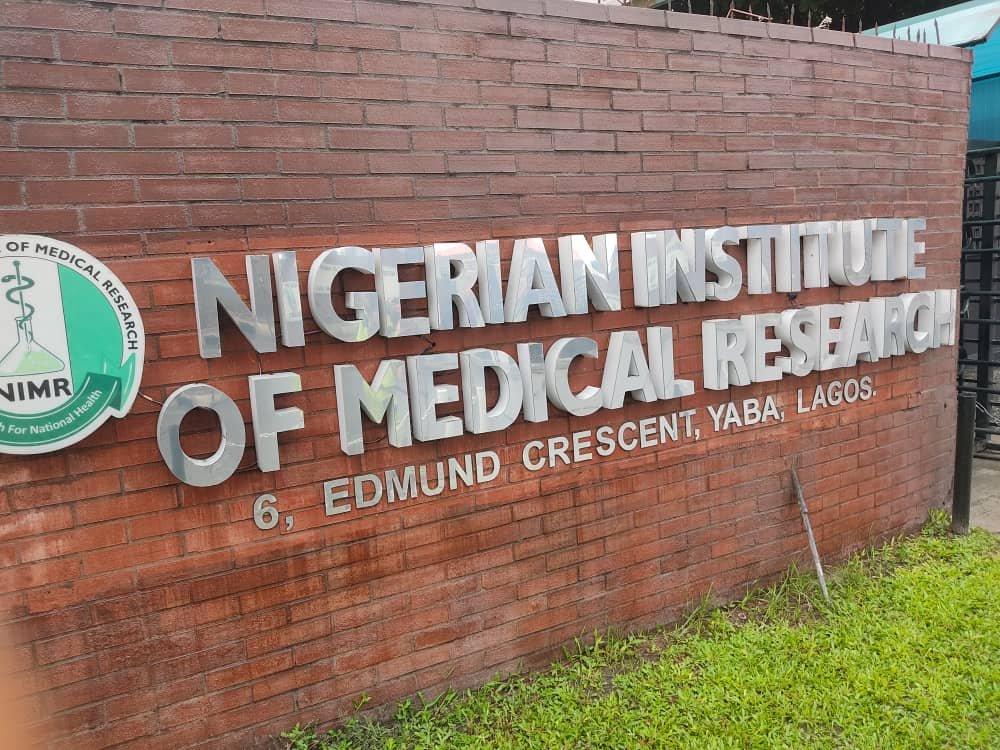
The management of the Nigerian Institute of Medical Research (NIMR) has attributed the ongoing industrial action by the Academic Staff Union of Research Institutions (ASURI) to the federal government’s eight-year tenure policy for directors, assuring that its core operations remain uninterrupted.
A media consultant to the institute, Sam Eferaro, disclosed this in an interview with PREMIUM TIMES on Monday amid tensions over the policy implementation.
Mr Eferaro said the strike was declared solely by ASURI members in protest against a federal directive on tenure for directors.
He, however, clarified that other unions in the institute are not participating in the action.
“Other unions within the Institute are not involved, and there has been no disruption to core activities,” he said.
According to him, all laboratories, including the TB Laboratory, Central Laboratory, Centre for Human Viral Genome, and the Biobank, as well as the institute’s clinic, remain fully operational.
Dispute over tenure policy
At the centre of the dispute is the federal government’s enforcement of the eight-year tenure policy for directors, as contained in Rule 020909 of the Public Service Rules (2021).
The policy mandates that directors in the federal public service retire after eight years in that rank.
Mr Eferaro explained that NIMR, as a government agency, is bound to implement directives issued by the authorities.
“As an agency of the federal government, NIMR does not determine policy independently. It is mandated to implement directives issued by the government,” he said.
Rejection
ASURI, however, opposes the application of the tenure policy to research and academic staff.
In a strike notice issued to the institute, the union argued that academic staff should retire based on age, specifically 65 years, rather than tenure.
The union also accused the institute’s management of violating existing conditions of service and disregarding what it described as prior agreements and ministerial interventions.
It further declared an indefinite strike and picketing, citing what it called the “illegal termination” of its members’ appointments.
Responding to these claims, Mr Eferaro said the management is unaware of any prior agreement or ministerial intervention exempting academic staff from the policy.
“It would be logical to conclude that if there was any prior agreement, the same federal government and Ministry would not have issued the directives about six weeks ago,” he said.
Disengagement of affected officers
The controversy also extends to the disengagement of affected directors and the stoppage of their salaries.
Mr Eferaro said these actions were taken in strict compliance with directives from the Office of the Head of the Civil Service of the Federation and the Federal Ministry of Health and Social Welfare.
Earlier circulars from both bodies directed agencies to immediately retire directors who had spent eight years in office as of December 2025 and to recover any salaries paid beyond their exit date.
Background to the policy
A circular from the Office of the Head of the Civil Service of the Federation reiterated that the eight-year tenure rule remains in force across ministries, departments, and agencies.
The circular noted that implementation of the policy had been inconsistent and warned of administrative consequences for non-compliance.
ALSO READ: NIMR raises alarm over surge in drug-resistant infections across Lagos
Similarly, a directive from the Federal Ministry of Health instructed heads of health institutions to enforce immediate disengagement of affected officers and ensure full compliance.
Efforts to resolve dispute
Mr Eferaro said the institute’s management remains open to dialogue but maintained that engagement on the policy should be directed to the federal government.
“Management will continue to appeal to the union, particularly at the national level, to engage constructively with the federal government,” he said.
He added that the supervising ministry is actively providing guidance on the matter.
About NIMR and ASURI
NIMR is a federal government research institute under the supervision of the Federal Ministry of Health and Social Welfare.
It is one of Nigeria’s foremost biomedical research centres, with laboratories focused on infectious diseases, public health research, and clinical services, including tuberculosis and viral genomics.
ASURI is a trade union representing academic and research staff across federal research institutions in Nigeria.
The union advocates for improved working conditions, protection of staff welfare, and adherence to conditions of service in research-based agencies.
Read the full article here