







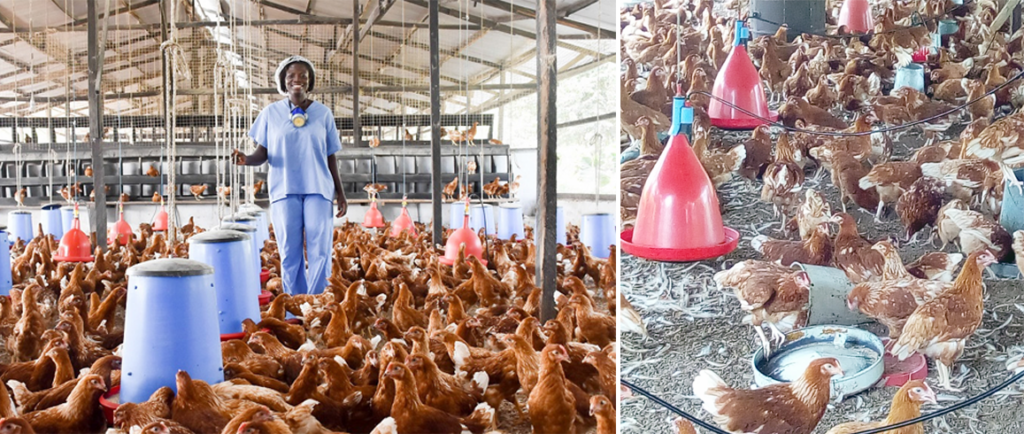
Poultry farming is one of the fastest-growing agribusiness sectors in Nigeria, attracting both small-scale and large-scale investors. With increasing demand for eggs and chicken meat, favourable government policies, and rising health consciousness among Nigerians, the poultry industry is proving to be one of the most profitable agricultural ventures.
Poultry Products Command High Demand
With a population of over 200 million people, there is a huge market for poultry products. Chicken meat and eggs are consumed daily in homes, hotels, restaurants, and fast-food chains. The demand for protein-rich foods is rising due to urbanisation and a growing middle class, making poultry farming a lucrative business. .
Quick Return On Investment
Compared to other livestock businesses, poultry farming offers a quicker turnaround time. Broiler chickens, for instance, are ready for sale within 6–8 weeks, while layers start producing eggs at 18–22 weeks. This makes it a profitable agribusiness with consistent income potential.
Low Capital Requirement
You don’t need to break the bank to start poultry farming. One can start with little capital. For instance, you can start small backyard poultry with about 50 to 100 birds or less; medium scale farm with 500 to 1000 with birds or large poultry with 1000 and above. You will discover that with proper management, even small-scale farmers can earn substantial profits.

Value Addition.
Apart from making money from sale of live birds and eggs, you can make more money through processing and packaging chicken meat for supermarkets and restaurants, producing egg powder and liquid eggs for bakeries and food manufacturers selling poultry manure as organic fertilizer and producing and selling poultry feed. These value-additions boost profits and create additional income streams.
Technological Advancements
Modern poultry farming is becoming easier and more profitable due to a number of technological advancements including automated feeding and watering systems; climate controlled poultry poultry houses; mobile apps for management and e-commerce platforms for sales. These innovations reduce labour costs, improve efficiency, and increase production capacity.
Job Creation
The poultry industry employs millions of Nigerians, from farm workers to feed producers, veterinarians, and marketers. Investing in poultry farming contributes to food security, economic development, and poverty reduction.
Challenges
Despite its profitability, poultry farming faces some challenges, including high feed costs. However, you can explore local feed production using maize, soybeans, and alternative protein sources. Another challenge is disease outbreaks. Proper vaccination, hygiene, and biosecurity measures can prevent losses. Market fluctuation is another, but this can be solved by diversifying products and selling directly to consumers.
Getting Started
Choose between broilers – raised for meat, ready for sale in 6–8 weeks; Layers raised for eggs, start laying at 18–22 weeks and produce for 12–18 months. Cockerels – slower growth than broilers but hardier and fetch higher prices. Turkey, ducks, or quails are less common but profitable niche markets.
Business Plan
In the last edition, I discussed the need for a good business plan. You can refer to it. Prepare a business plan to help you stay organised and attract investors if need be. It should include capital estimation (cost of land, housing, chicks, feed, vaccines, labor, etc.); revenue projection (expected earnings from selling eggs/meat and target market (restaurants, hotels, local markets, supermarkets, etc.). Growth strategy should for expanding production, adding value, etc. should be included.
Secure Land and Housing
Land Size: A small-scale farm (100– 500 birds) needs about 1 plot of land while larger farms require more space. Ensure the poultry house has proper ventilation, enough spacing (1 square foot per broiler, 2 square feet per layer), and protection from predators. Deep Litter or Battery Cage System Deep litter: In this, birds move freely on the floor with sawdust bedding.
Battery cages: This is more expensive but saves space and makes egg collection easier.
Source High-Quality Chicks
Buy hatcheries from reputable farms and ensure chicks are vaccinated against common poultry diseases.
Feeding and Health Care
Poultry feed is about 70 percent of total costs. You can buy commercial feed or mix your own using maize, soybean meal, fish meal, etc.
Regular vaccinations and biosecurity measures are essential to prevent disease outbreaks. Market Your Products
Sell eggs/chickens directly to retailers, supermarkets, restaurants, hotels, and local markets. Consider branding and packaging for a premium market. Social media and online platforms (WhatsApp, Facebook, Instagram) help reach more customers. Poultry farming is one of the most attractive agribusiness opportunities due to high demand, quick returns, government support, and technological advancements. With proper planning, investment, and management, entrepreneurs can build a profitable poultry business that meets the growing needs of the Nigerian market. Go, venture and prosper. If you are interested in this agribusiness, email me
Read the full article here