







Stakeholders in the nation’s capital market have called on banks in the country to adhere strictly to the provision of corporate governance as get set to operate in the proposed $1 trillion economy by Tinubu’s led admiration.
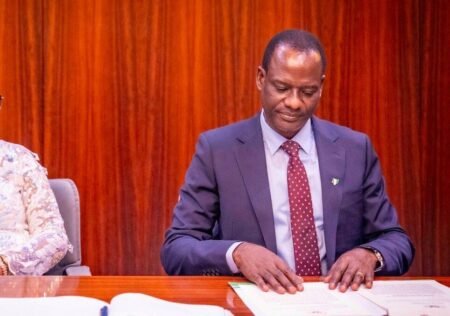
Speaking at a one-day workshop of the Capital Market Correspondents Association of Nigeria (CAMCAN) in Lagos recently, the Director General of the Securities and Exchange Commission (SEC), Dr. Emomotimi Agama urged banks to strengthen their corporate governance principles and risk management framework to enhance investors’ confidence in the ongoing recapitalisation exercise.
Agama restated the commission’s commitment towards ensuring transparency and efficiency in the recapitalisation process.
Agama, who was represented by the Divisional Head, Legal and Enforcement of the SEC), Mr John Achile, noted that the framework on the banking sector recapitalisation (2024–2026) provided clear guidance for issuers while also safeguarding the interests of investors.
He noted that the key to bridging the gap between issuers and investors remained the harnessing of innovation for inclusive growth.
In view of this, he pointed out that the SEC, through the aid of digital platforms, is exploring the integration of blockchain technology for secure and transparent transaction processing, a step that will redefine trust in the market.
Agama, noted that the oversubscription of most recapitalisation offers in 2024 reflects strong investor confidence.
To sustain this momentum, he said that the SEC has intensified efforts to enhance disclosure standards and corporate governance practices.
According to him, expanding financial literacy campaigns and collaborating with fintech companies to provide low-entry investment options will democratize access to the capital market.
He assured stakeholders of the commission’s steadfastness in achieving its mission of creating an enabling environment for seamless and transparent capital formation.
“Our efforts are anchored on; providing issuers with clear guidelines and maintaining open lines of communication with all market stakeholders, reducing bureaucratic bottlenecks through digitalisation, ensuring timely review and approval of applications, and enhancing regulatory oversight to protect investors while promoting market integrity,” he said.
Agama listed the constraints to the exercise to include: addressing market volatility, systemic risks, limited retail participation as well as combating skepticism among investors who demand greater transparency and accountability.
“We are equally presented with opportunities which include leveraging technology to deepen financial inclusion and enhance market liquidity, as well as developing innovative financial products, such as green bonds and sukuk, to attract diverse investor segments.
He stressed that the success of recapitalisation efforts depends on collaboration among regulators, issuers, and investors.
Speaking on market infrastructure at the panel session, Achile said SEC provides oversight to every operation in the market, ranging from technology innovations to market infrastructure.
“We are committed to transparency because we are mindful of the benefits and risks associated with technology adoption. SEC does due diligence to all the innovative ideas that come into the market to ensure adequate compliance with the requirements,” he said.
On the rising unclaimed dividend figure, he blamed the inability of investors to comply with regulatory requirements and information gap, noting that SEC has done everything within its powers to ensure that investors receive their dividend at the appropriate time.
However, he assured that the commission would continue to strengthen its dual role of market regulation and investor protection to boost confidence in the market.
Mr Johnson Chukwu, an economist and Managing Director Cowry Asset Management Company, stressed the need for the Central Bank of Nigeria (CBN) to deploy available information technology and Bank Verification Numbers (BVN) to tackle delay in the verification of banks’ offers and ensure speedy conclusion of the process.
Worried by the delay in the apex bank’s verification process which has continued to raise concerns among investors, especially as the CBN has not been able to conclude any verification almost four months after the closure of some offers, Chukwu said the deployment of high level IT available at the CBN and the use of the BVN would fastrack the process of accepting or rejecting offers and enable investors get their allotment or deploy their funds in other profitable economic activities.
Chukwu stated this at the yearly workshop of the Capital Market Correspondents Association of Nigeria (CAMAN) with the theme: ‘Banks’ Recapitalisation: Bridging the Gap between Investors and Issuers in the Nigerian Capital Market’ held in Lagos at the weekend.
He argued that while the apex bank’s role in verifying the source of the capital invested is important, the longer period for completion of the verification process is dampening investors’ confidence.
According to him, “this is, particularly worrisome, for investors whose funds may be returned where the offers may be oversubscribed given the missed reinvestment opportunities.”
Chukwu, also stated that the current CBN requirements for investors investing in banks shares are seen by many as overly stringent and creating barriers for both issuers and investors.
He cited the provision of three-year audited financial statements, board resolution authorising the investment and tax clearance certificates for the past three years for corporate investors, noting that these requirements are disincentive to investment in the capital market.
He added that while regulation is necessary for maintaining the stability and integrity of the financial system in ensuring that unqualified capital is not invested in the banks, there is need to leverage on existing customer information in the banking system to avoid imposing onerous conditions on investors.
Chukwu, who is also the Chief Executive Officer of Cowry Asset Management Limited, described banks’ recapitalisation as a key strategy for strengthening the Nigerian banking sector and fostering economic growth.
He, however, argued that the success of these efforts hinges on effectively bridging the gap between investors and issuers in the capital market.
Outlining the role of the capital market in the recapitalisation exercise, Chukwu noted that when banks access the capital market and demonstrate their ability to raise capital through successful initial public offers, IPOs, rights issues and bonds, it strengthens investors’ confidence and sends a positive signal to the broader financial market.
“This is because a well-capitalised bank is perceived as financially stable, reducing risk for investors and enhancing market confidence. This encourages further investment in the banking sector, which is essential for the sustainable growth of the industry,” he added.
Chukwu also urged the CBN and other regulatory bodies to work together in creating a more predictable regulatory environment for banks and investors.
“The frequency of regulatory policy changes need to be moderated to allow for better planning for both banks and the investing public as well as reduce the regulatory and operational risks associated with these frequent changes.
“Banks must commit to improving their transparency and disclosure standards. This includes the publication of detailed and accurate financial statements, risk disclosures, and forward-looking guidance.
“By addressing the challenges of information asymmetry, regulatory uncertainty, and liquidity, while improving transparency, corporate governance, and financial innovation, the Nigerian capital market can unlock new opportunities for bank recapitalisation,” he said.
Read the full article here