






The ongoing recapitalisation exercise of banks in the country has been described as one that will usher in solid banks as a result of the availability of resources and alliances that may be created.
Mr Ugodre Obi-Chukwu, Chief Executive officer of Nairametrics, while presenting an outlook of the Nigerian economy in 2025 to members of the Finance Correspondents Association of Nigeria (FICAN) on Tuesday, said banks will come out of the exercise bigger and stronger.
He said: “There is money in Nigeria and I can see that a lot of these banks might still meet their income validation targets with or without merger and acquisition”
At the Meristem 2025 Annual Outlook Conference held at its headquarters in Lagos recently, the Group Managing Director of Meristem Securities, Sulaiman Adedokun, who unveiled the Meristem 2025 Annual Outlook report, also agreed that the ongoing recapitalisation exercise has the potential to produce strong mergers which will usher in strong banks and effective banking sector.
The report revealed why some of the tier-1 banks in Nigeria entered the capital market to raise the additional funds required to meet new regulatory thresholds.
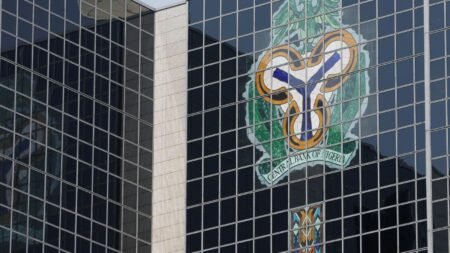
Since the fresh recapitalisation exercise was announced by the Central Bank of Nigeria (CBN) in March 2024, some financial institutions have approached the market to raise funds via a combination of public offers and rights issues.
They include Access Holdings, Guaranty Trust Holding Company, Fidelity Bank, Sterling Financial Holding Company, and FCMB Group. Others are FBN Holdings and United Bank for Africa. Stanbic IBTC Holdings is in the market with a rights issue.
Speaking on the recapitalisation exercise, the Meristem GMD said: “The banks are key to the economy, and for a government that is targeting a $1tn economy, there is no doubt that you need solid banks, and I’m sure that is the reason for the recapitalisation exercise to ensure that they are well positioned. The big banks need to be recapitalised.
They need to do more. The other banks that have not started anything, I’m sure that they have their plans. You need to strategise on how you want to raise equity or capital to meet up. There are other plans that they have come up with, but for the big ones, they need to quickly position themselves because they are the ones doing most of the business in the country.”
He noted that mergers and acquisitions are not unlikely in the New Year, and for banks whose board and management were sacked by the Central Bank of Nigeria in January last year, Adedokun said the primary assignment of the CBN-appointed managers was first and foremost stability.
“The new boards are appointed by the CBN to position the banks and make them fit for the economy. I believe these boards are important in providing strategic direction for those banks. I believe they will make proper decisions on how to move forward. Perhaps that is when the question of whether to merge with other banks will come in or go for capital raising. “Additionally, they were appointed by the CBN, so the managers have to circle back to the CBN on the decision that they need to take. The appointment would have been based on stabilising the banks to ensure that there is no failure in the banking sector.
“We don’t want to witness failure in the banking sector because of the role that it plays in the economy. They need to connect to the CBN to see how it plays out,” he asserted.
On the inflation that has hurt households and businesses, the Meristem GMD urges strategic investments that beat inflation.
“Inflation affected everyone, the purchasing power of an average citizen of the country. We are going through a particular phase in the country that we just need to manage to move forward. The truth is, no matter what you have today, the purchasing power has dropped, but are we going to witness this level of inflation going forward? We expect that in 2025, we will see something better than 2024. The economy is going through a lot of reforms, and if we have better policies to improve the lot of the citizenry, I think we will have something better in the New Year.
“At 34 per cent, the purchasing power was down, and the cost of doing business was very high. It affected individuals and businesses. Poverty levels increased. Do we want to continue doing that? We need information. How do you hedge against inflation, and how do we invest in soft instruments such that the returns on investment would be higher than inflation? If you are still investing now and getting about 16 per cent while inflation is at 34 per cent, it is a negative return. What we need to do moving forward is to plan our investment activities to ensure that what you are investing in is better than inflation, and then you need a partner that can assist,” Adedokun noted.
He also revealed that the firm will focus on youth empowerment and entrepreneurship in 2025: “Youths are the hope of our future. If we can empower them, we are better off. One of the areas we are going to focus on as an organisation is youth empowerment and entrepreneurship. A lot of people are coming up with ideas but are short on funding.
“We want to provide a platform towards educating. Many people have been frustrated. We have taken it up as a responsibility, as a duty to do more of youth empowerment in the area of investment and entrepreneurship. We will be doing more of this and communicating more of this as we move on in 2025.”
In his contribution, the Managing Director of Meristem Stockbrokers Limited, Saheed Bashir, hailed the inclusion of pension funds in the rebased GDP.
He said: “That is a plus for the sector and the market, and we should celebrate it. What the rebase is meant to do is properly calibrate the drivers of GDP. If a sector was excluded before and is now included, you know what that means. And you can take a cue from what happened to the telecoms during the last rebase. It can help the government to appropriately focus on sectors.
“The current pension industry is the product of one of the major reforms in the last 20 years that has impacted the economy. We need more of those bold reforms to shape and propel the economy to the next level.
“I think it is a big plus for the economy and allows us to understand the structure of the economy and the impact that each sector of the economy has on the GDP. It helps the government in planning, helps the private sector and private capital too in mobilising, and you can see a lot of investment in PFAs and pension business from the commercial banks and non-banks as well, and that tells you there are a lot of Nigerians yet to be brought under the pension scheme.”
Highlighting the role of Nigeria’s youth in economic transformation, Adedokun called for increased efforts in mentoring and empowering young entrepreneurs to contribute meaningfully to national development.
“The youth are our hope in this country. Empowering them is crucial for investment and entrepreneurship. We must focus on youth empowerment, train and mentor them to become great entrepreneurs so they can contribute to the country’s economy,” he emphasised.
Supporting this perspective, Dr Tope Fasua, the Special Adviser to the President on Economic Affairs, stressed the importance of strengthening Nigeria’s domestic economy to reduce external borrowing pressures.
“To sustain the country’s economy, we must focus on Nigeria’s domestic and local economy so there will be less pressure on borrowing from external bodies,” Fasua noted.
“We must achieve a more equitable society to generate more revenue. The depreciation of the Naira has impacted inflation, and we must fight it back.”
Fasua also highlighted the impact of the Naira’s devaluation on reducing the “Japa” migration trend and reiterated the need for economic stability through local production.
“What Nigeria needs now is stability. We must be stable in our local production and run our economy to defend the Naira,” he added.
Further contributions from the panel emphasised agricultural development and infrastructure. The Principal Manager of Agribusiness Finance and Investments NIRSAL Akinola Baiyewu pointed out the government’s increased budgetary focus on land utilization for production and called for stronger standardisation and collaboration among regulatory bodies.
“We must standardise to meet international quality. Government agencies need to work together effectively, and we must address infrastructure challenges like the coastal road project,” Baiyewu stated.
Read the full article here