







1
A leading procurement expert, Prof Mohammed Aliyu, has warned that Nigeria’s economy may continue to face serious setbacks if government procurement processes are not handled by trained professionals.
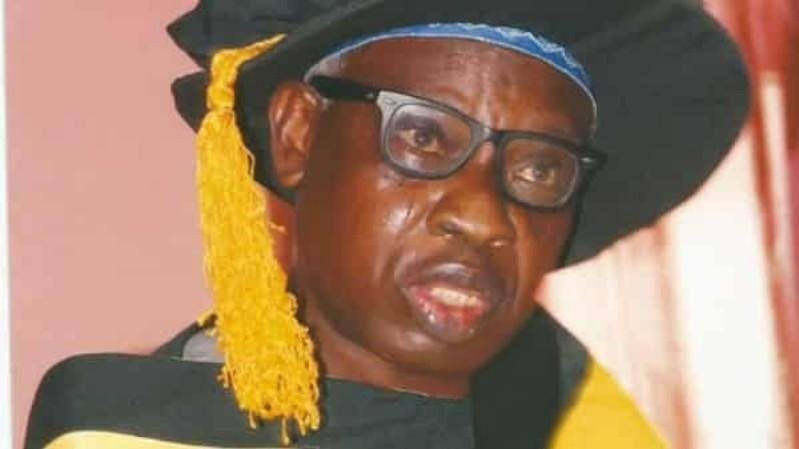
Aliyu, the Registrar and Chief Executive Officer of Chartered Institute of Purchasing and Supply Management of Nigeria (CIPSMN), who has spent more than five decades working in procurement and supply chain management emphasised that the sector remains a critical pillar of national development emphasising.
According to him, no organisation, whether public or private, can function effectively without a steady and well-managed flow of materials, services and resources.
He explained that procurement ensures that the right quality of goods is delivered in the right quantity and at the right time, enabling organisations and governments to operate efficiently.
“In business, you do not get what you deserve; you get what you negotiate,” he said. “What we are getting in Nigeria today is often what we negotiate, not necessarily what we deserve.”
“Procurement is not just about awarding contracts. It is a professional discipline that affects virtually every aspect of human and organisational life,” he said.
The expert noted that procurement accounts for a significant portion of public spending worldwide. According to international estimates, between 70 and 80 per cent of government budgets are spent through procurement-related activities.
He recalled that during the administration of former President Olusegun Obasanjo, a World Bank–supported study recommended that procurement professionals should oversee government procurement processes to promote transparency and ensure value for money.
“The biggest problem is that everyone wants to handle procurement without the required knowledge,” he said. “You find accountants, engineers, journalists and many others managing procurement processes, yet procurement is a specialised profession.”
He warned that allowing untrained individuals to manage procurement increases the likelihood of mismanagement, inefficiency and financial leakages in both public and private institutions.
However, he expressed concern that the sector in Nigeria continues to face serious challenges, particularly role duplications and usurpation because individuals without the necessary expertise are often assigned procurement responsibilities.
The expert also raised concerns about the incomplete implementation of the Public Procurement Act 2007.
According to him, the law provides for the establishment of a Procurement Council to oversee the activities of the Bureau of Public Procurement, yet the council has not been fully constituted years after the law came into effect.
He explained that the council is expected to include representatives from government ministries, professional bodies, civil society organisations and the media to strengthen transparency and accountability.
“The absence of the council weakens oversight and undermines the effectiveness of procurement reforms,” he said.
Nigeria has everything it takes to succeed,” he said. “But if procurement is not handled properly, public resources will continue to be wasted and sustainable development will remain difficult to achieve.”
Drawing an analogy from the medical field, he said the situation is comparable to allowing untrained individuals to perform surgery in a hospital.
“What would happen if everyone was asked to enter the operating theatre to perform surgery?” he asked. “That is essentially what is happening in procurement today.”
He added that the Chartered Institute of Purchasing and Supply Management of Nigeria (CIPSMN) has continued to organise training programmes and certification courses aimed at producing competent procurement professionals.
The institute also runs graduate conversion programmes designed to equip young Nigerians with the knowledge and skills needed to build successful careers in procurement.
Despite these initiatives, he said the institute requires stronger collaboration with government institutions and greater recognition of its role in regulating and certifying professionals in the field.
Looking ahead, the expert expressed optimism that Nigeria can still fully benefit from procurement reforms if existing laws are properly implemented and qualified professionals are allowed to manage procurement systems.
He also advised young Nigerians interested in the profession to focus on acquiring proper training and certification, rather than seeing procurement as a quick path to wealth.
According to him, procurement professionals are guided by strict ethical standards and are expected to prioritise transparency, accountability and value for money in all transactions.
“We must treat procurement as a serious profession,” he added. “Once we do that, the country will begin to see real economic progress.”
Read the full article here