








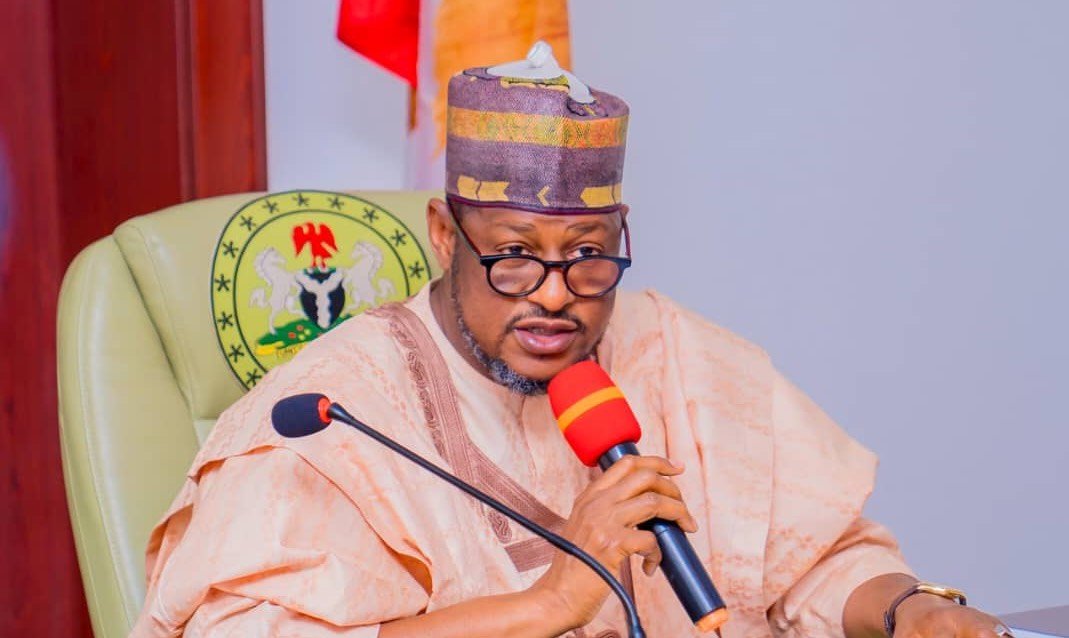
The Katsina State Government has announced plans to establish a local factory for the production of Ready-to-Use Therapeutic Food (RUTF) and employ more than 2,300 health workers as part of a comprehensive strategy to combat child malnutrition across the state.
The Governor of Katsina, Dikko Radda disclosed this on Thursday during his opening address at the High-Level Conference on Mobilising Against Malnutrition in North-west Nigeria held in Abuja.
Mr Radda said the initiative reflects his administration’s resolve to confront the region’s nutrition crisis with sustainable, home-grown solutions that combine local production, social protection, and healthcare reform.
He said the state’s new direction was inspired by a recent report by Médecins Sans Frontières (MSF), which exposed the alarming scale of child malnutrition in Katsina and other parts of the northwest.
“When the MSF report came out, people thought we were going to fight them because it was so daunting,” he said.
“But I told my team, if there is malnutrition in Katsina, then let’s confront it. Let’s make the report a catalyst for change.”


Following the report, the governor said his administration set up a multi-sectoral committee to diagnose the underlying causes of malnutrition.
The findings, he noted, have now become part of the state’s strategic blueprint for addressing the crisis.
Sustainable nutrition
A major component of the new plan, Mr Radda said, is the establishment of a local RUTF production factory in Katsina, a move he described as both a health and economic intervention.
“To ensure a sustainable and consistent supply of therapeutic food, we are taking the visionary step of setting up local RUTF production factories right here in Katsina.
“This will not only guarantee regular supply but also stimulate our local economy and create jobs for our youths.”
He explained that the factory will support the state’s ongoing expansion of Outpatient Therapeutic Programmes (OTPs) and stabilisation centres in local government areas currently without such facilities.
New health workers
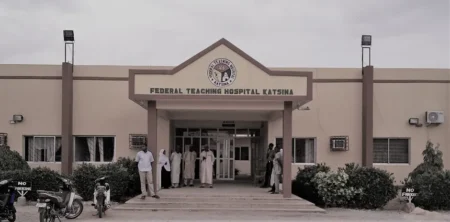
Mr Radda also revealed that the state has approved the employment of 2,377 health workers at the primary healthcare level, in addition to 600 others recently recruited into secondary healthcare facilities.
He said the move was part of broader efforts to strengthen the healthcare system, following a N14 billion investment in 2024 that achieved 87 per cent budget performance.
“Our administration is committed to revamping the health system from the ground up,” he said. “We have prioritised human resources, infrastructure, and service delivery.”
The governor also disclosed that Katsina contributed N1 billion to the Children’s Nutrition Fund in partnership with UNICEF, while more than 2.2 million vulnerable residents have been enrolled in the state’s health insurance scheme.
Social protection and maternal health
To cushion the impact of poverty, one of the root causes of malnutrition, Mr Radda said the government has begun distributing 90,000 bags of grains to vulnerable families and caregivers of malnourished children.
He added that his administration is considering the approval of six months of maternity leave for women in the state to enable proper care for infants in their first months of life.
“We cannot fight malnutrition without addressing poverty and food insecurity. That is why we are investing heavily in agriculture and social protection.”
Mr Radda urged other northwest states, traditional and religious leaders, and development partners to build on Katsina’s example and strengthen collective action against malnutrition.
Malnutrition in Nigeria
The Katsina situation mirrors a broader national challenge.
In August, PREMIUM TIMES reported that the federal government raised alarm over Nigeria’s “triple burden” of malnutrition, under-nutrition, over-nutrition, and micronutrient deficiencies.
According to the report, stunting affects about 40 per cent of Nigerian children aged 6–59 months, while eight per cent suffer wasting and 27 per cent are underweight.
The government said these figures reflect an urgent need for sustained nutrition investment and stronger community-based health interventions across states.
About the event
The High-Level Conference on Mobilising Against Malnutrition in Northwest Nigeria was hosted by the Katsina State Government and the Northwest Governors Forum, in collaboration with MSF, the Office of the Vice President, UNICEF, the World Food Programme (WFP), the World Bank, the International NGO Forum (INGO Forum), the Alliance for International Medical Action (ALIMA), the International Rescue Committee (IRC), the Civil Society Scaling Up Nutrition in Nigeria (CS-SUNN), and the European Union (EU).
The conference brought together international development partners, civil society organisations, the private sector, and philanthropic institutions to draw attention to the urgent need for stronger political and financial commitment to address the rising cases of child malnutrition in Nigeria’s North-west region.
Read the full article here